Summer in Kansai and a Seaside City
関西の夏、そして海辺の街
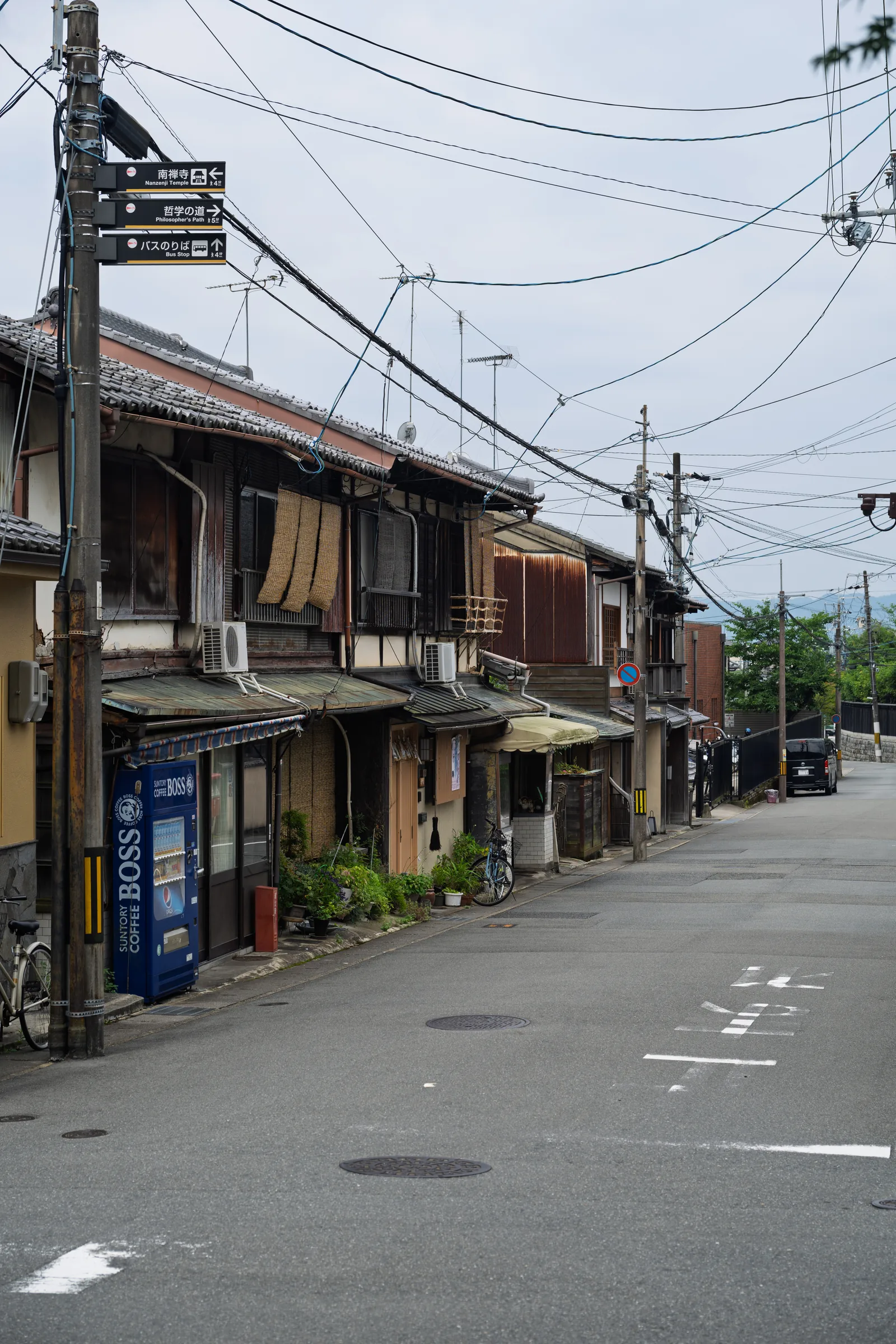
Before the streets fill
KYOTO / 08:50The route was measured less in distance than in changes of pace: a garden before the crowds, a platform at noon, a city held between mountain and sea.
A nine-day photographic notebook moving from eastern Kyoto, Lake Biwa, Osaka, Kifune, Kurama, and Nara to Hakodate's streetcars, steep harbor roads, open coast, and the first train south.
The city before it fills
At eight in the morning, the streets east of Kyoto had not yet become a route. Around Nanzen-ji and Awataguchi, summer appeared as a density of green—gardens tended by hand, corridors opening toward leaves, gravel held beside moss, and rooms built to frame the view. A heron stood still enough to become part of the design. At Kyoto Station, the sequence changed material: local trains, illuminated carriage windows, steel roofwork, and finally the Shinkansen at night.
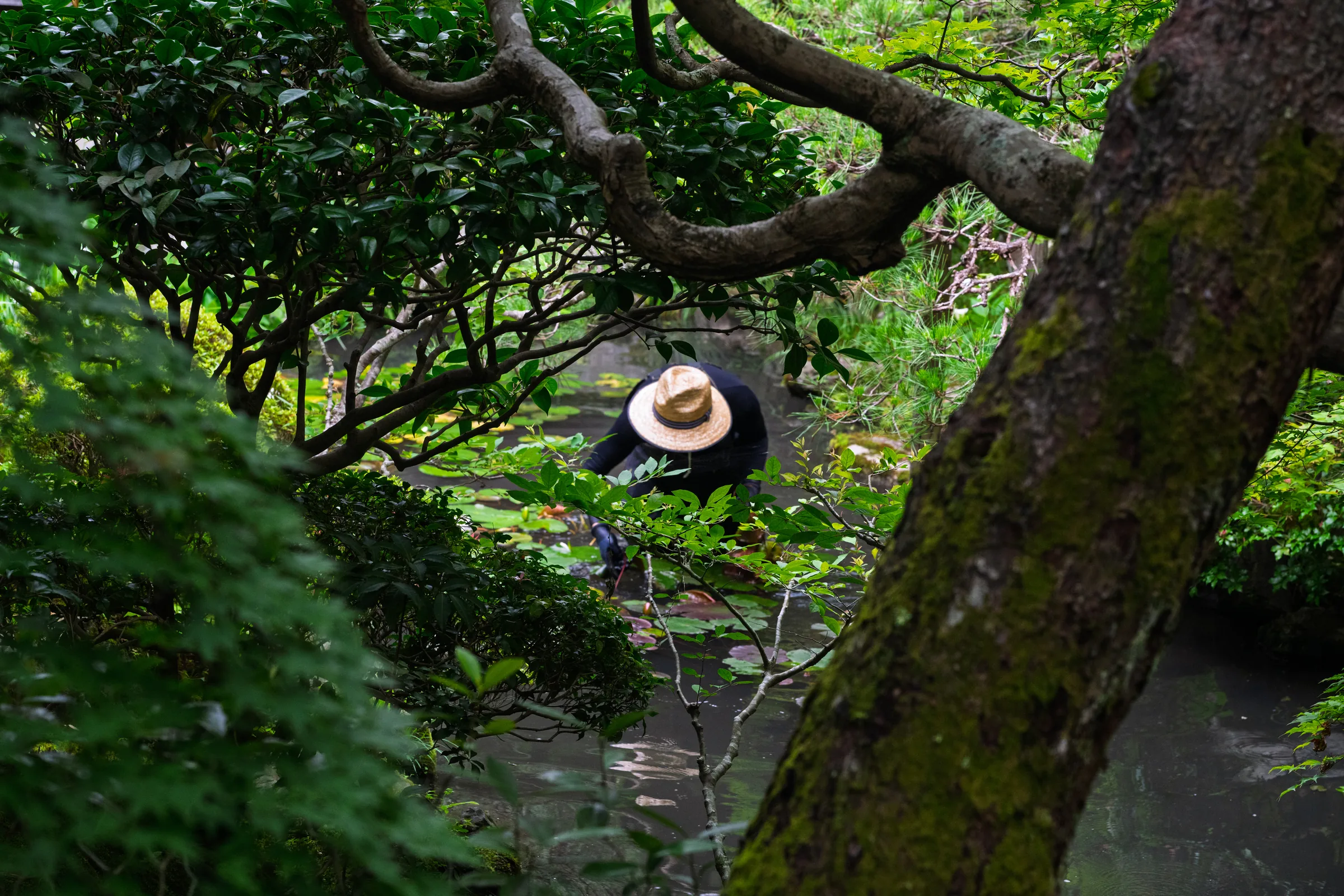
The garden is already at work
NANZEN-JI DISTRICT / CARE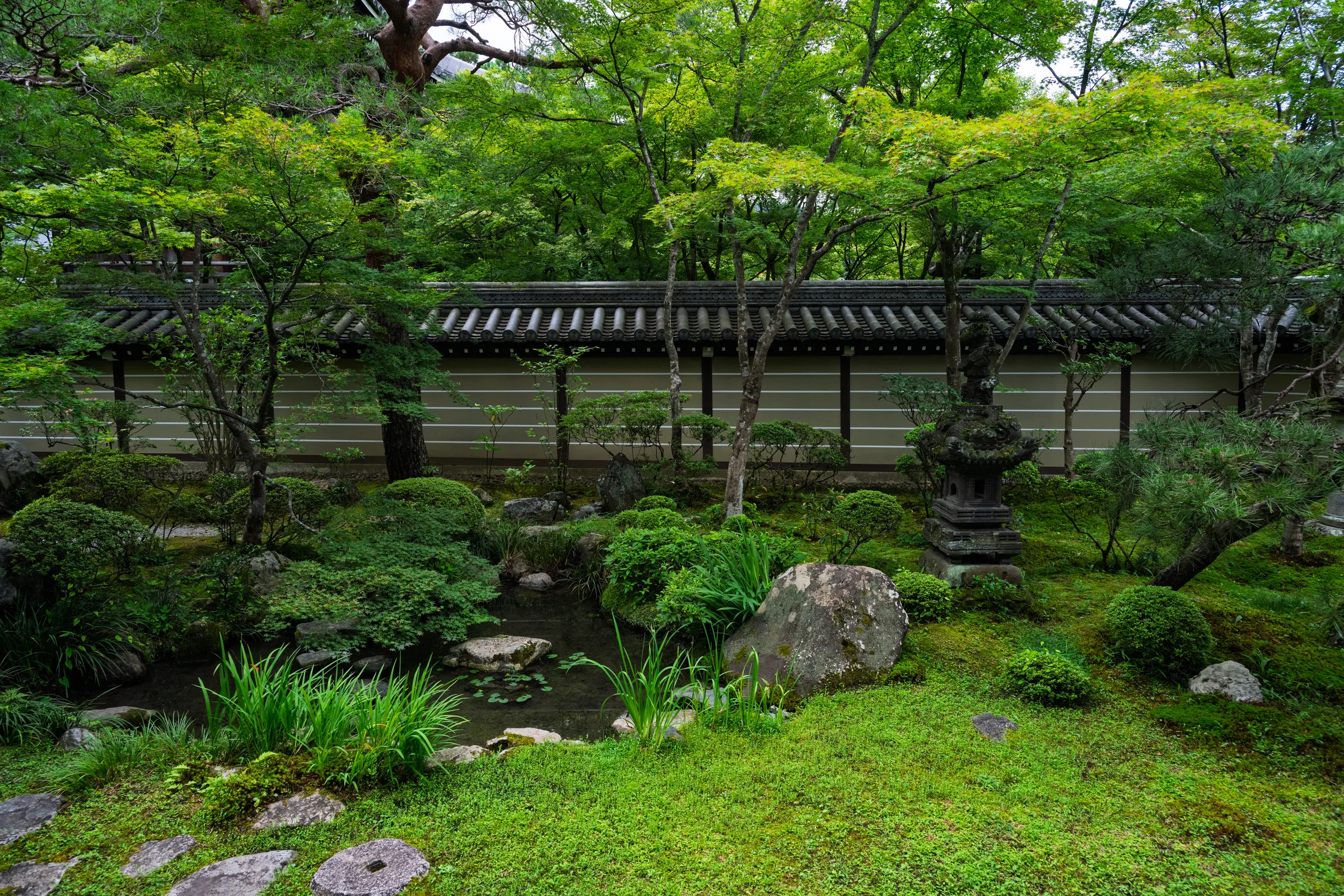
Green settles into every surface
NANZEN-JI DISTRICT / GARDEN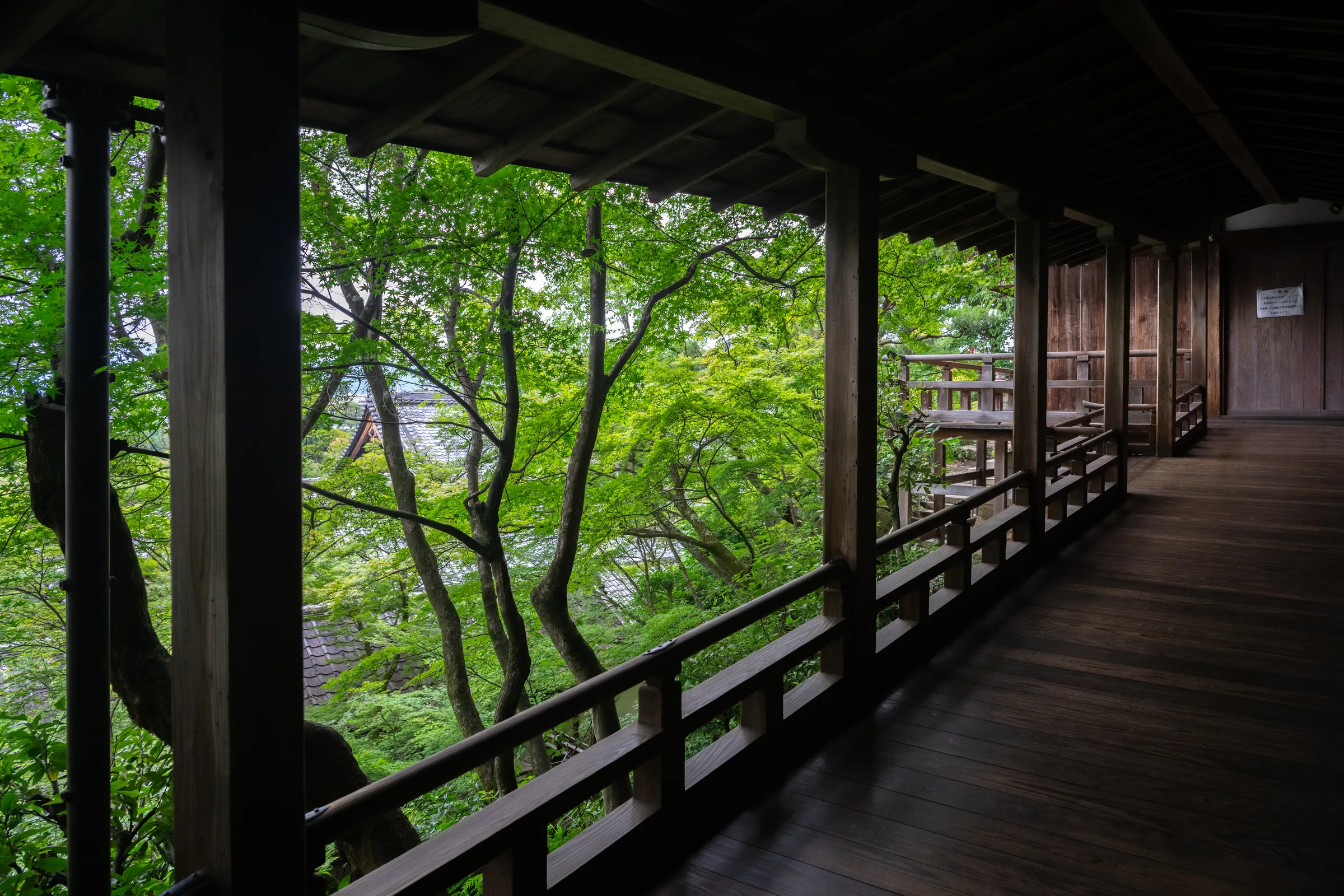
The corridor keeps the garden moving
NANZEN-JI DISTRICT / VERANDA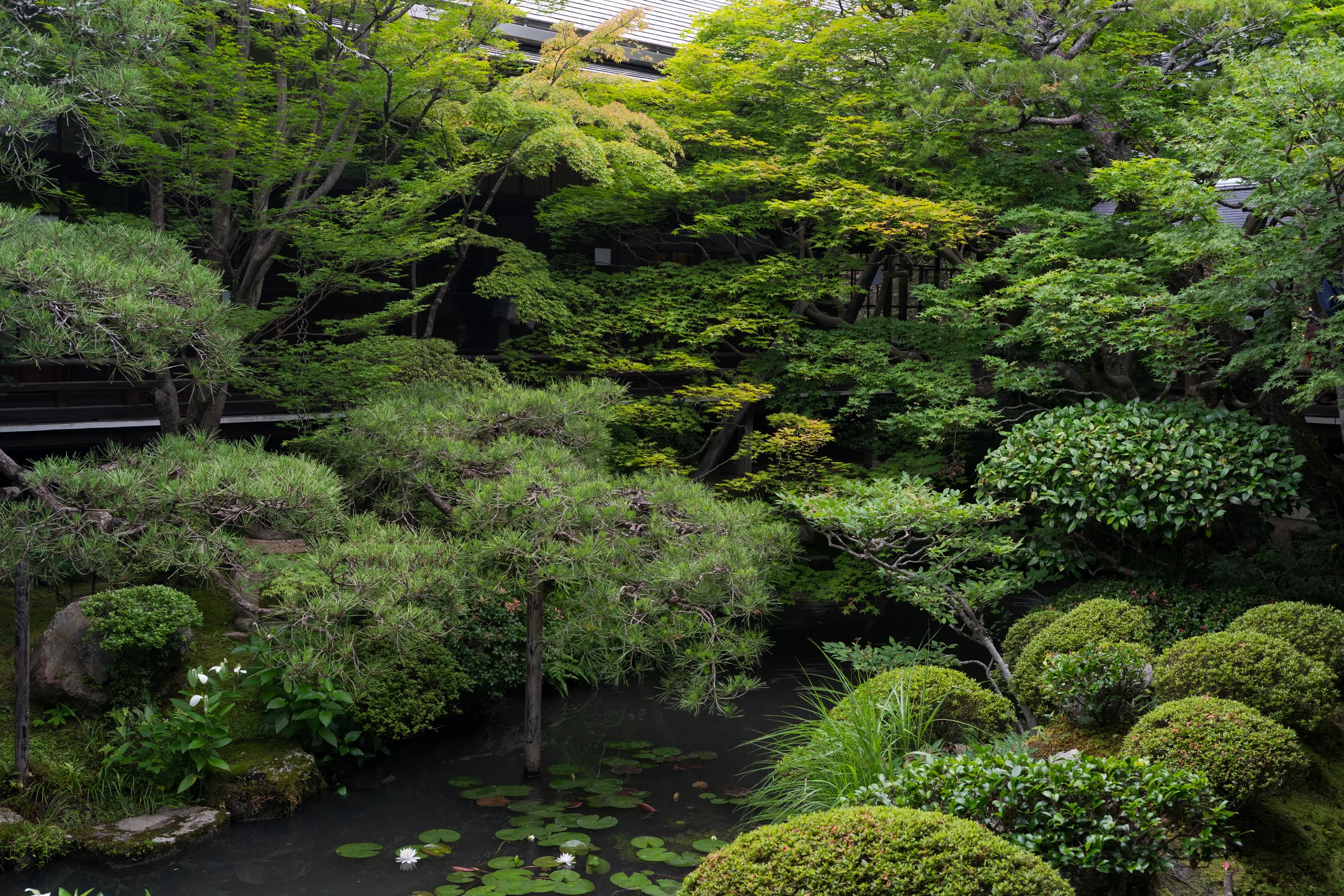
A garden composed in layers
NANZEN-JI DISTRICT / SUMMER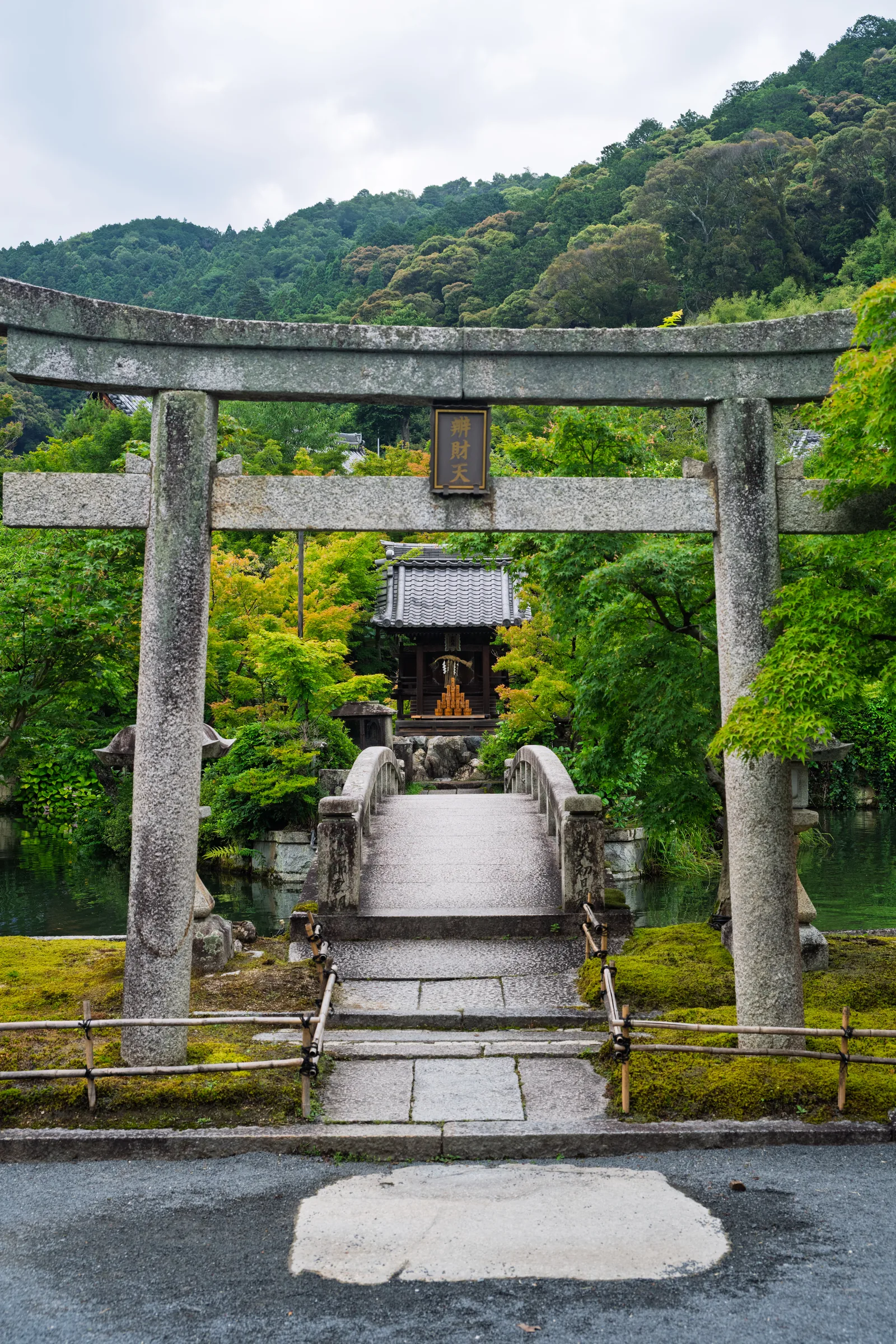
A shrine at the edge of the route
EASTERN KYOTO / ROADSIDE SHRINE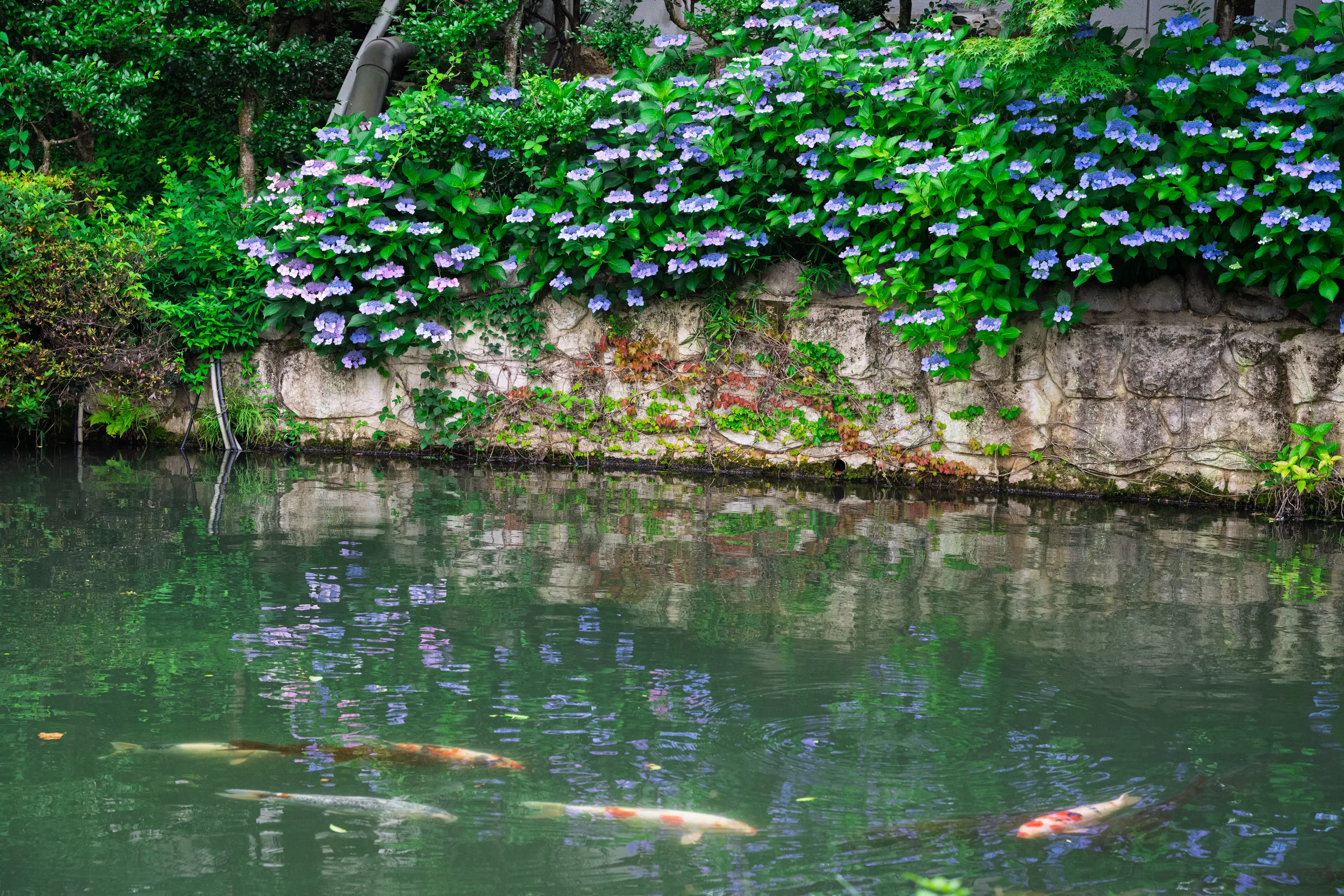
June gathers at the waterline
NANZEN-JI DISTRICT / HYDRANGEA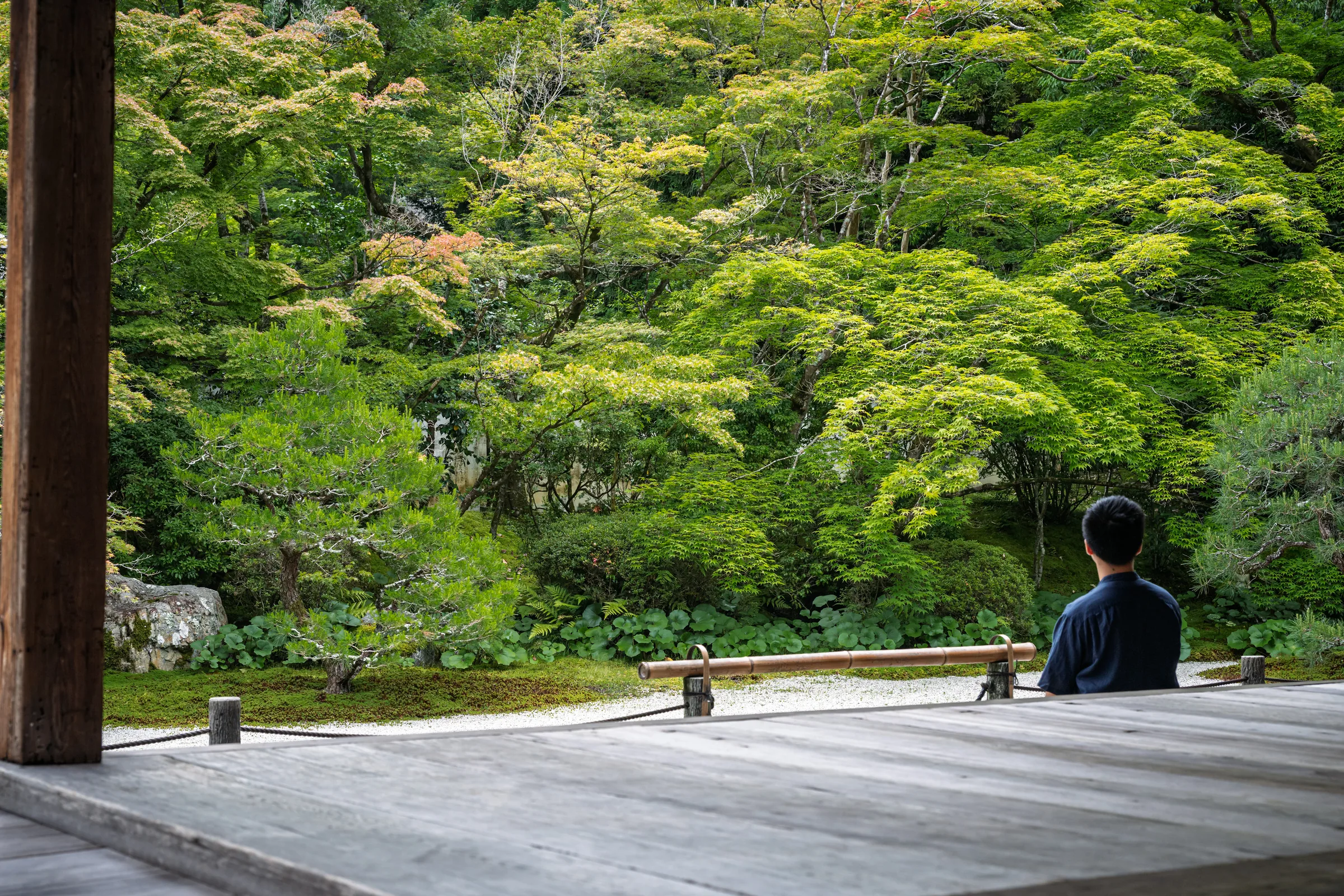
A seat facing nothing but green
AWATAGUCHI / GARDEN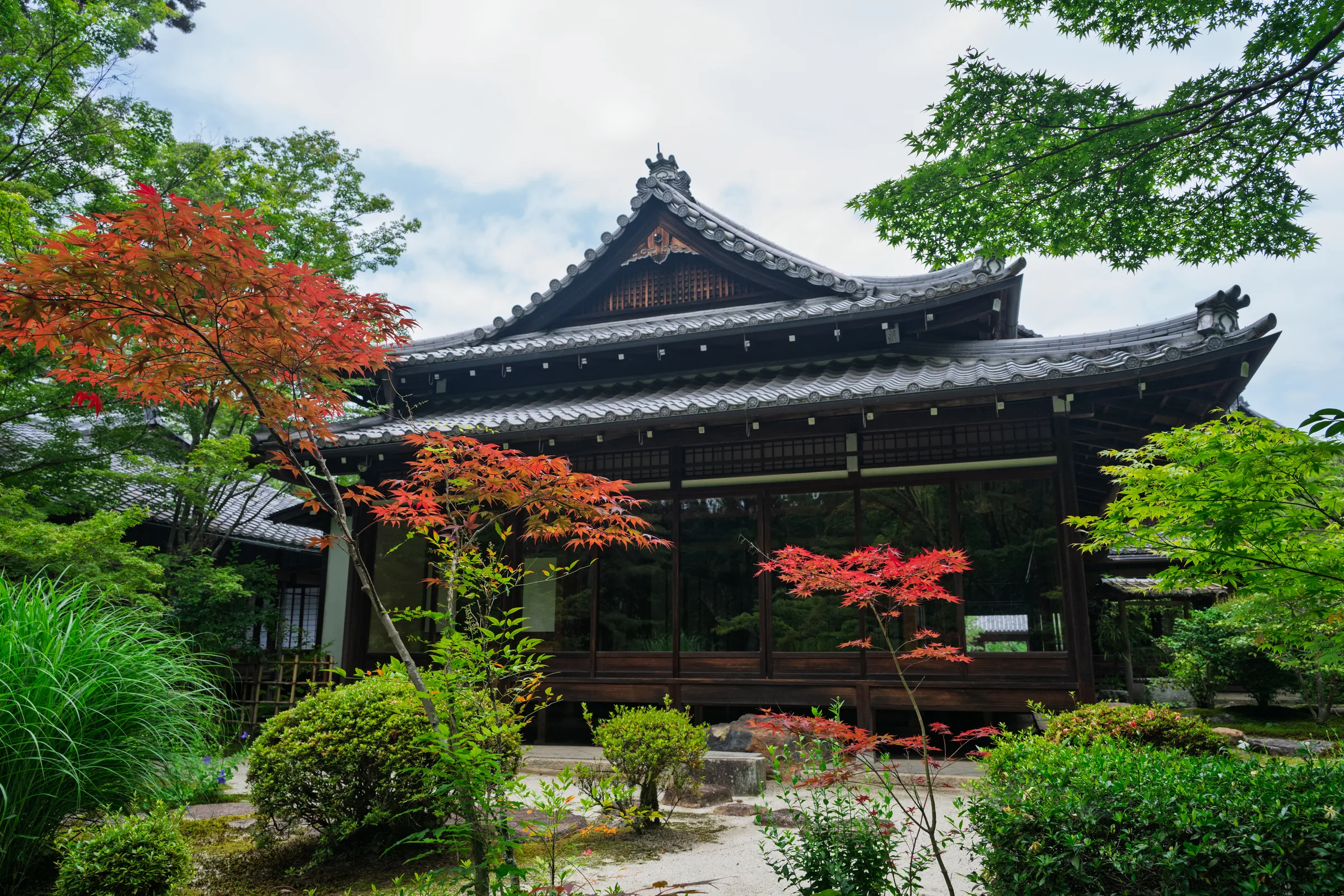
One red branch interrupts the green
AWATAGUCHI / TEMPLE HALL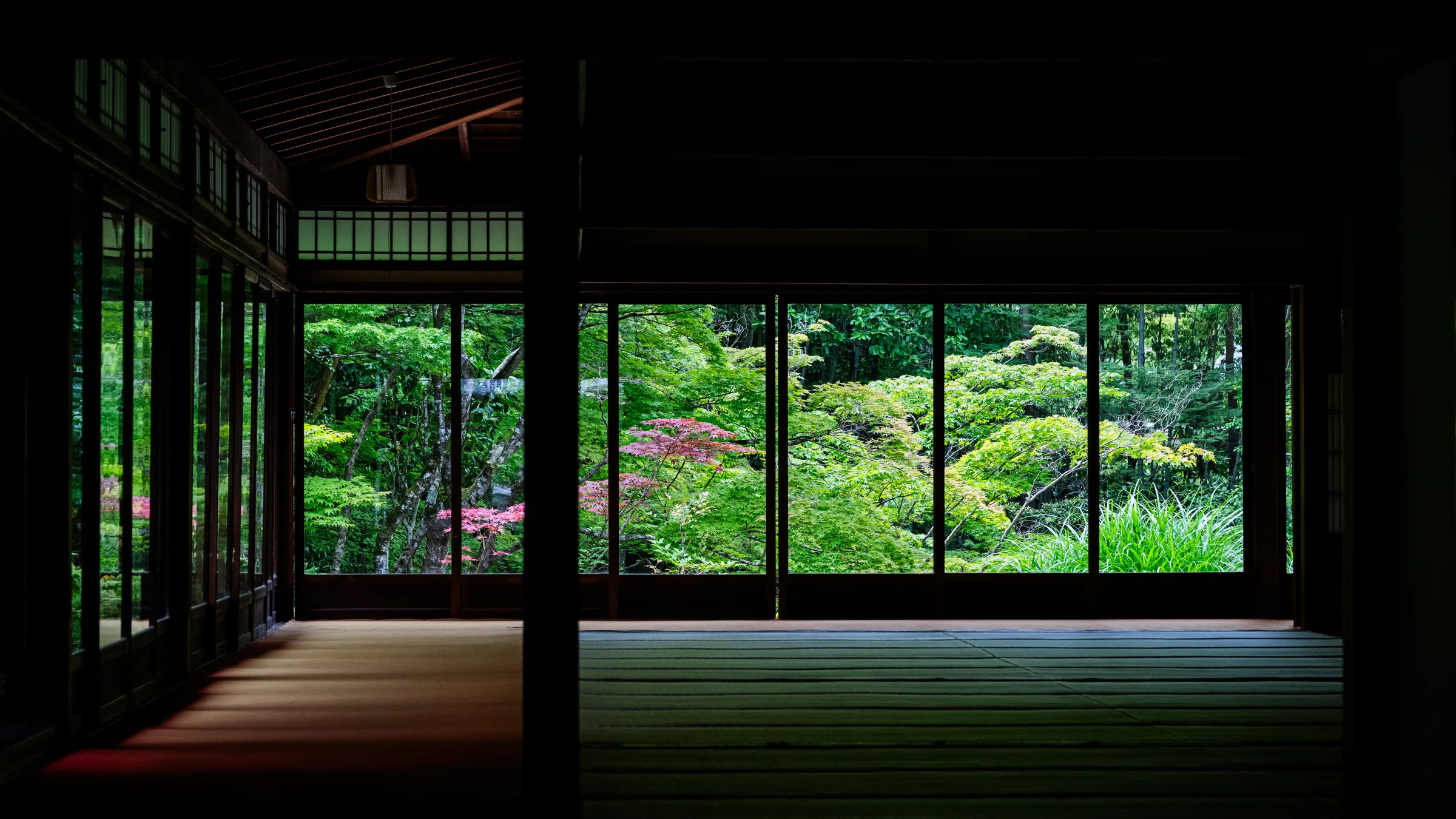
Summer held by the frame
AWATAGUCHI / INTERIOR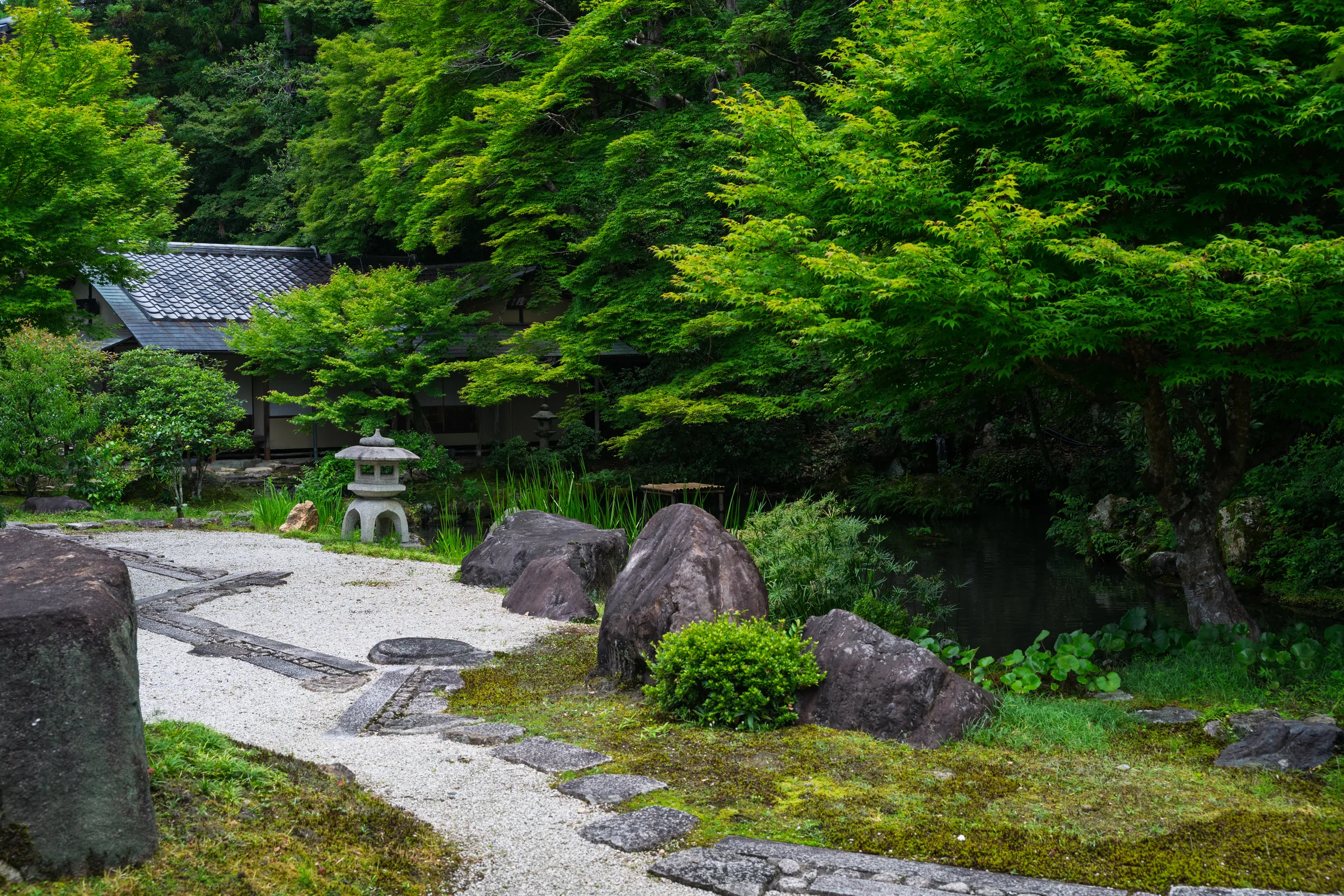
Stone, gravel, and the weight of green
EASTERN KYOTO / DRY GARDEN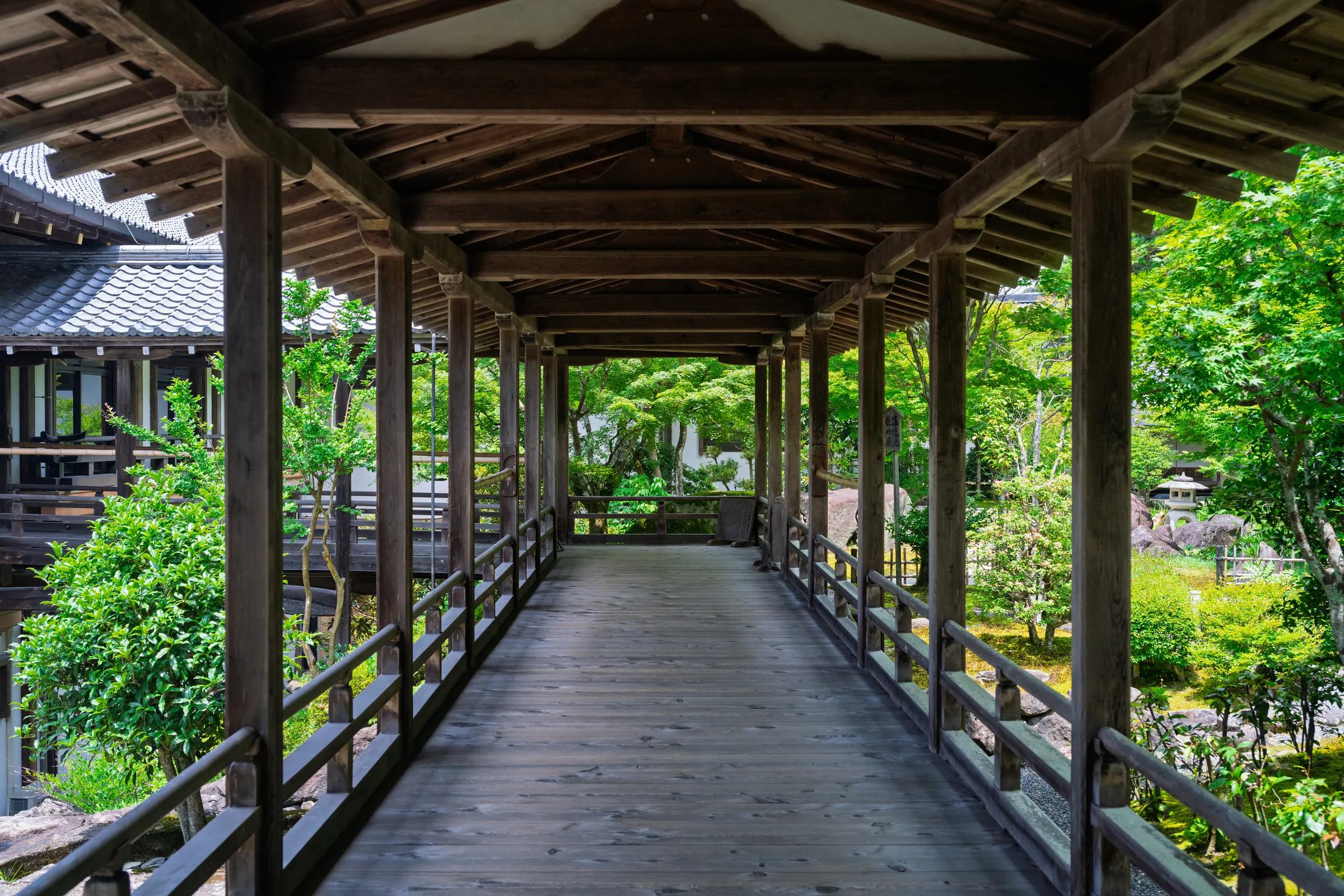
The route continues under timber
EASTERN KYOTO / CORRIDOR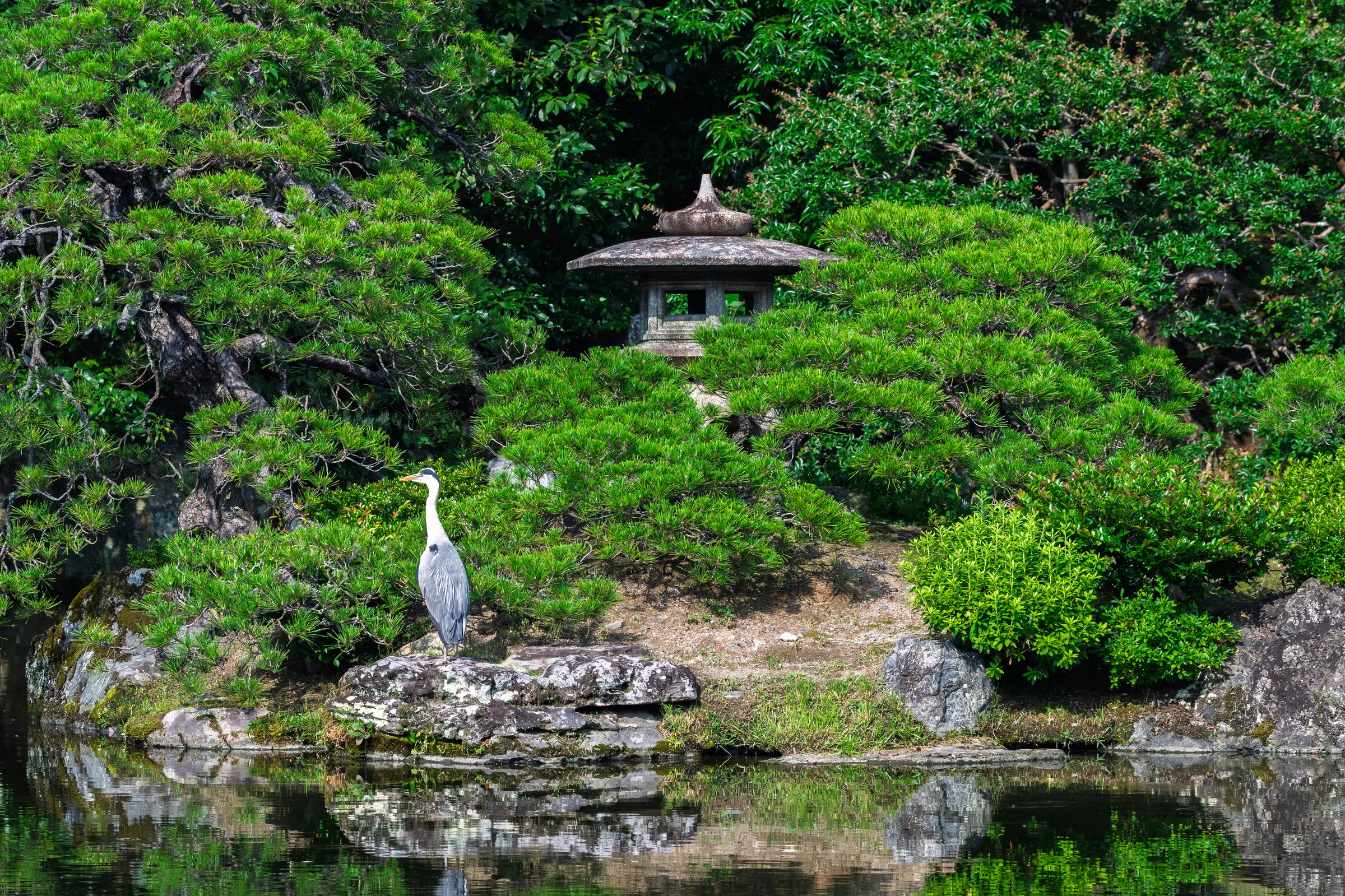
A heron inside the garden
KYOTO / STILLNESS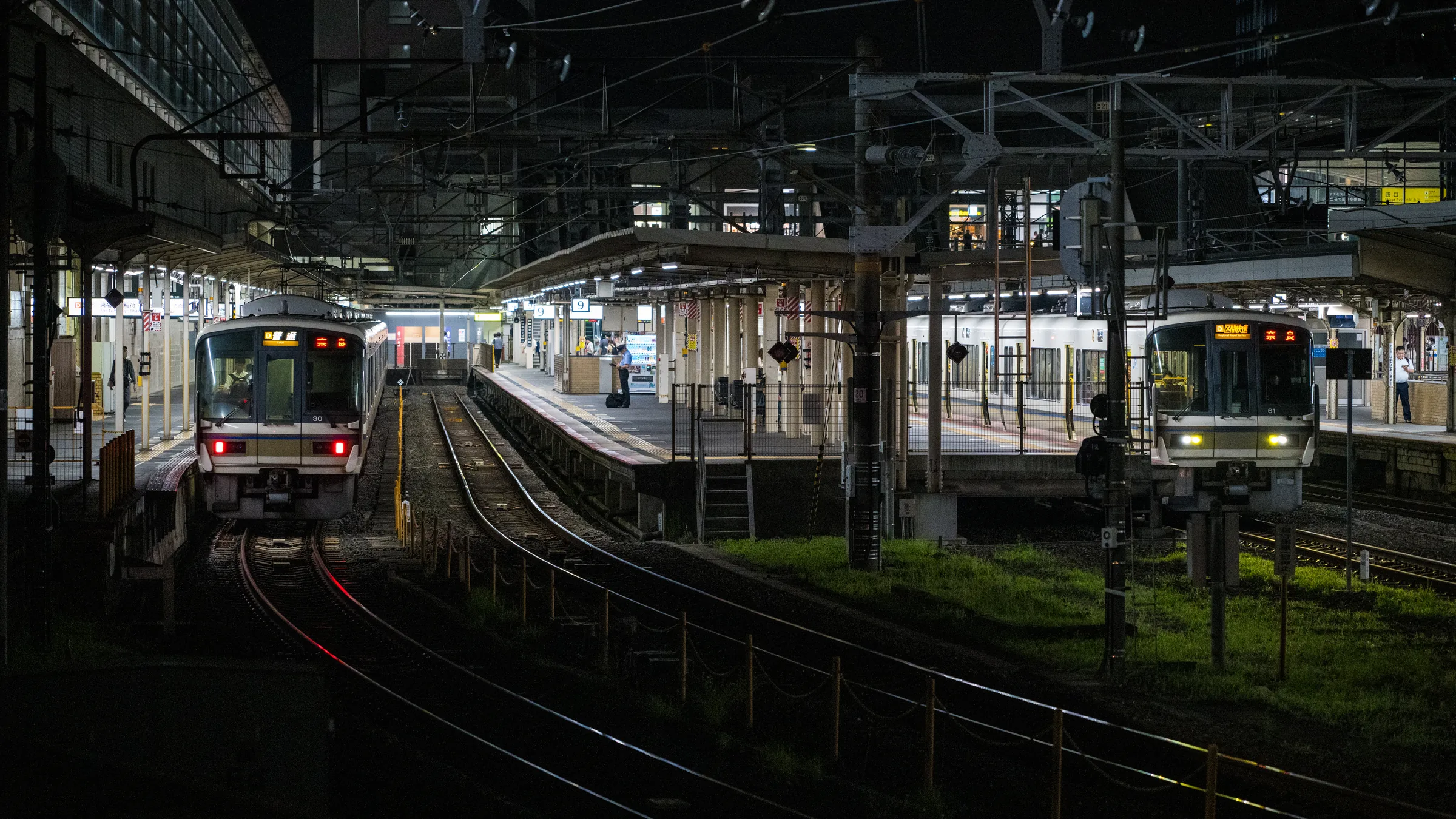
The garden gives way to the junction
KYOTO STATION / LOCAL LINES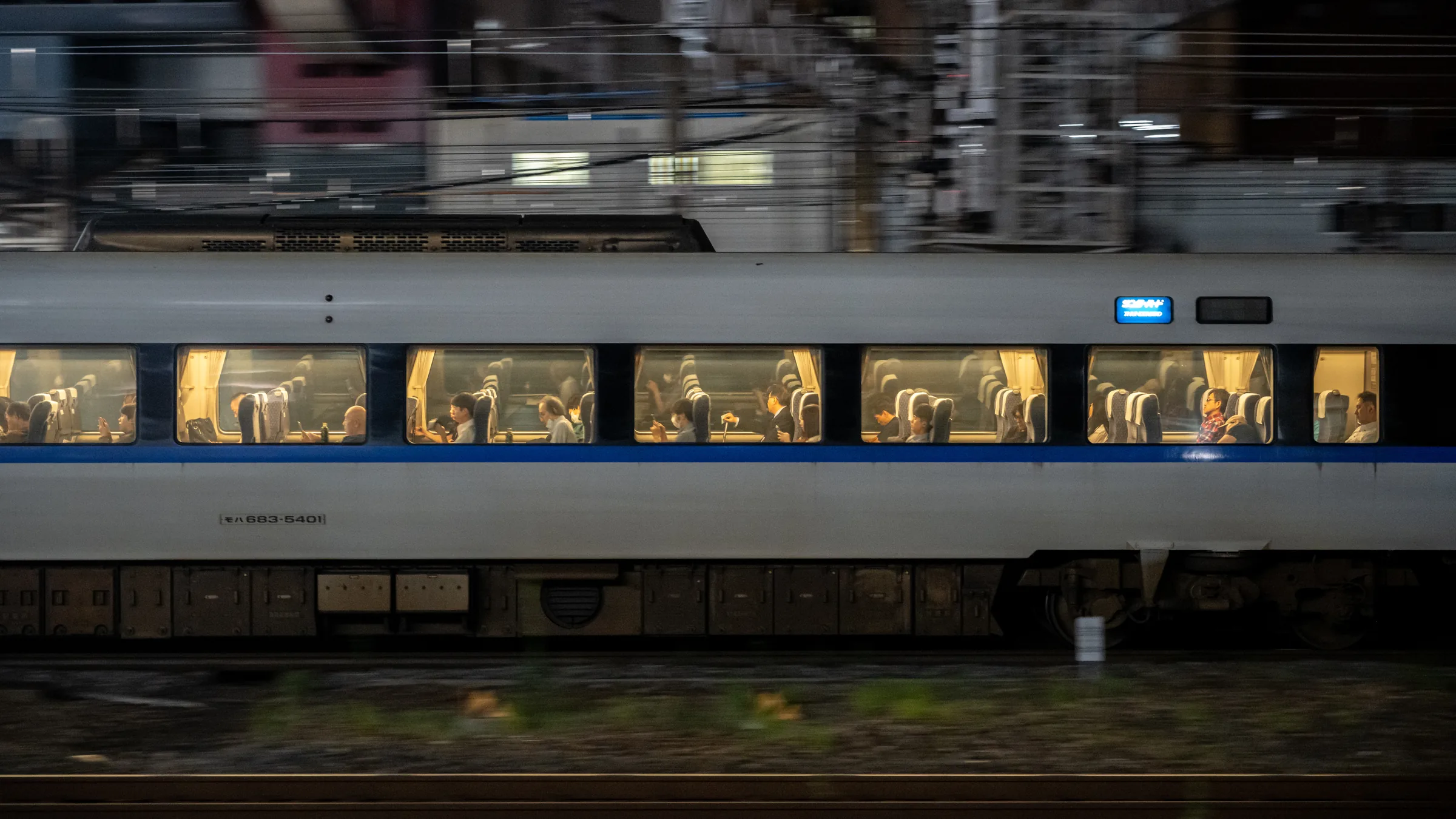
A carriage briefly becomes a strip of rooms
KYOTO STATION / IN MOTION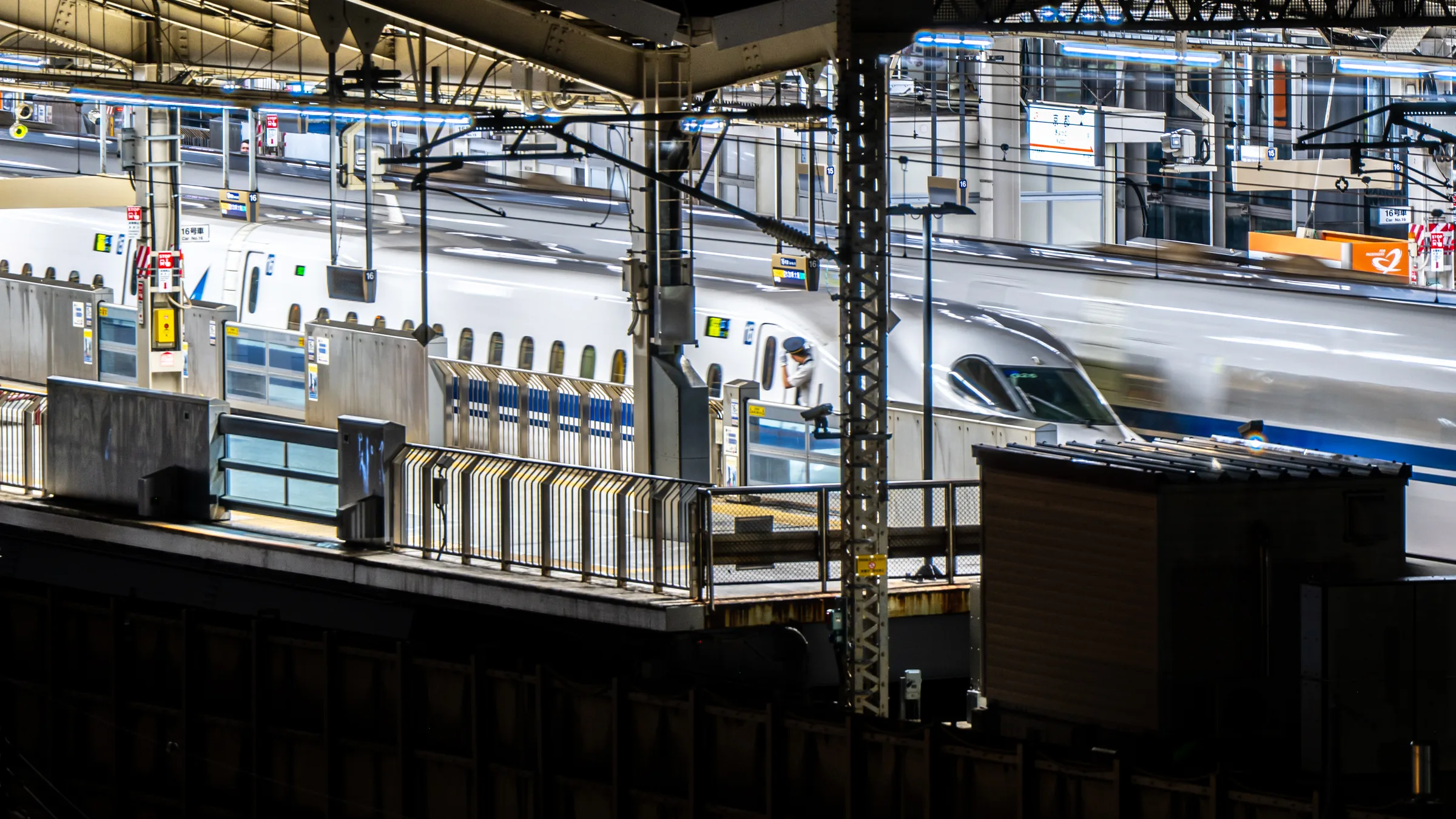
Night arrives by rail
KYOTO STATION / SHINKANSENThe lake enters the room
Sakamoto held the garden twice: once beyond the veranda, and once in the dark surface of Former Chikurin-in's table. Beyond it, torii and roadside lanterns led downhill toward the Lake Biwa Line. A local train, baseball players waiting at Katata, a narrow town street, and Ukimido carried the day toward open water. The Shinkansen erased the distance back to Kyoto; headlights continued after dark.
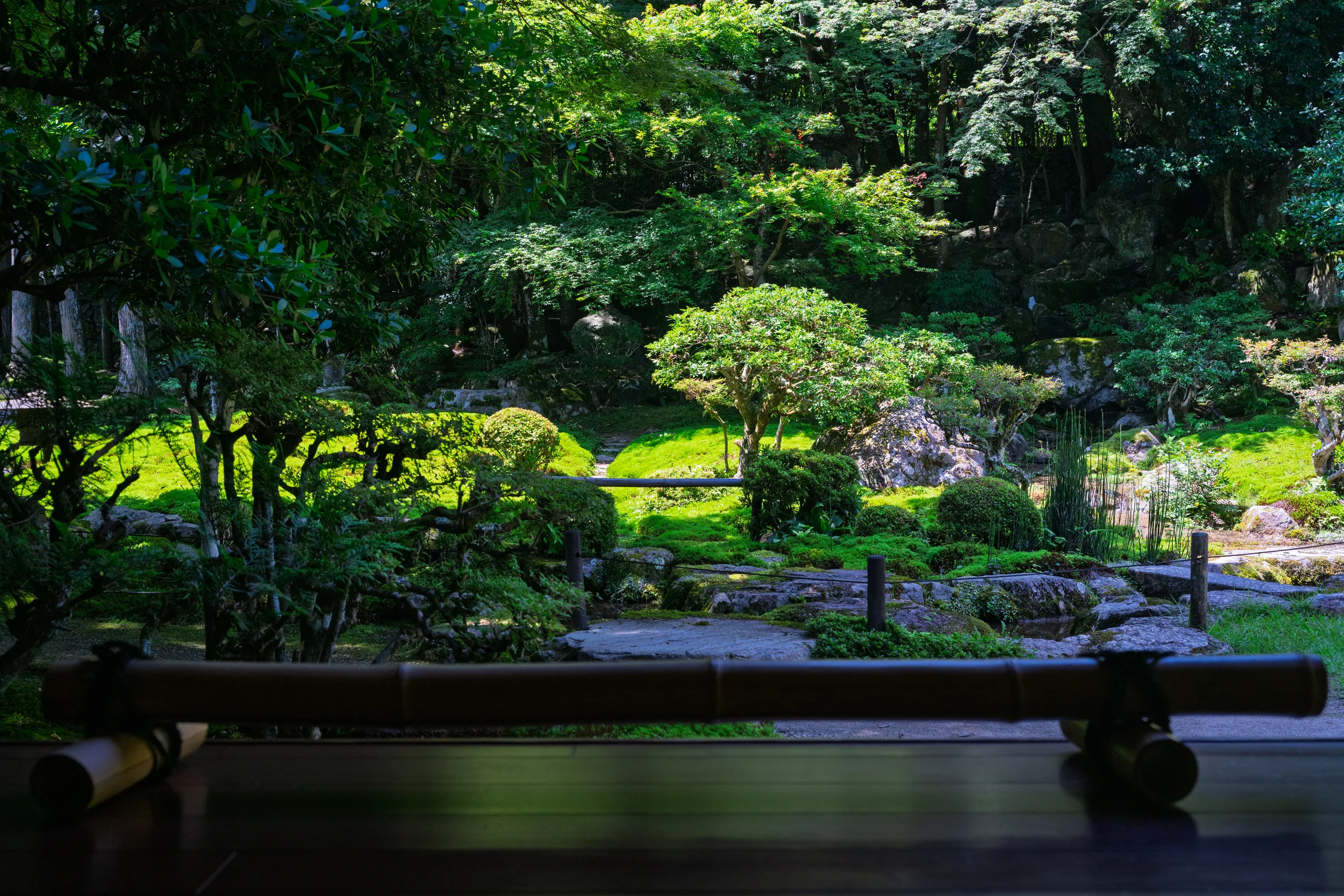
The room opens before the reflection
FORMER CHIKURIN-IN / VERANDA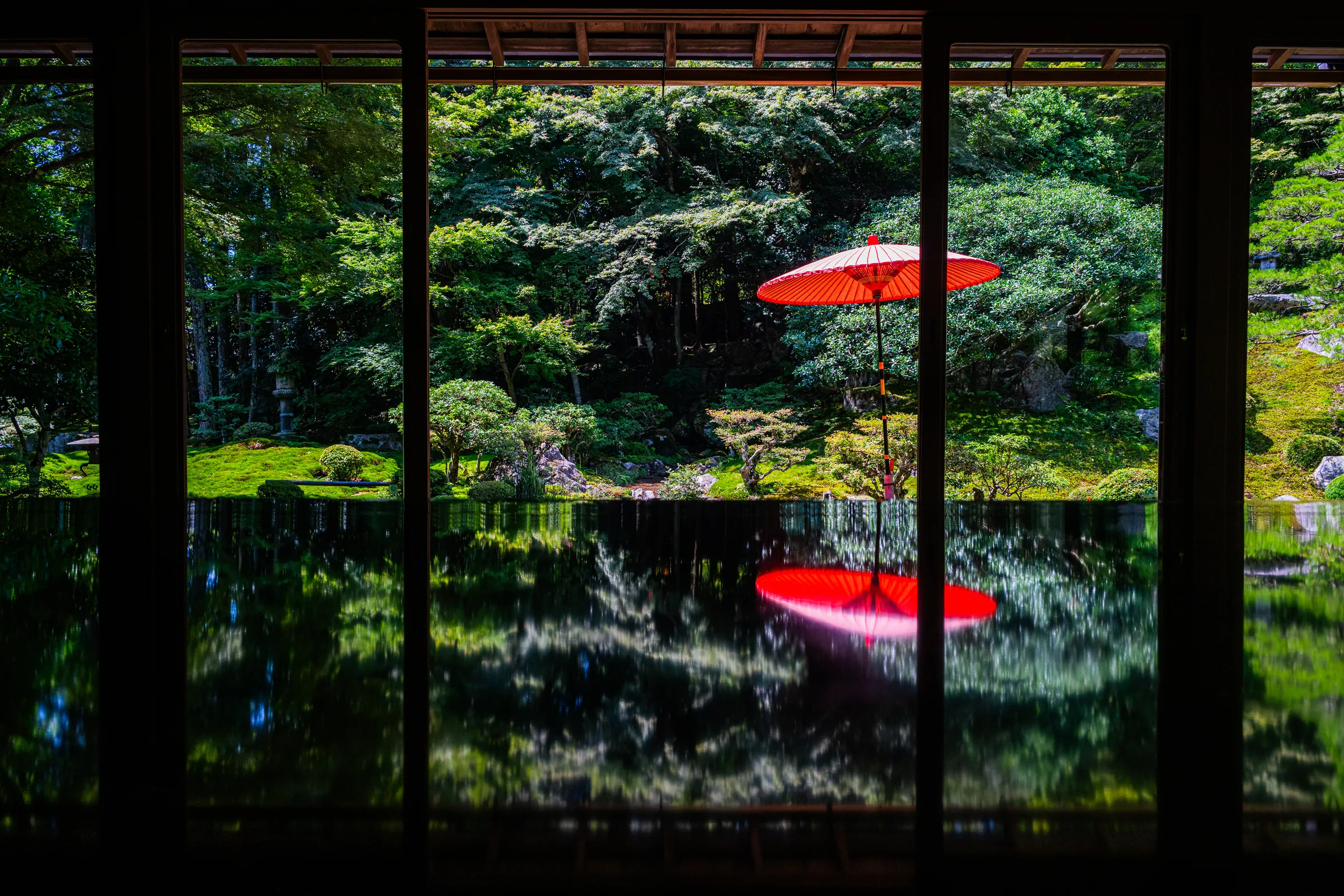
The garden enters the room
FORMER CHIKURIN-IN / SAKAMOTO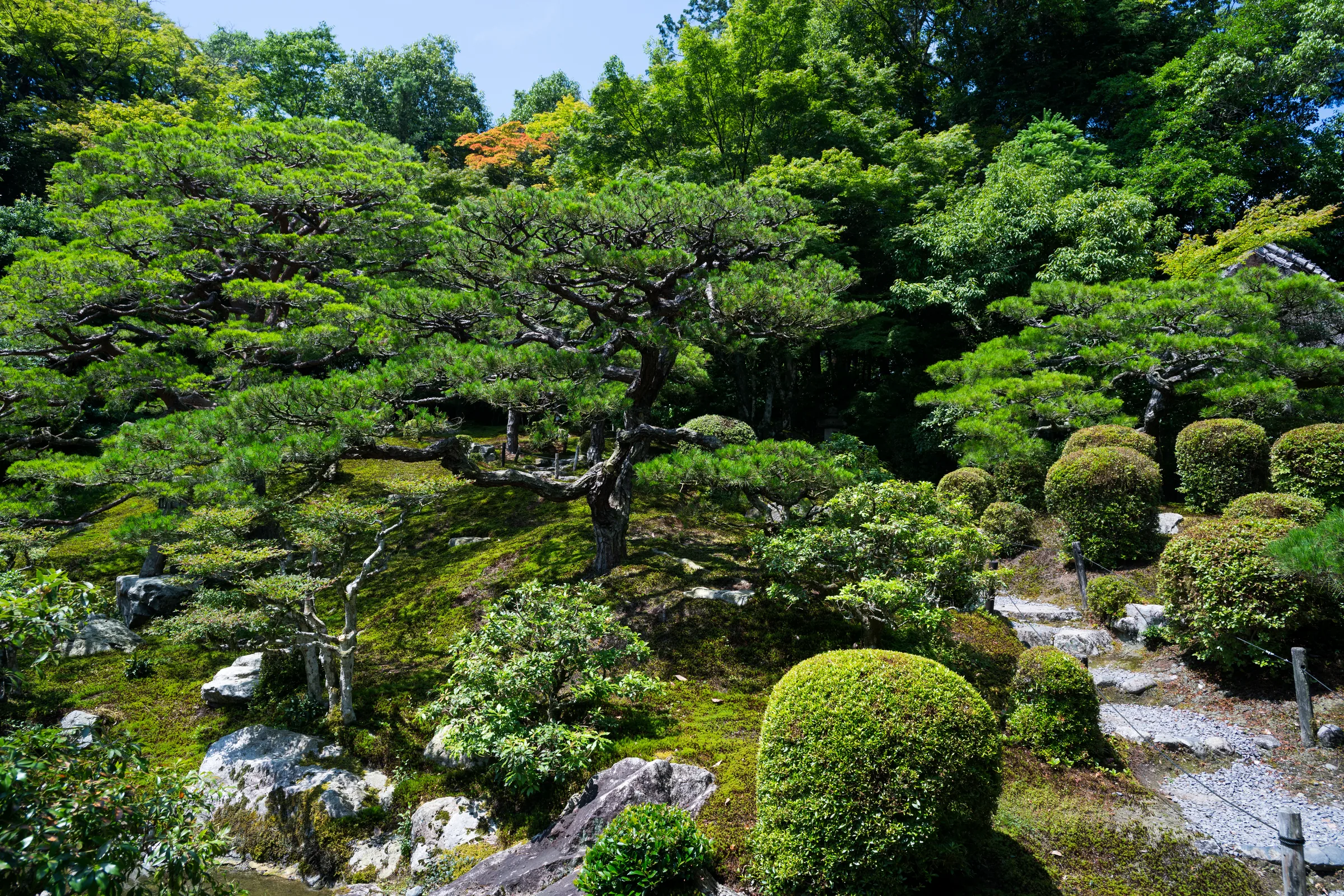
The garden after the mirror
FORMER CHIKURIN-IN / GARDEN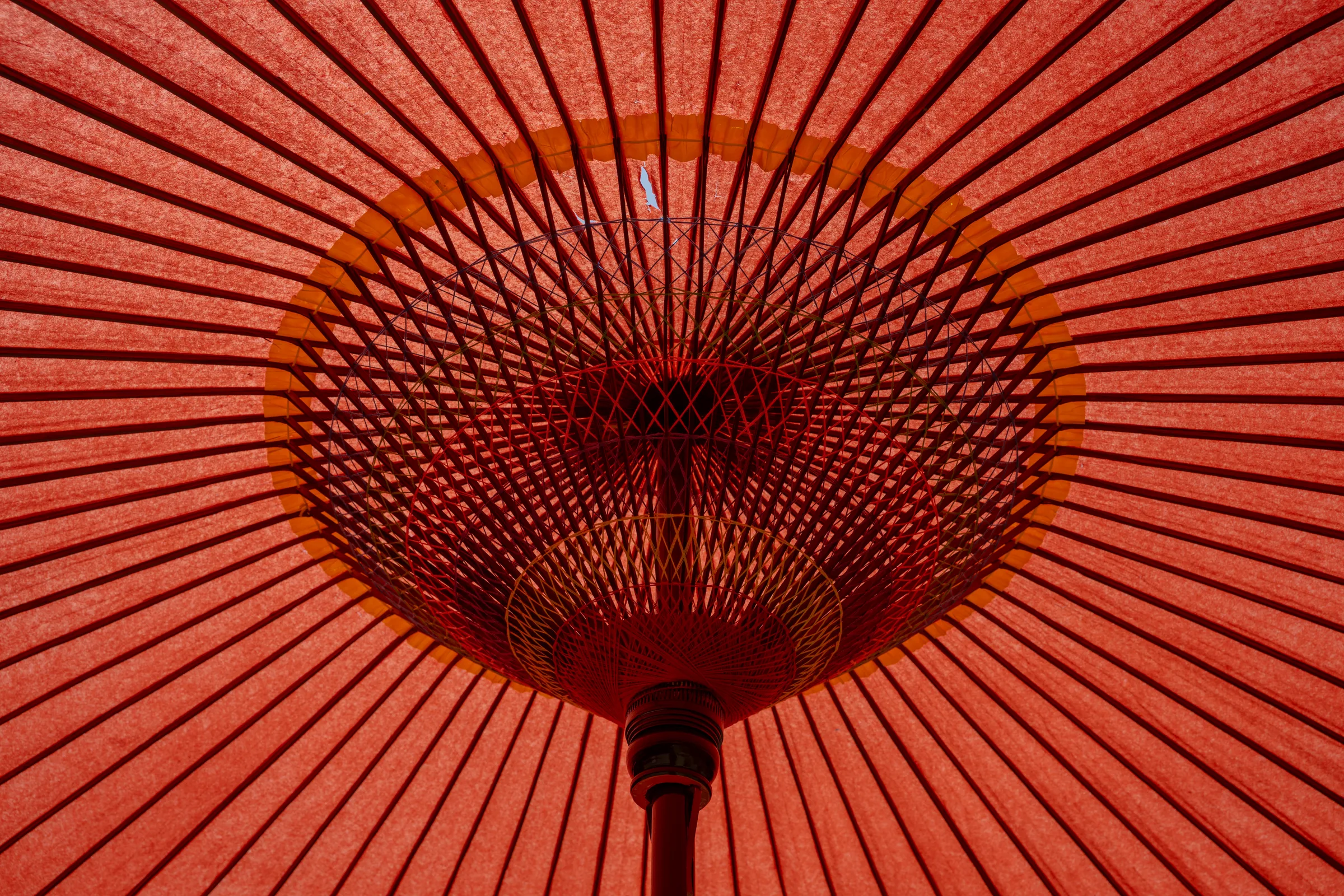
The red inside the reflection
FORMER CHIKURIN-IN / PARASOL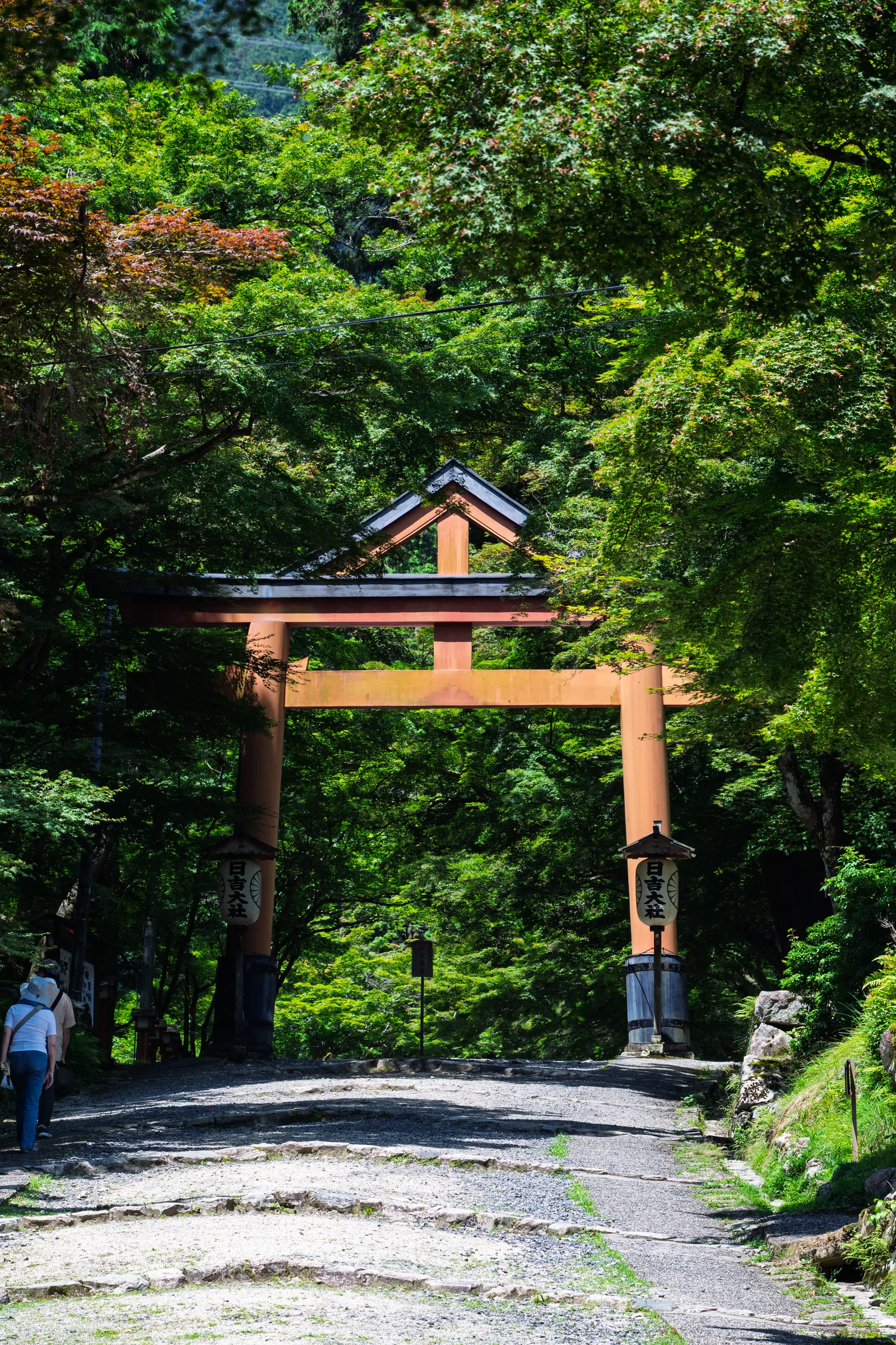
The road leaves through a gate
SAKAMOTO / SHRINE ROAD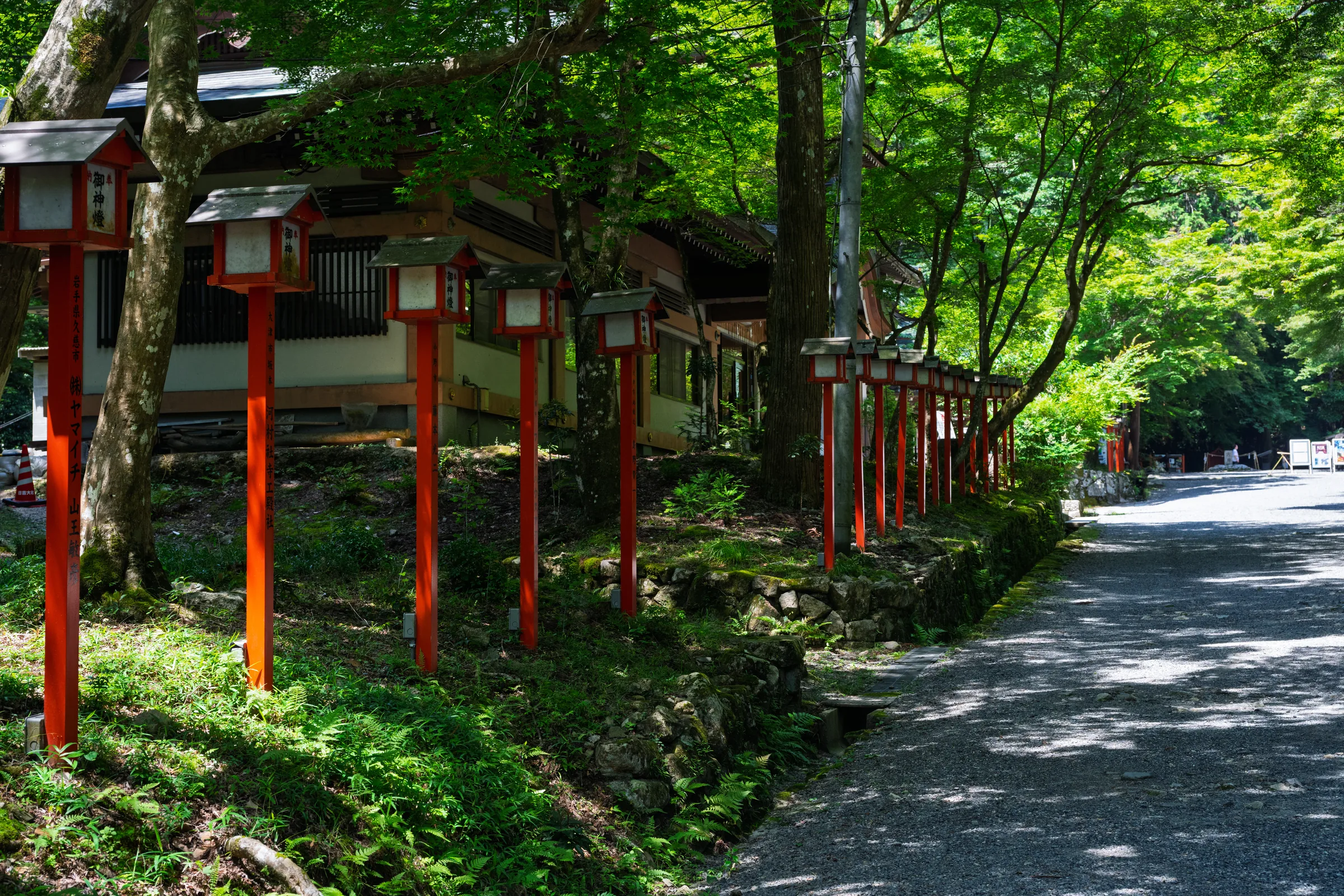
Lanterns mark the roadside
SAKAMOTO / APPROACH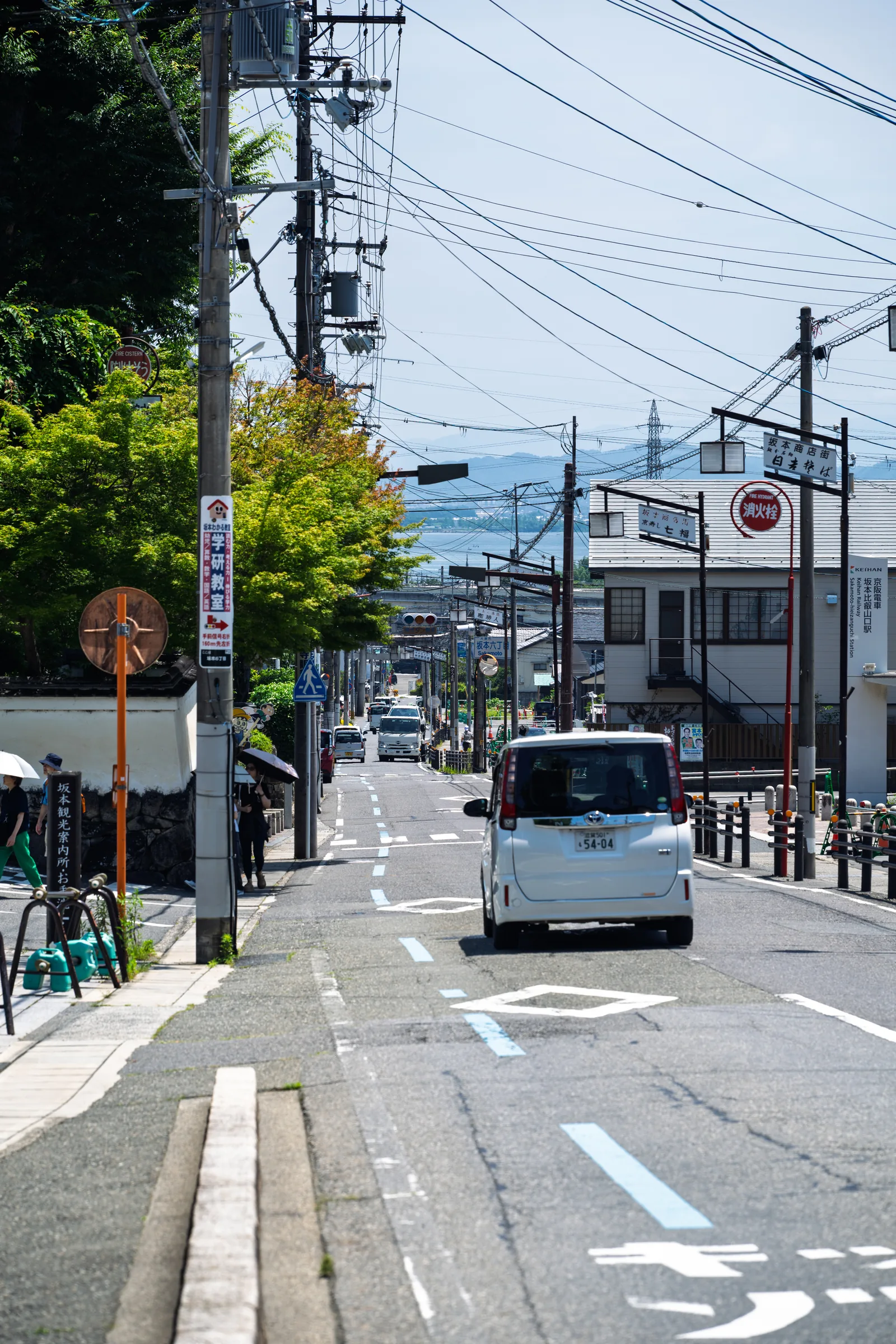
Downhill, toward the lake
SAKAMOTO / LAKE BIWA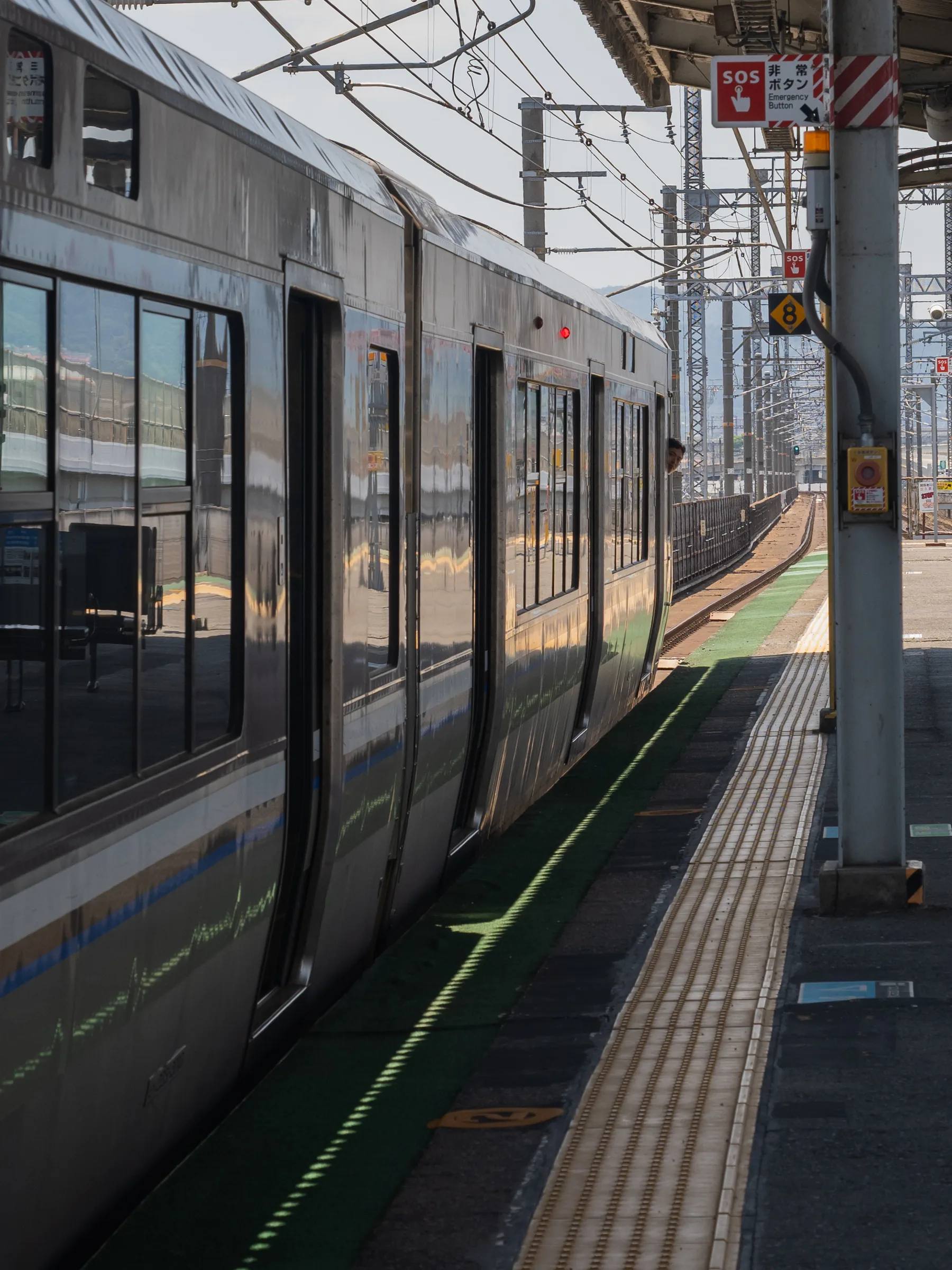
A local train pauses in the sun
LAKE BIWA LINE / PLATFORM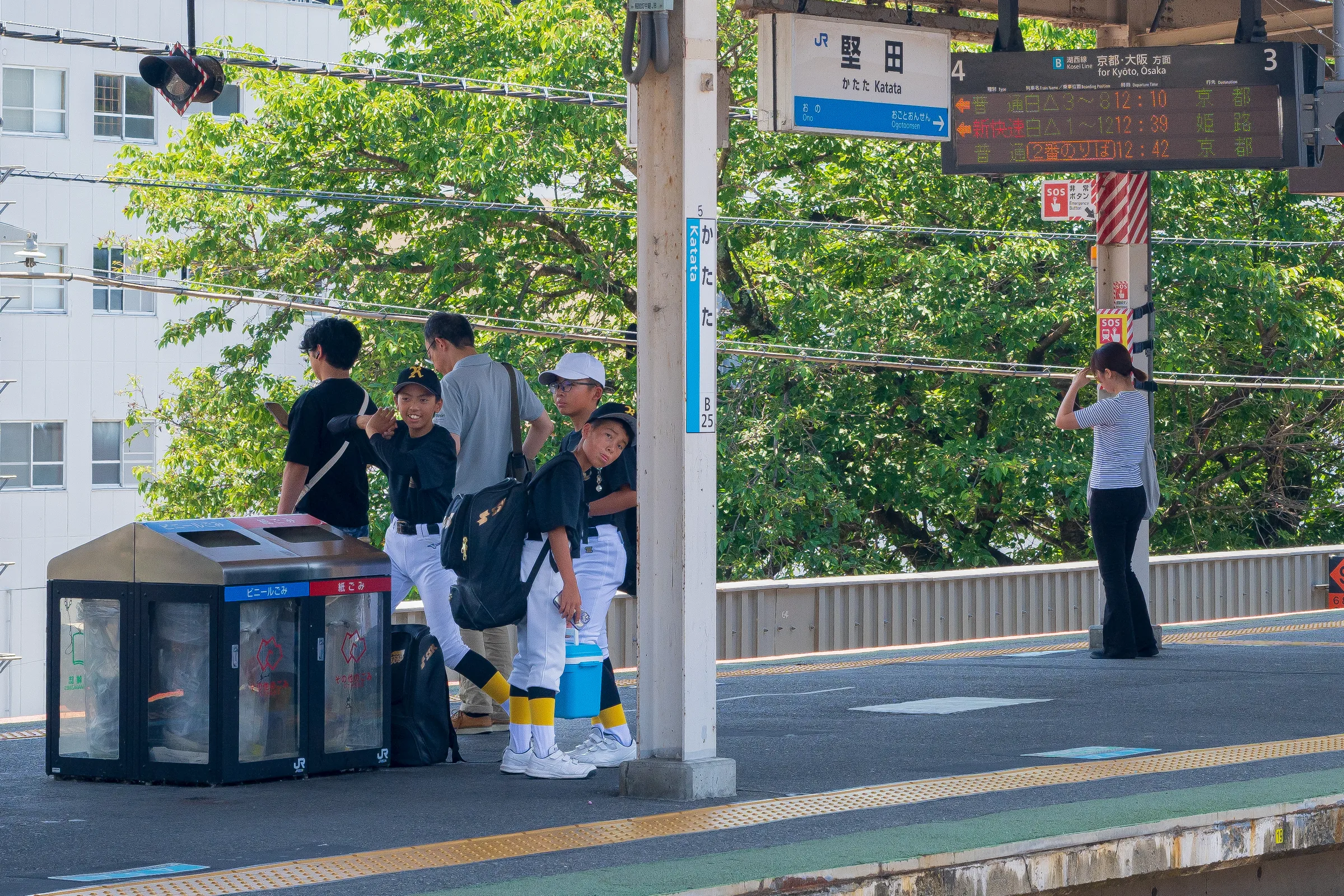
Between practice and the train
KATATA STATION / NOON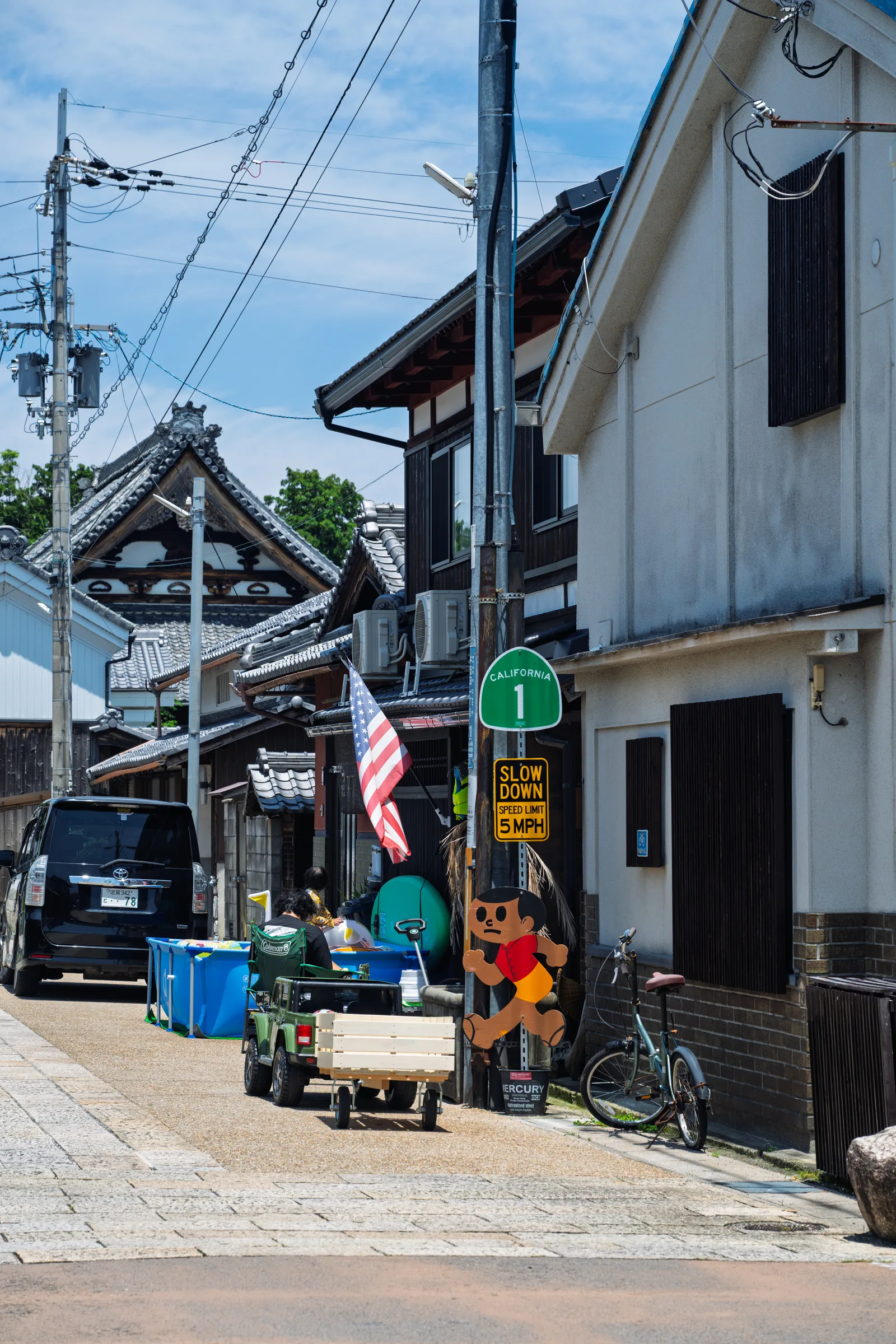
The town waits between trains
KATATA / STREET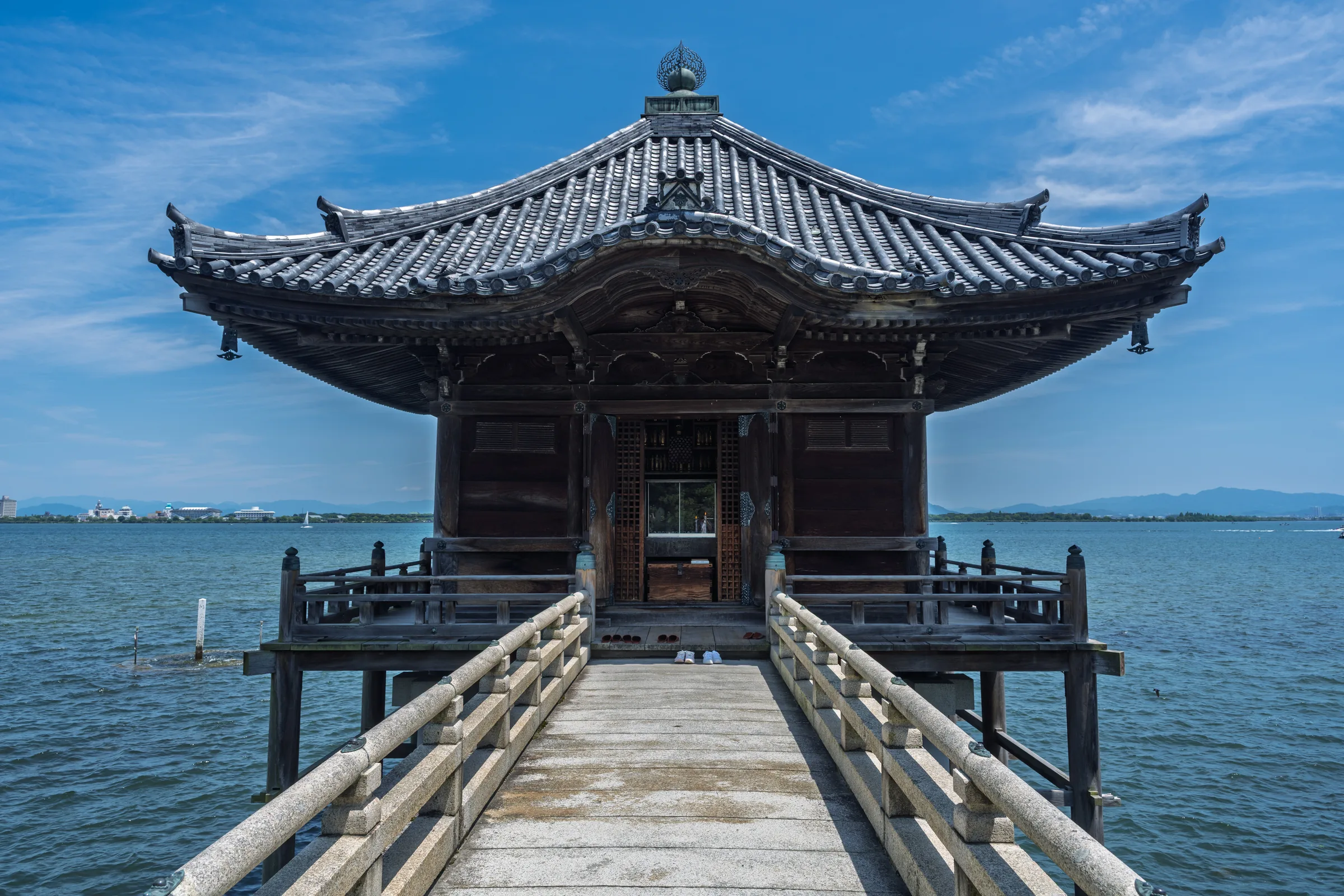
The hall over the water
UKIMIDO / LAKE BIWA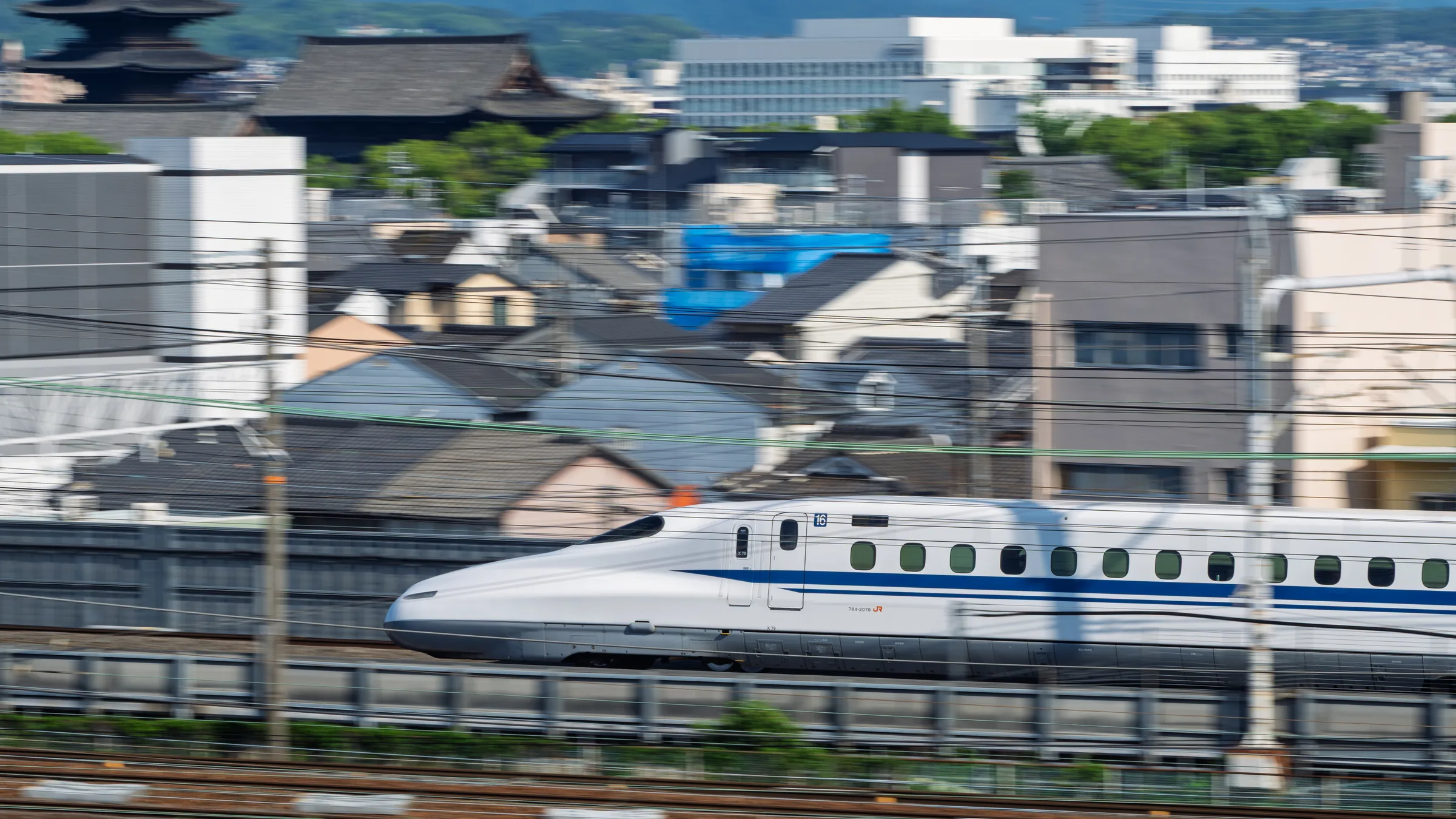
Kyoto moves behind it
TOKAIDO / SHINKANSEN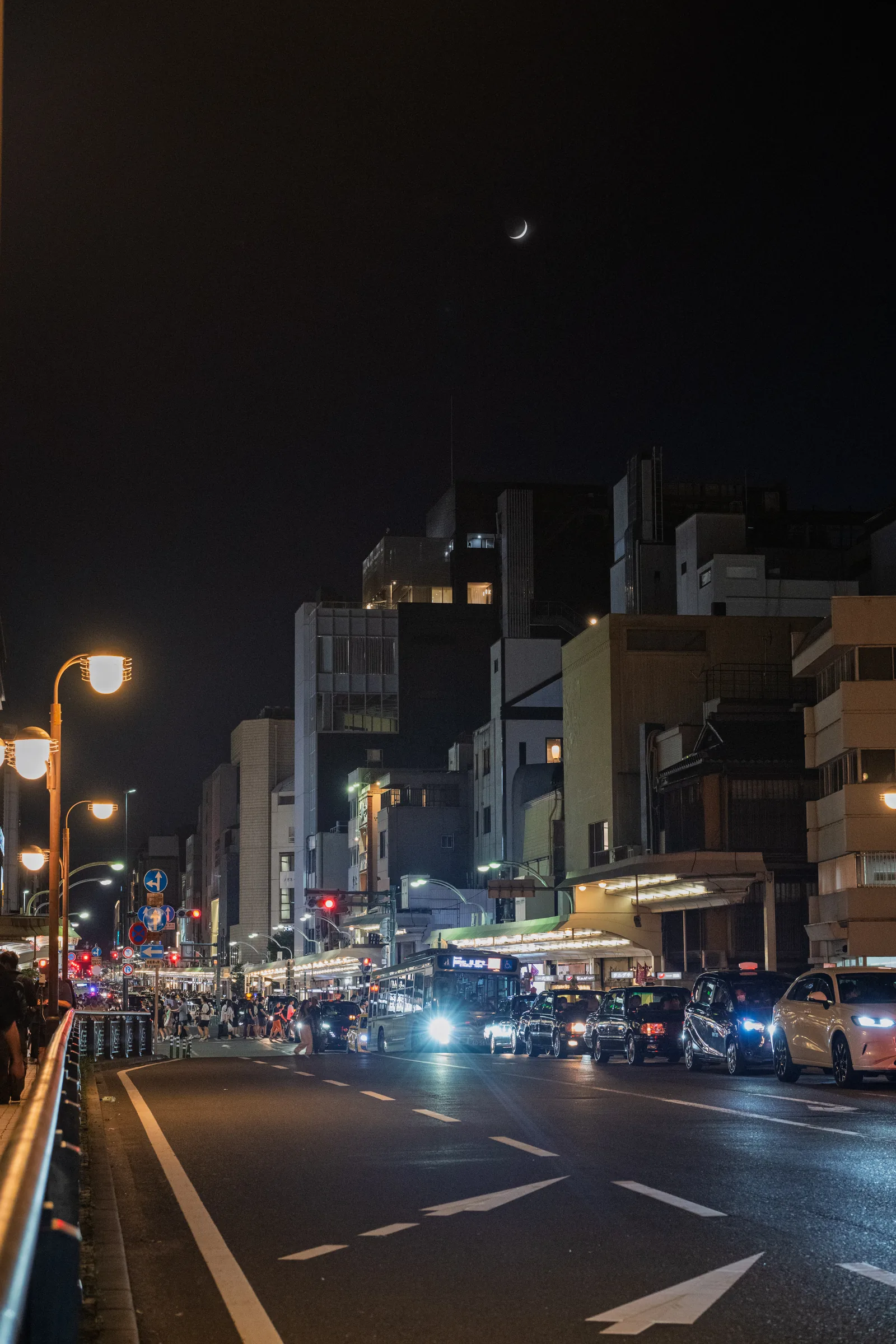
The road continues after dark
KYOTO / NIGHT ROADSouthbound, then neon
Omi-Hachiman began as a pause across the tracks, followed by the local train and the long white edge of platform eleven. The N700S announced itself in details—emblem, nose, crew—before delivering us into Osaka's thirty-one-degree afternoon. Shinsekai, the covered arcade, and Dotonbori compressed signs and bodies into a continuous current. A cook worked in the small bright theater of a shopfront; Shin-Osaka held the last platform of the night.
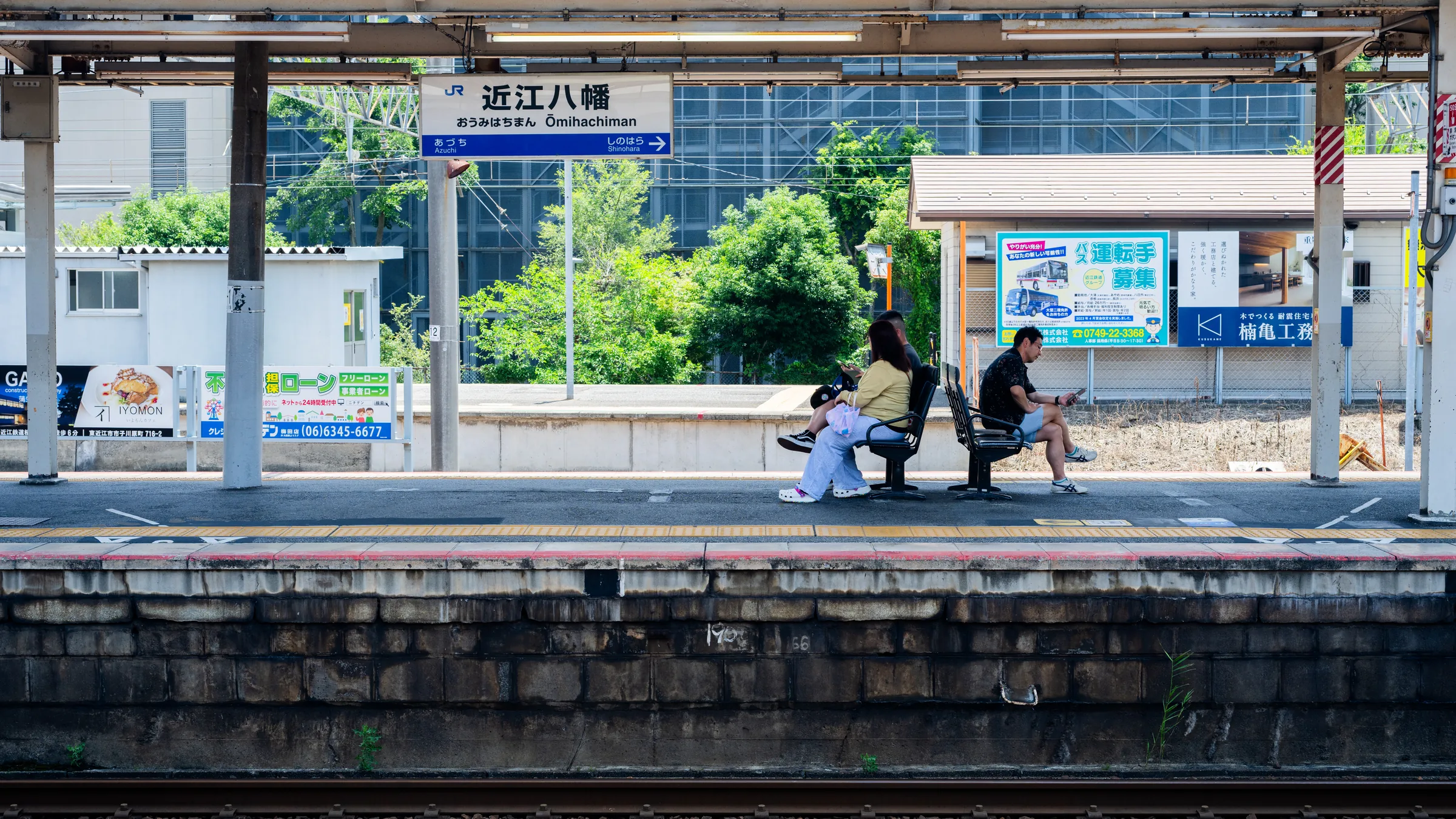
A station pause in Omi-Hachiman
OMI-HACHIMAN / PLATFORM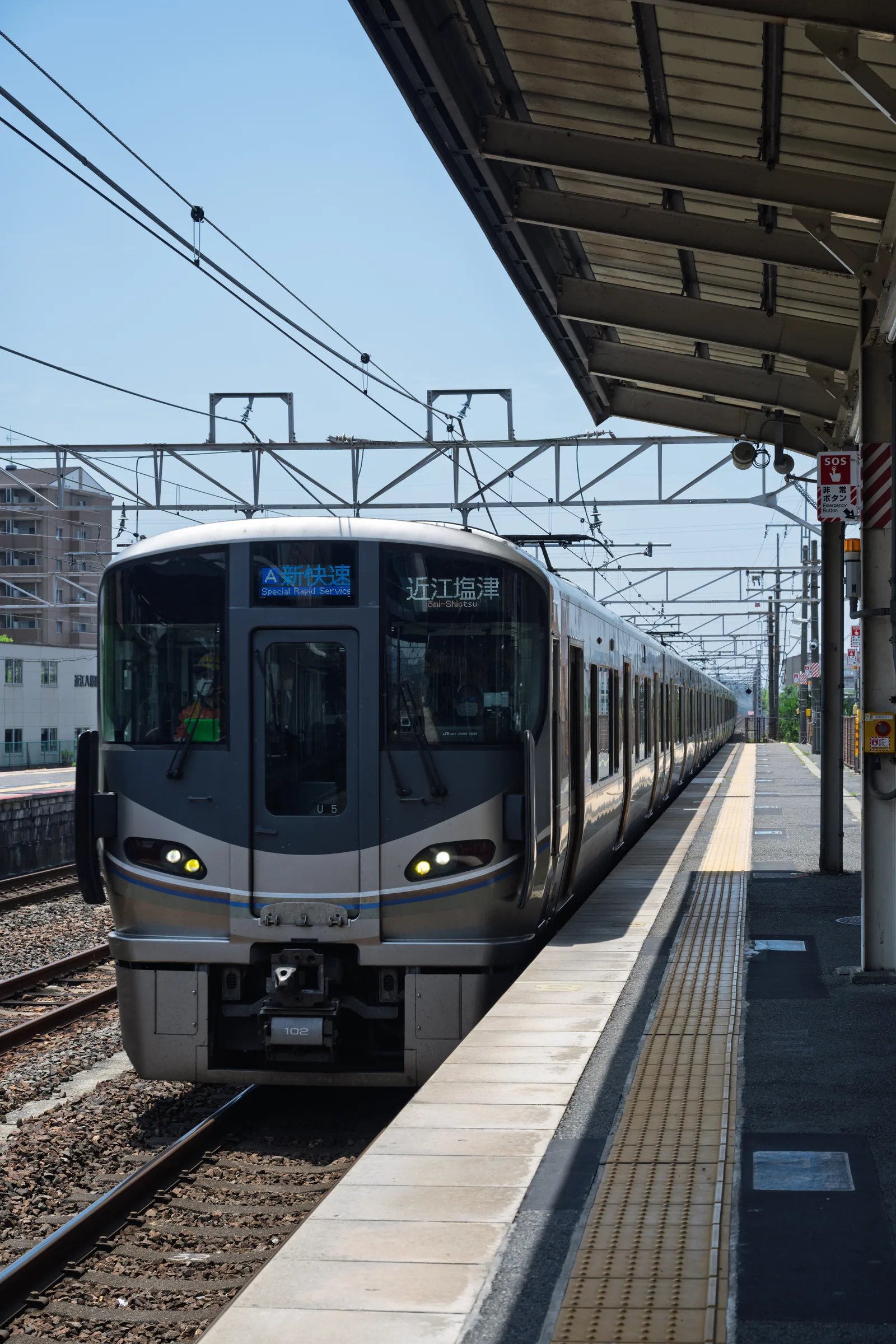
The local brings us to the transfer
OMI-HACHIMAN / LOCAL LINE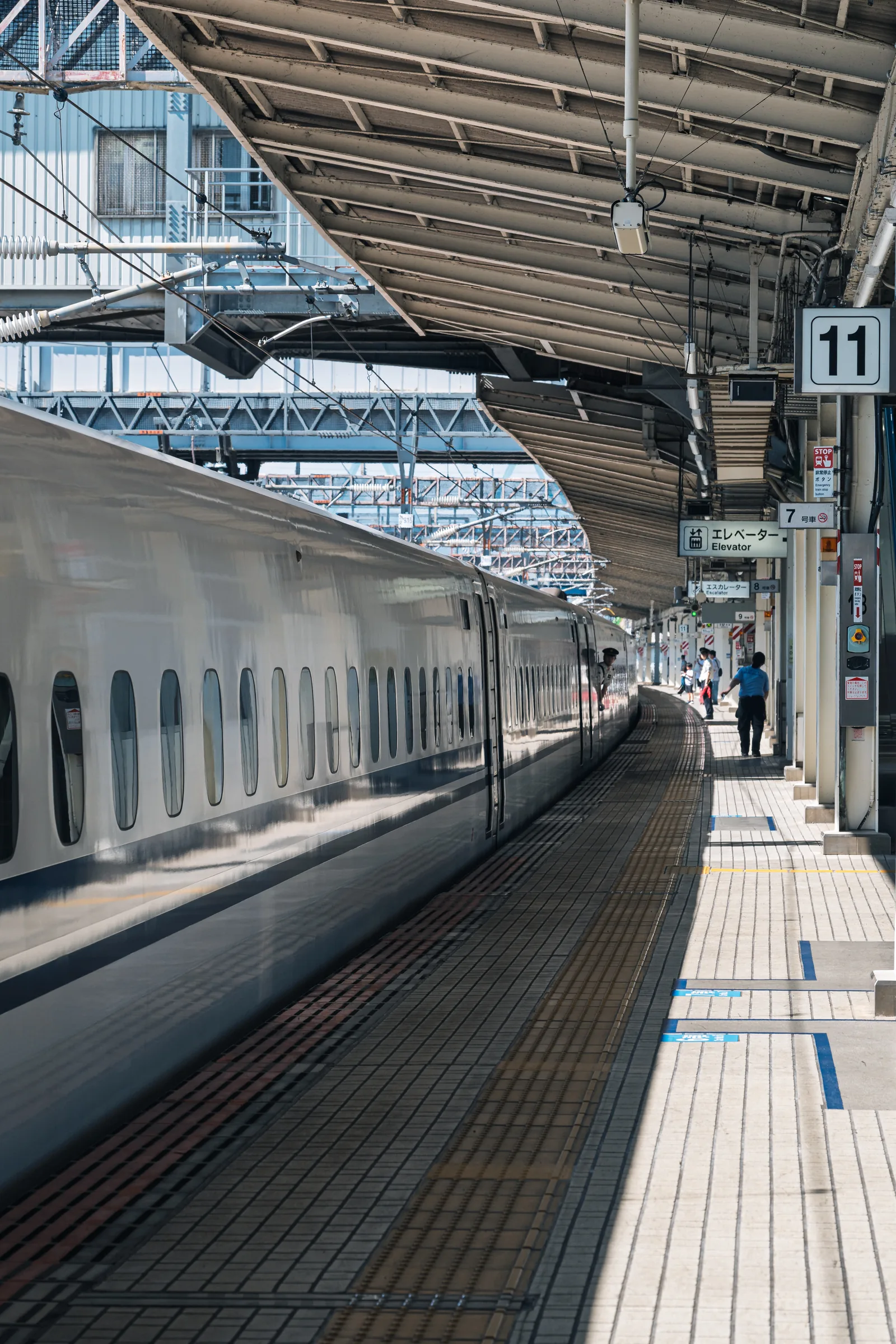
Platform eleven, before departure
KYOTO / SHINKANSEN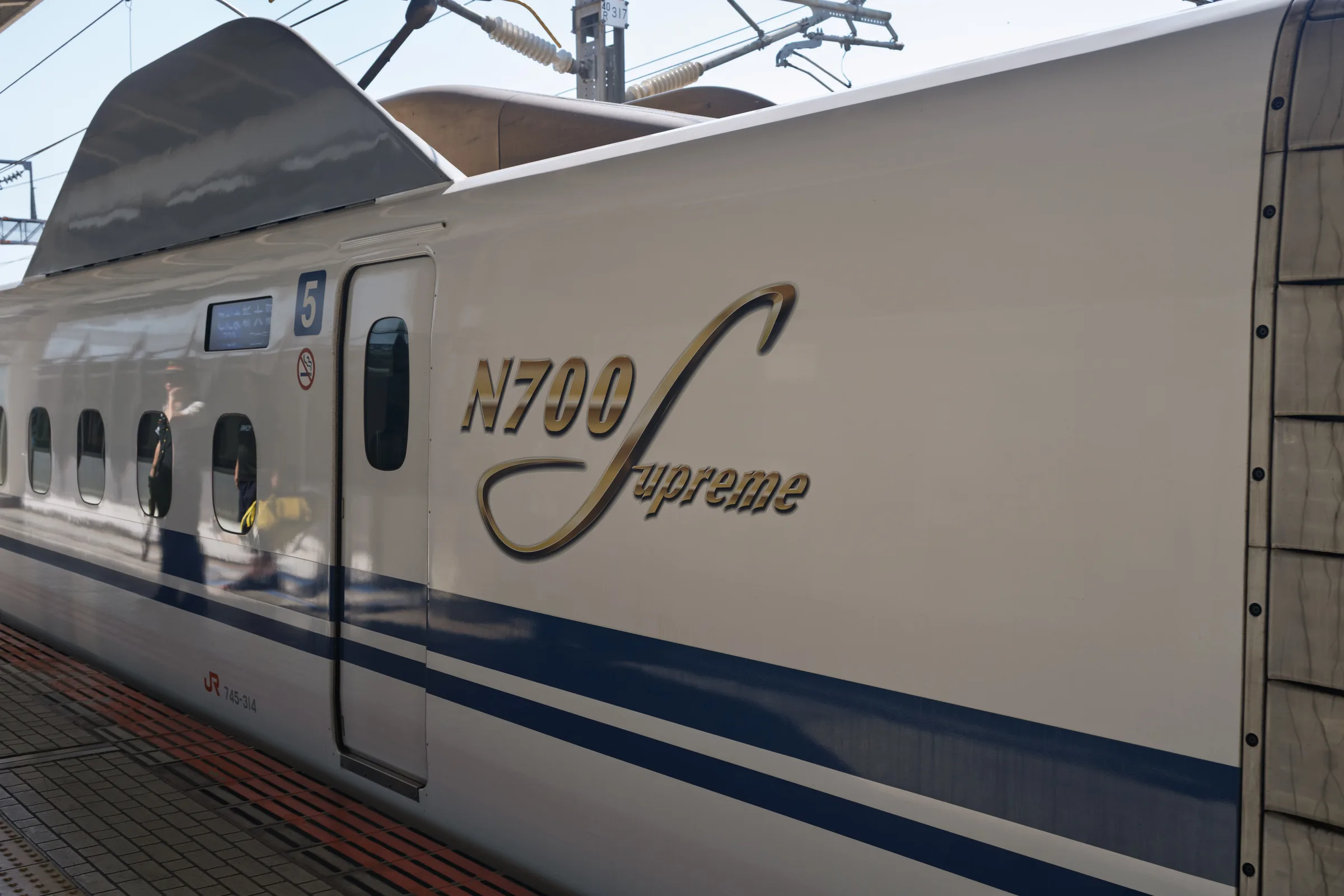
The newest train names itself
N700S / DETAIL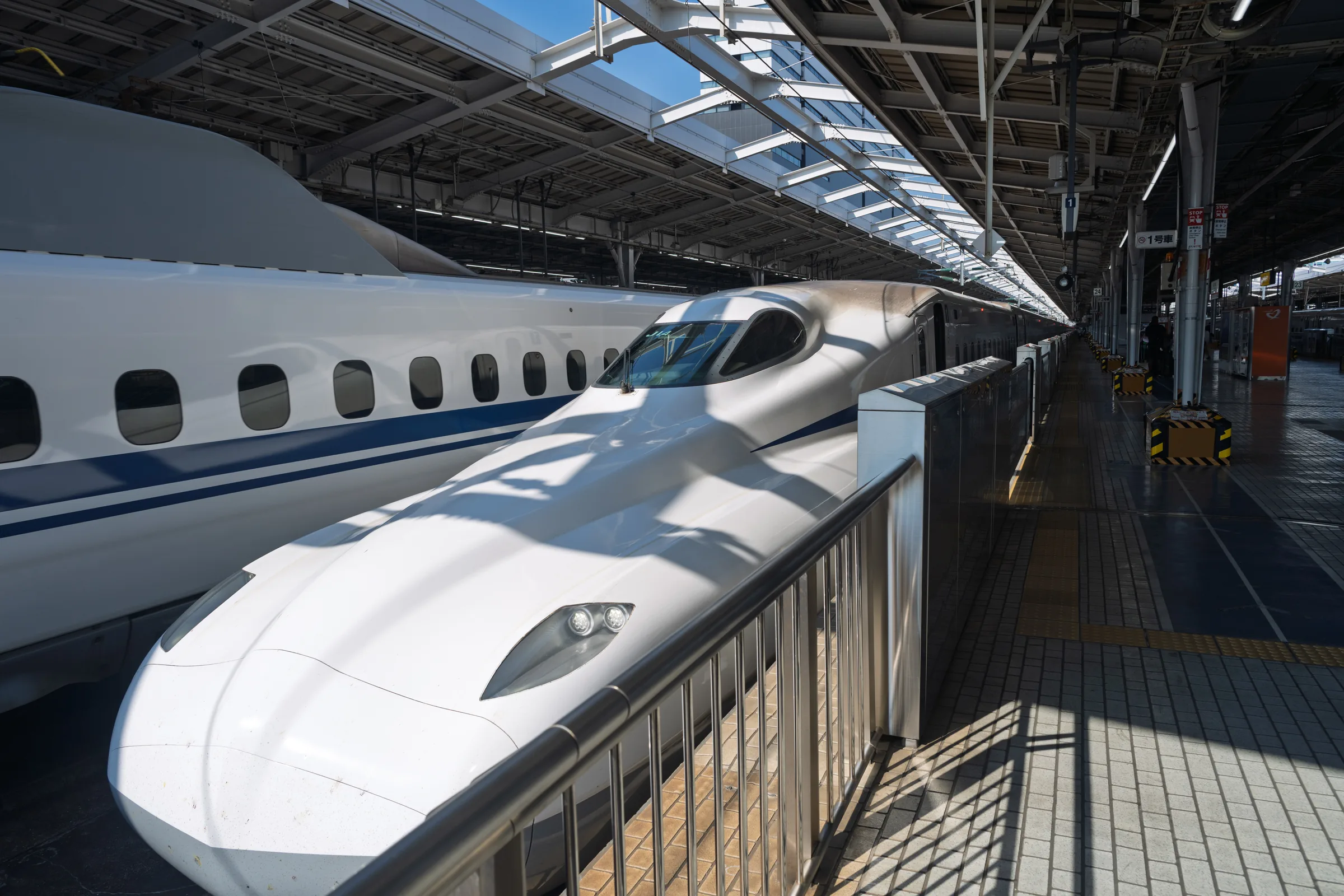
The nose catches the roof light
N700S / PLATFORM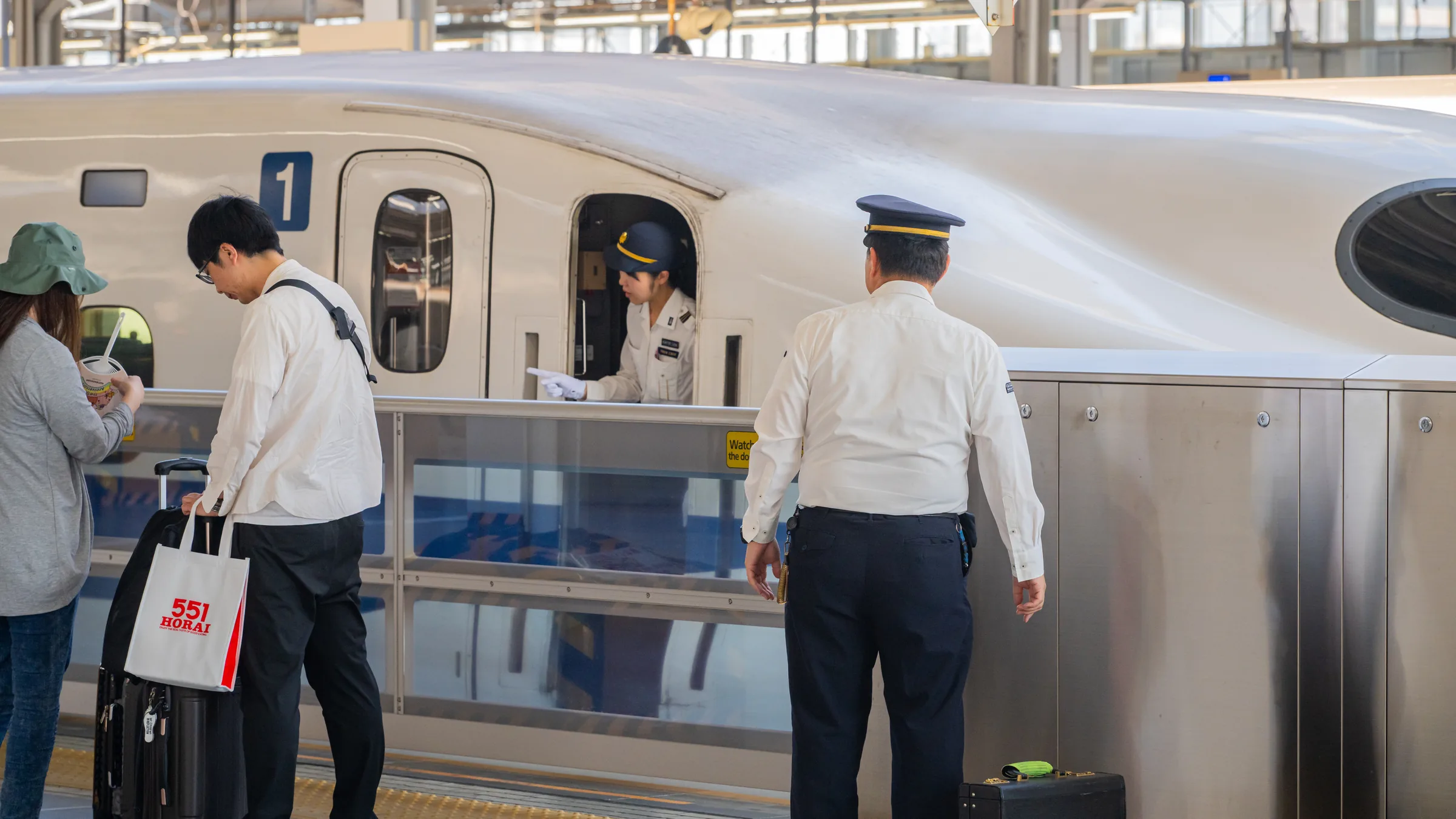
Departure is a practiced exchange
SHINKANSEN / CREW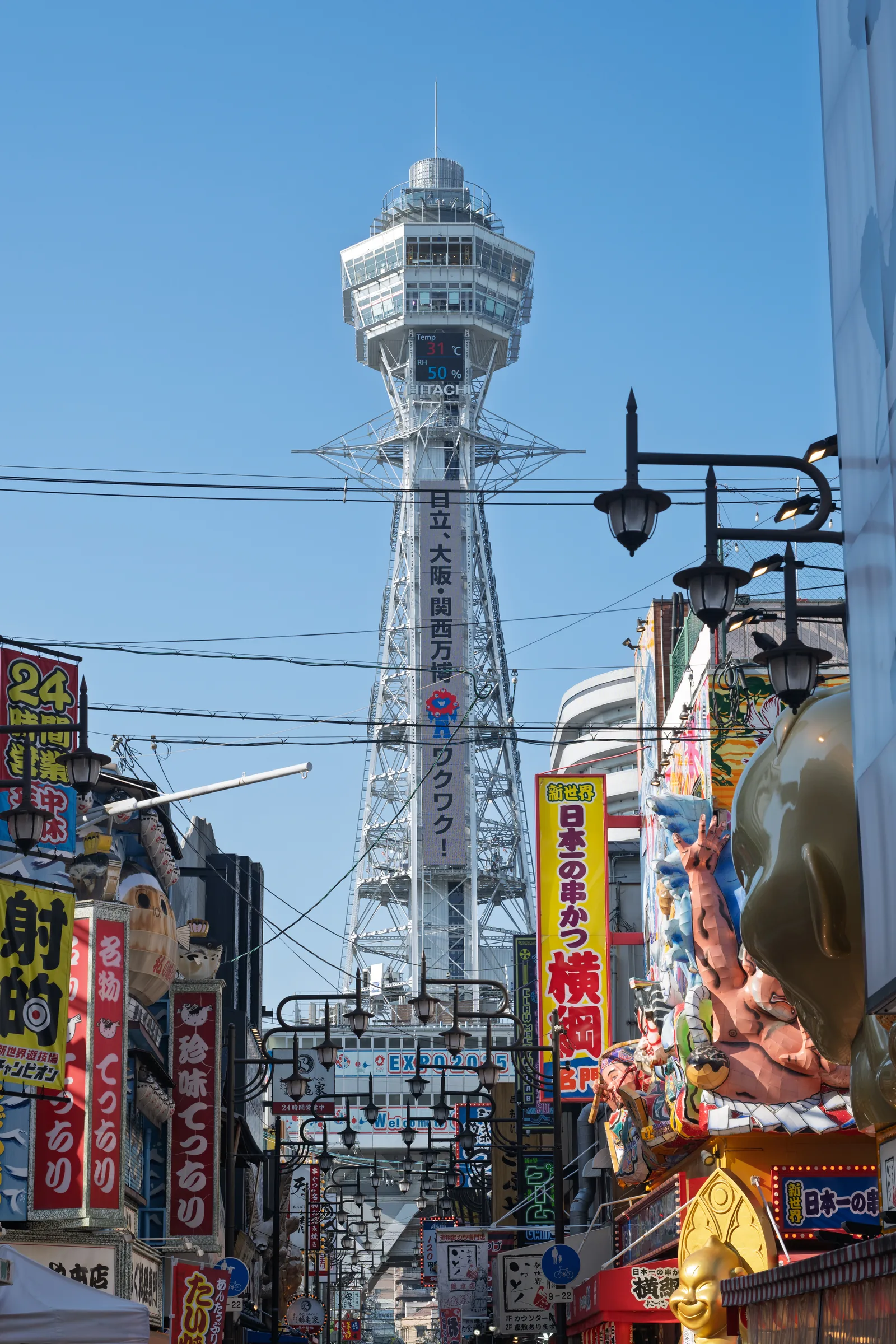
Thirty-one degrees beneath Tsutenkaku
SHINSEKAI / OSAKA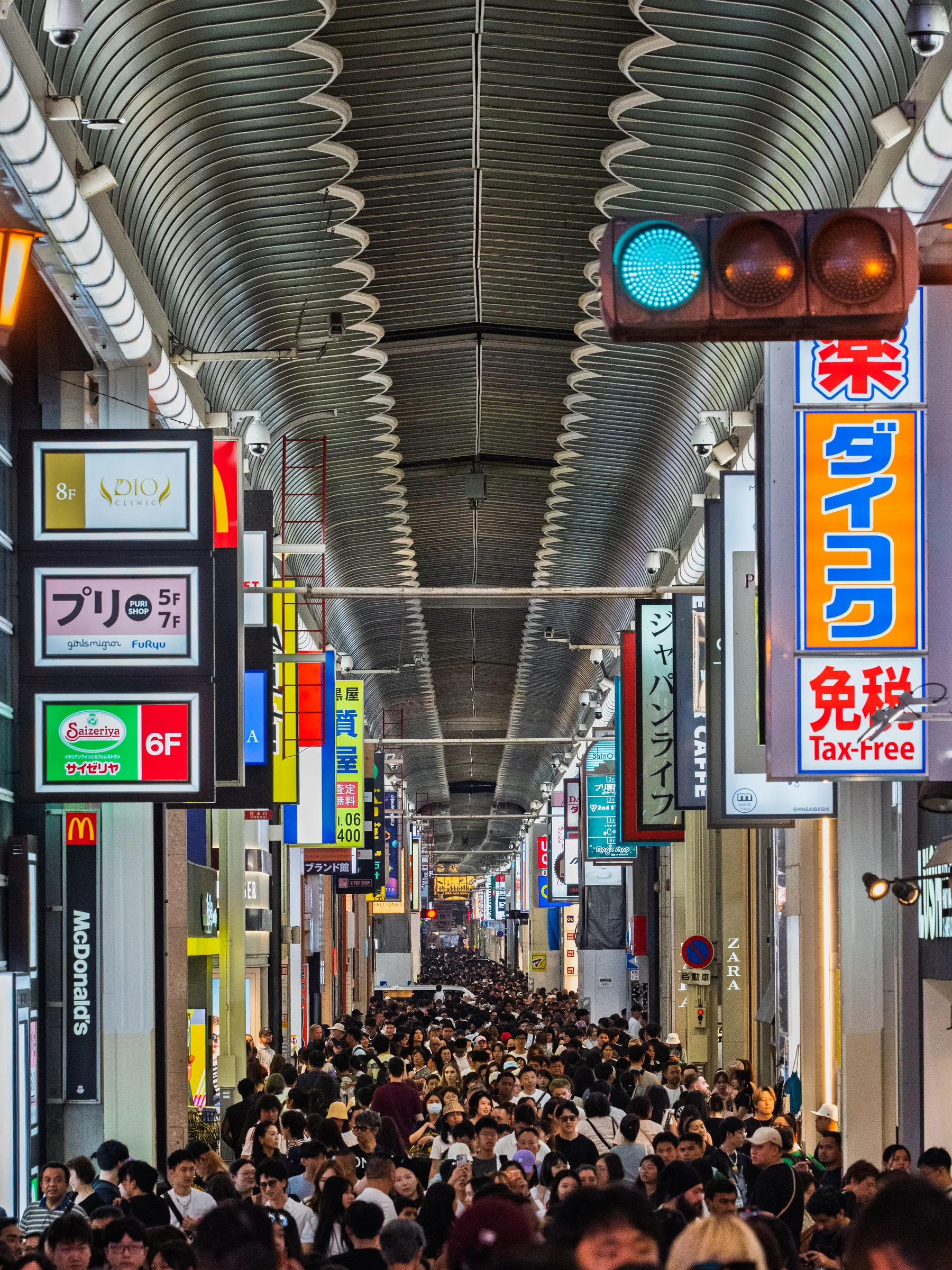
The crowd continues under cover
OSAKA / SHOPPING ARCADE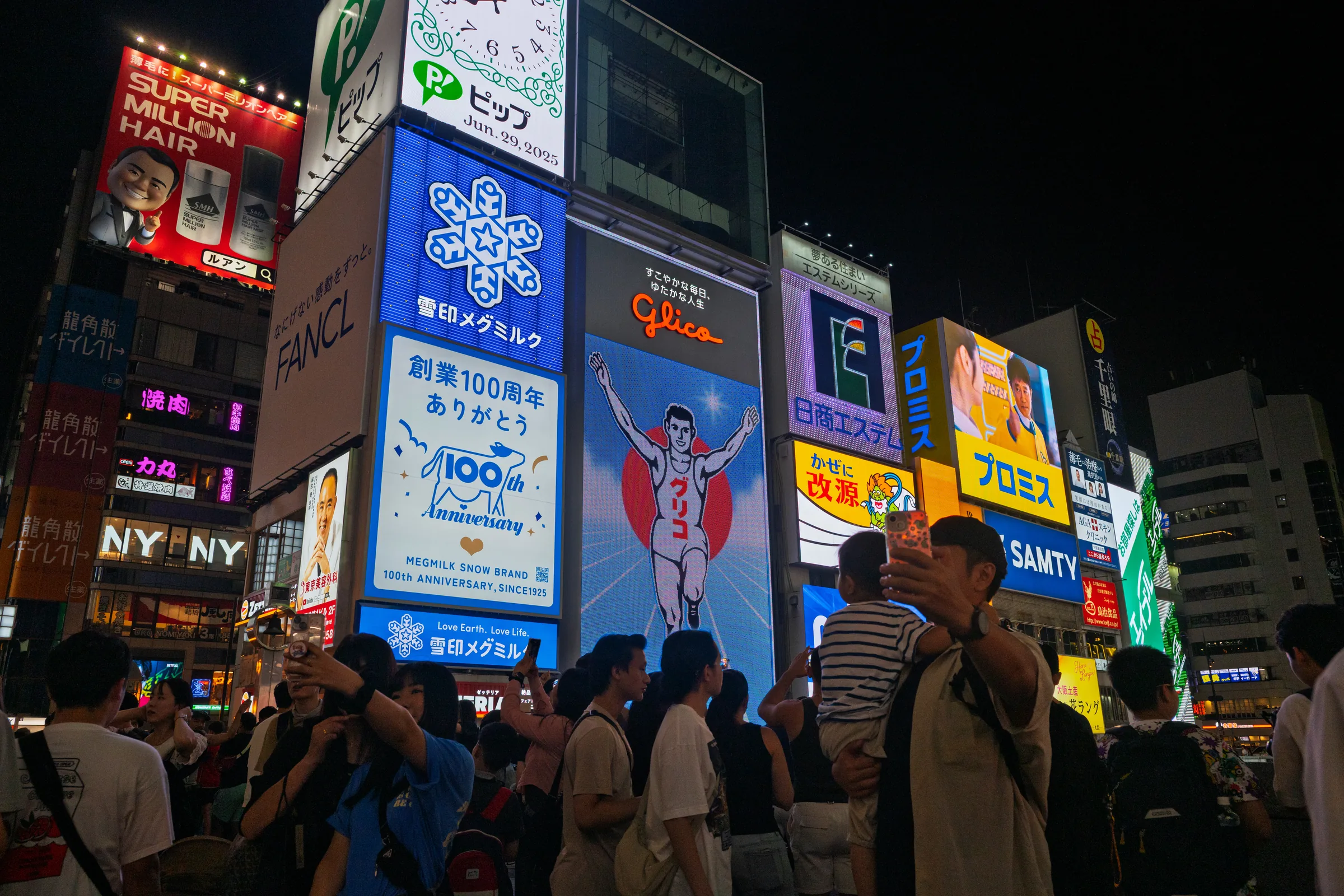
Everyone photographs the light
DOTONBORI / NIGHT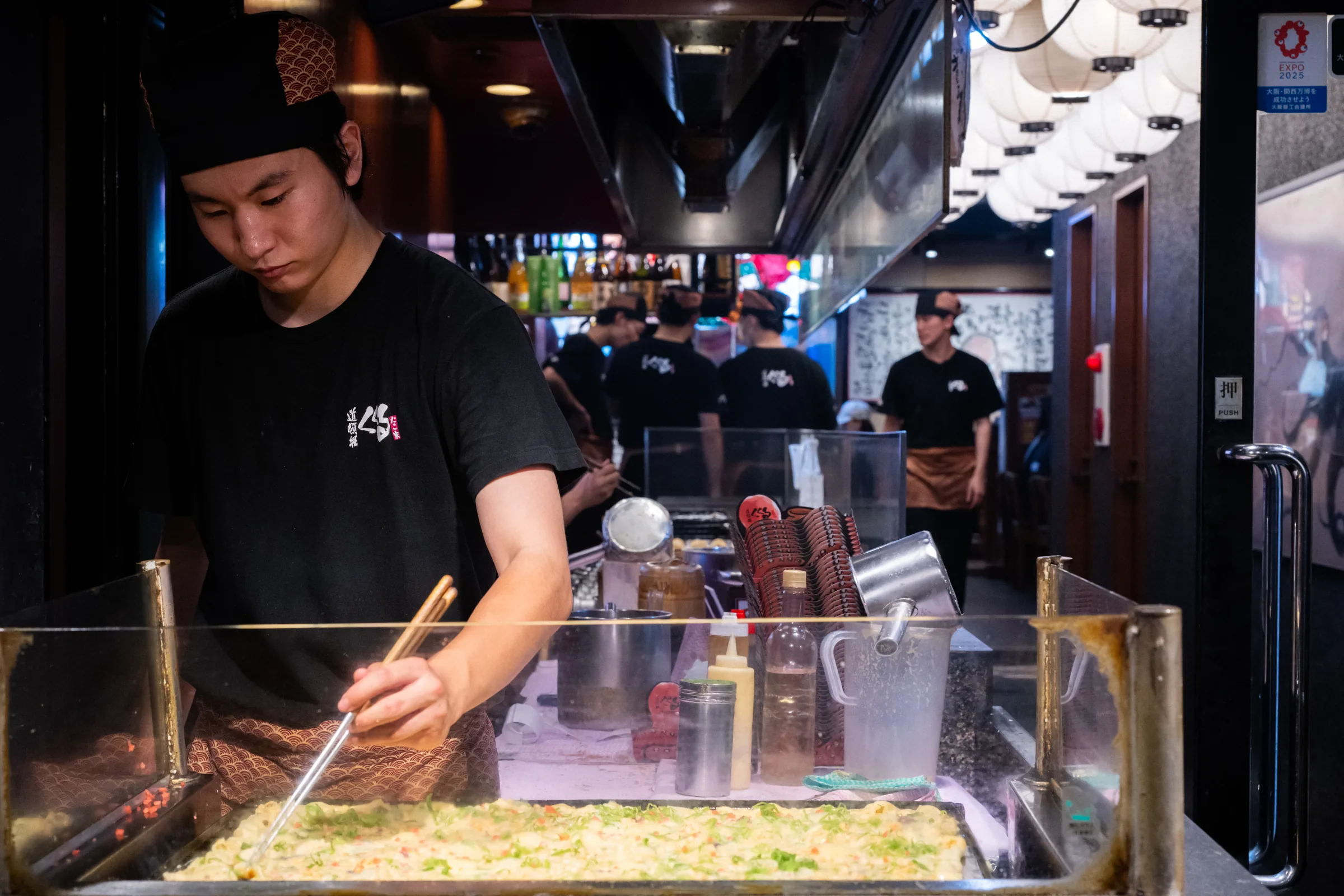
Dinner is made in public
DOTONBORI / TAKOYAKI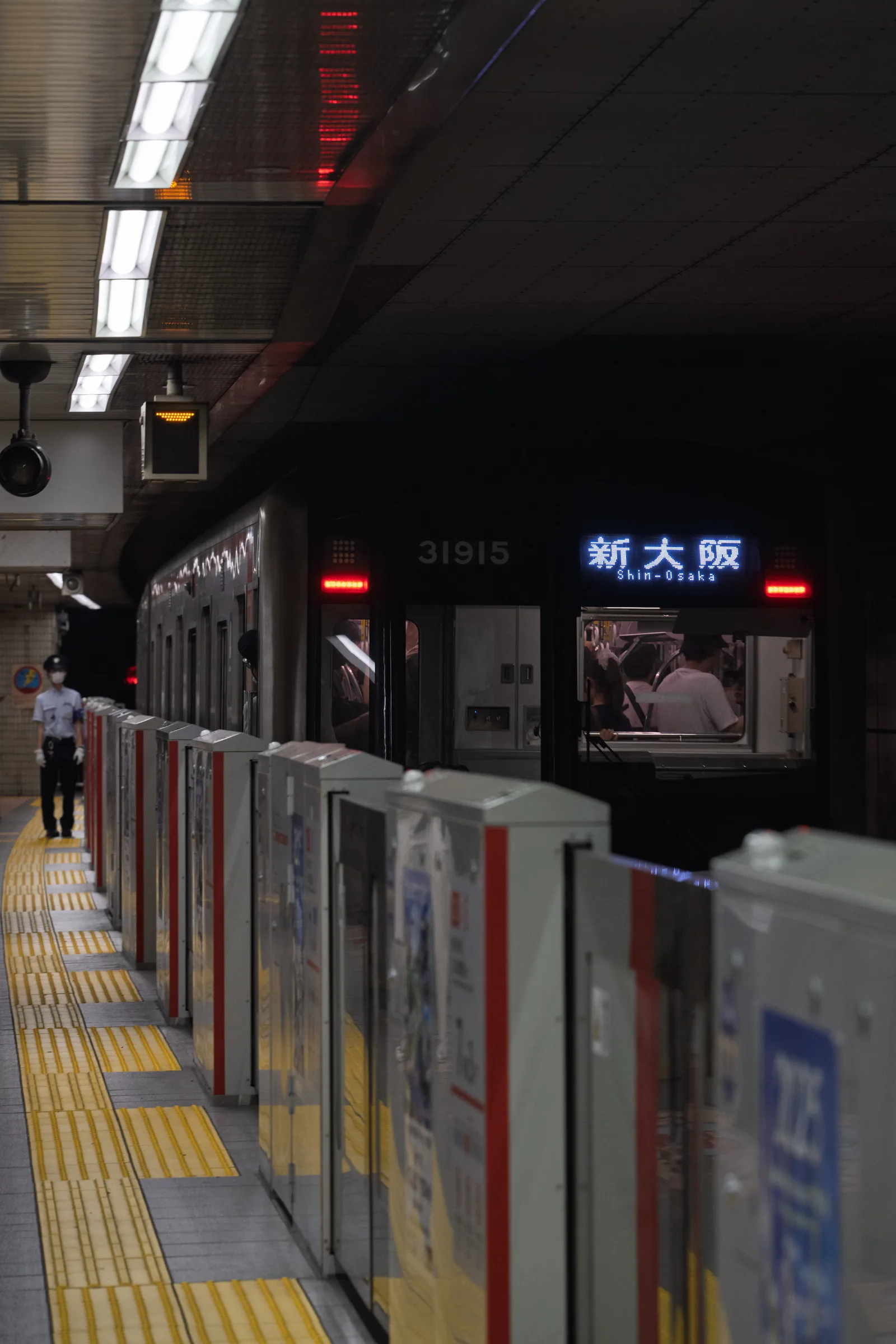
The last platform of the night
SHIN-OSAKA / PLATFORMA fortune appears in water
By late afternoon, Kifune's lanterns were already lit beneath the trees. A fortune revealed itself in water, but the shrine stayed with me as a sequence of thresholds: prayer at the first steps, wishes tied beneath the branches, torii opening onto further torii, and lanterns suspended in the blue hour. I appear once in the convex mirror; then the route returns to water—ladles, a spring, the quiet inner shrine, and the final staircase holding what light remained.
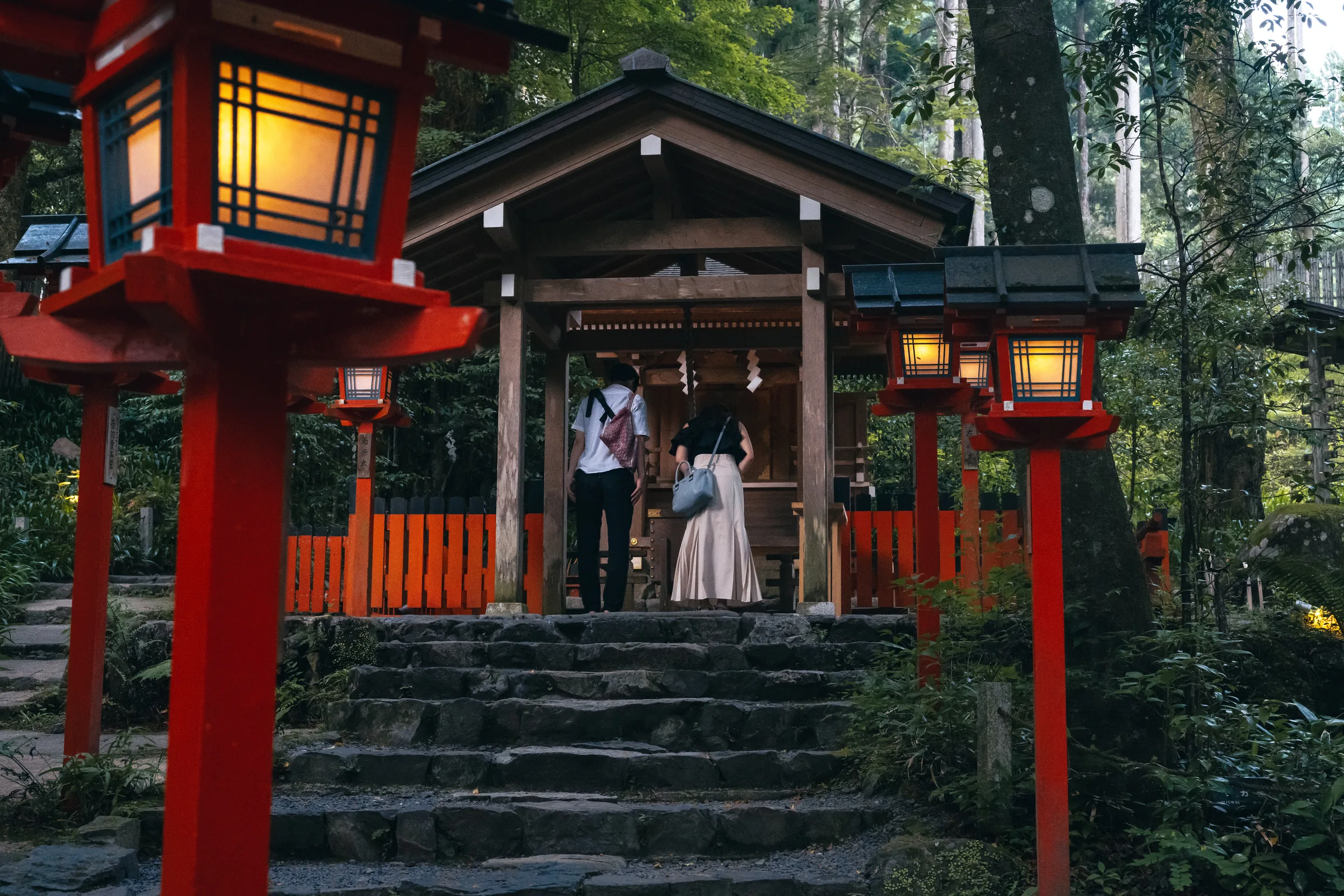
The mountain keeps its own light
KIFUNE SHRINE / EVENING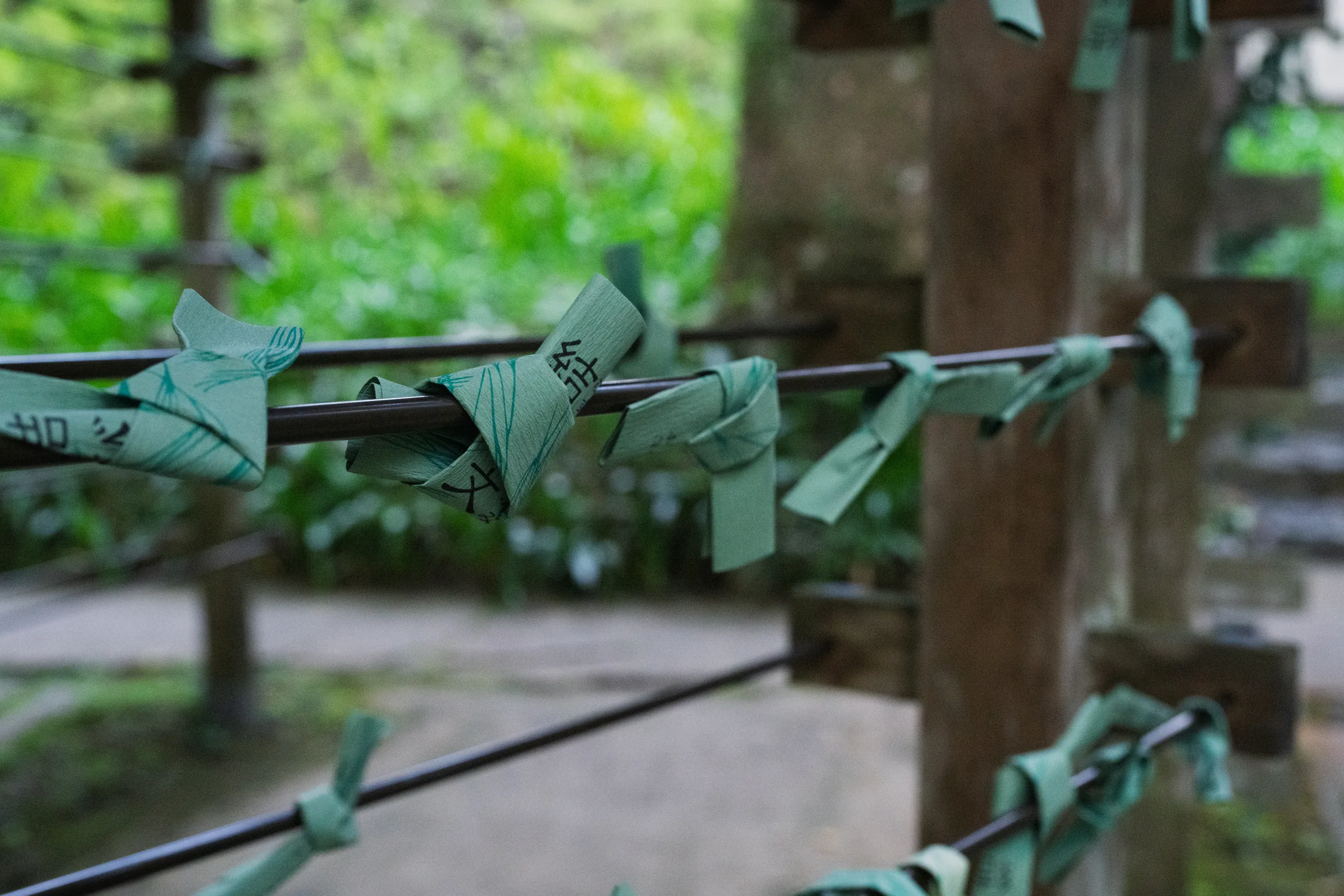
Fortunes tied beneath the trees
KIFUNE / OMIKUJI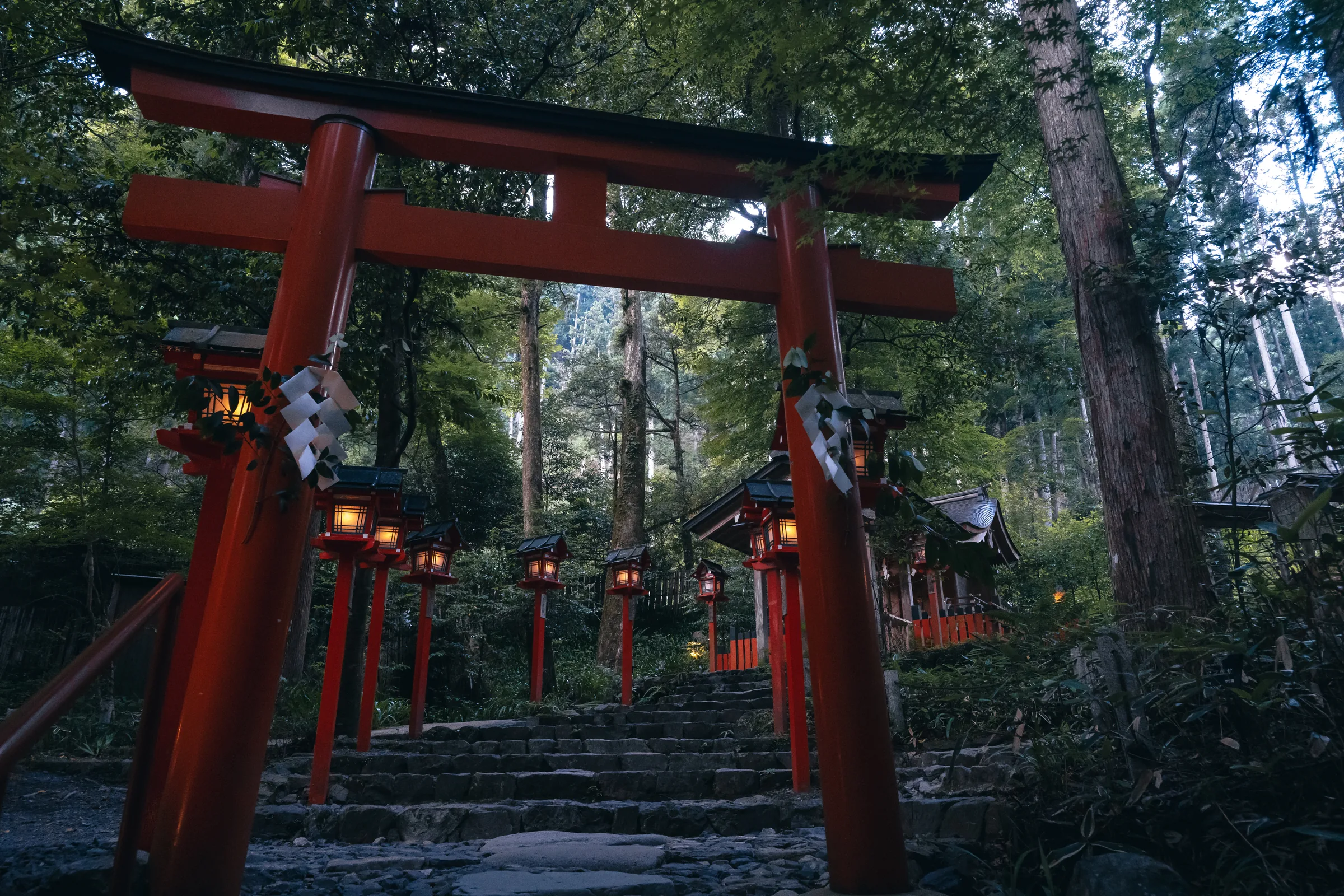
The gate begins the ascent
KIFUNE / TORII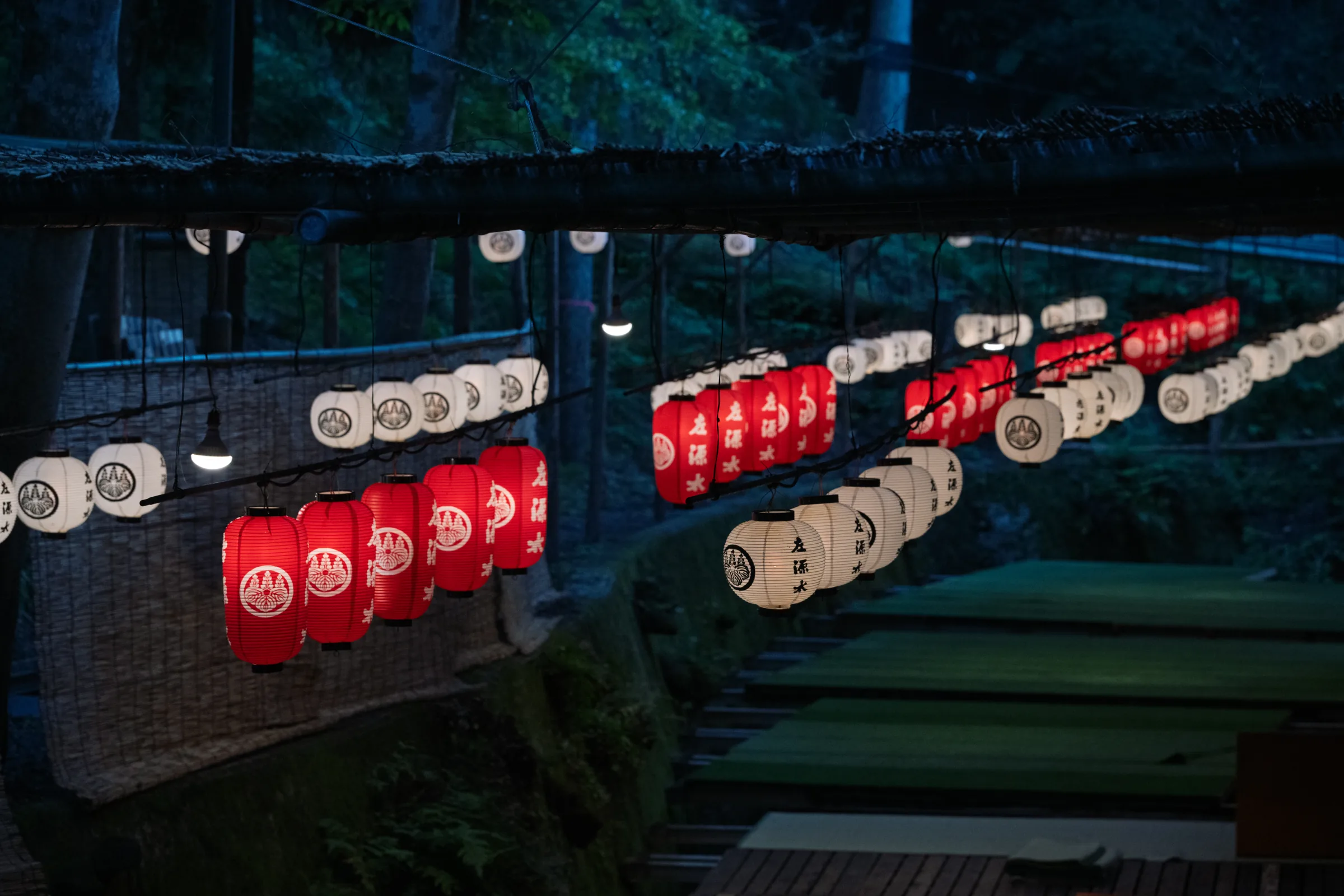
Lanterns hold the blue hour
KIFUNE / LANTERN CANOPY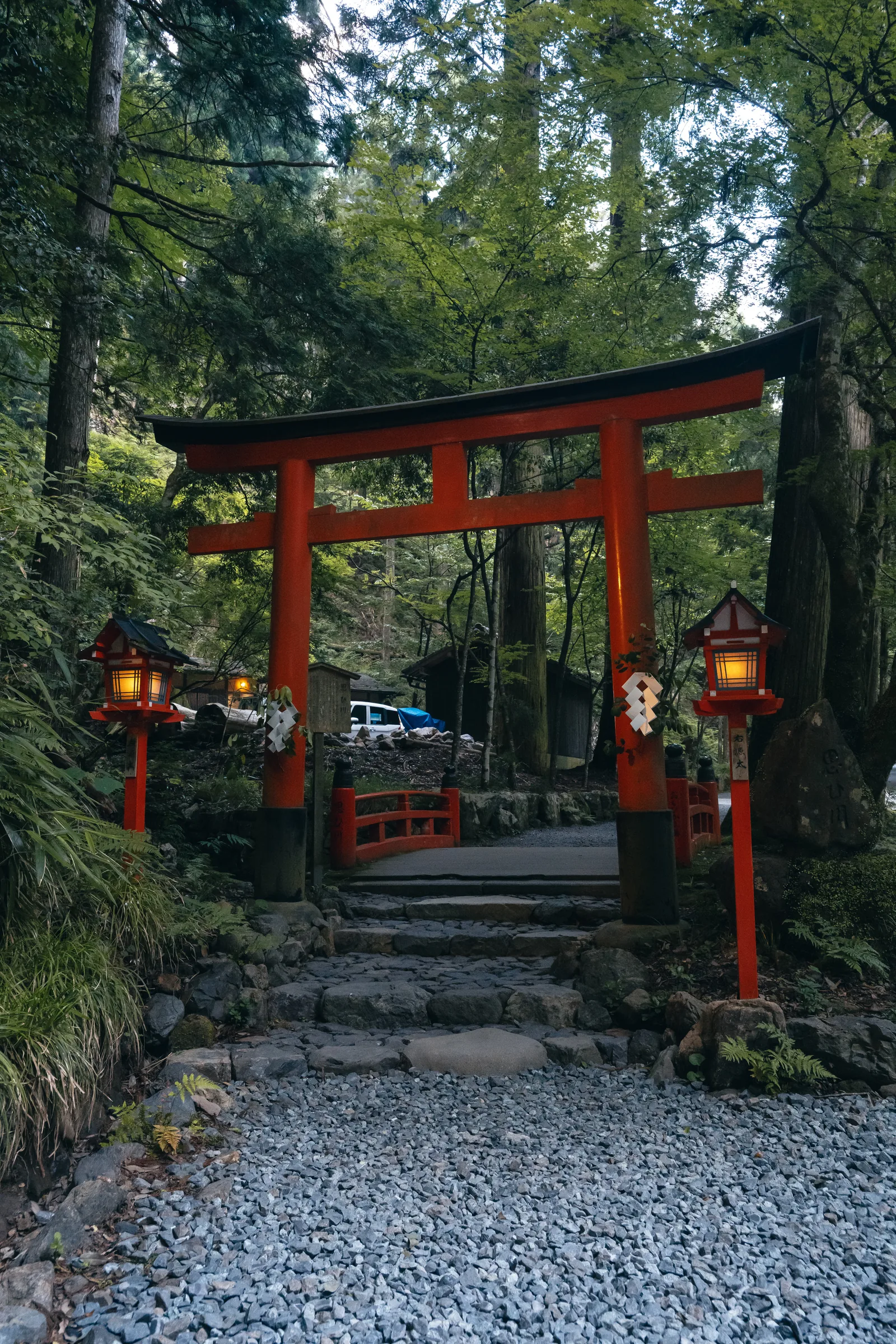
Another threshold in the trees
KIFUNE / INNER PATH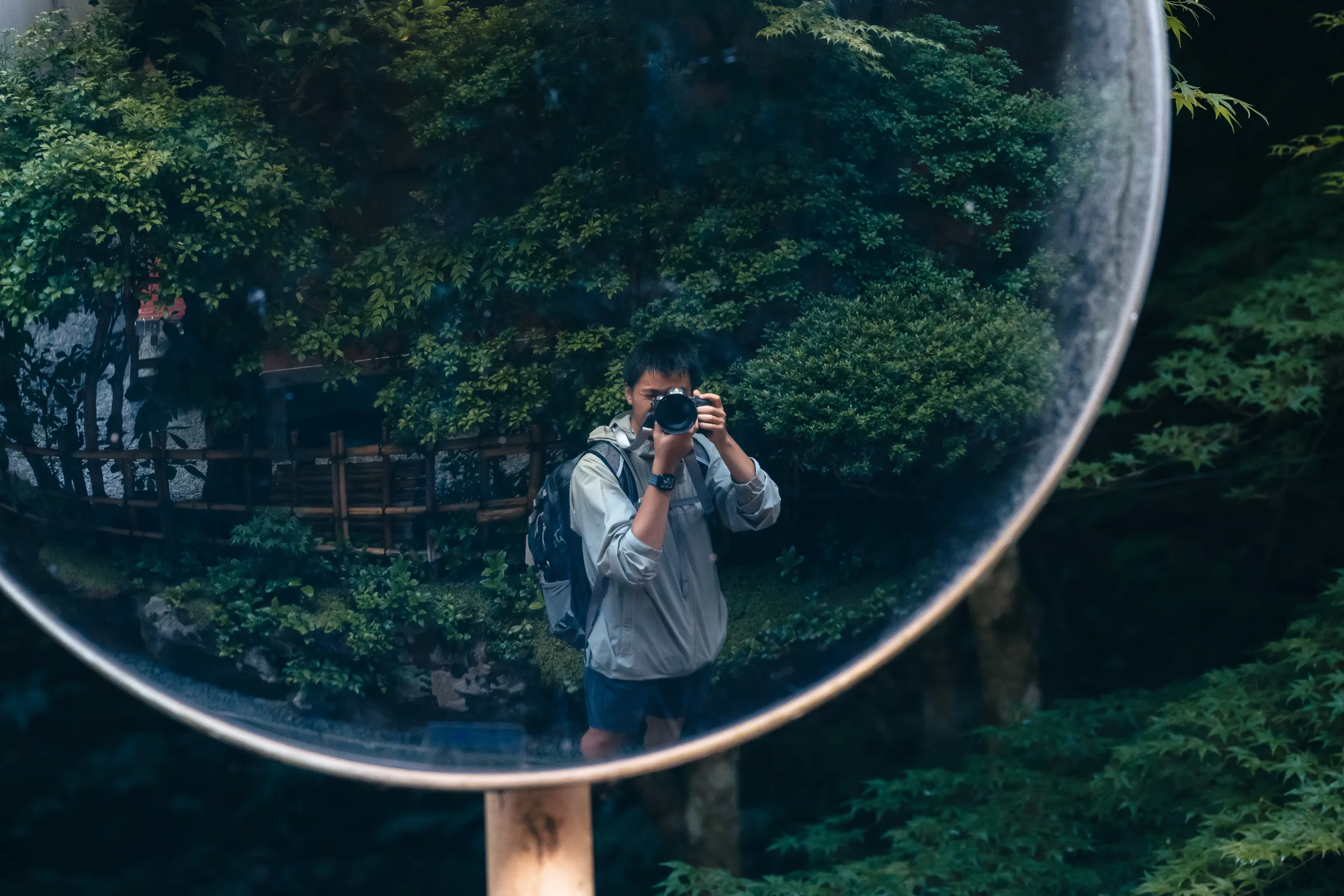
The photographer enters once
KIFUNE / SELF-PORTRAIT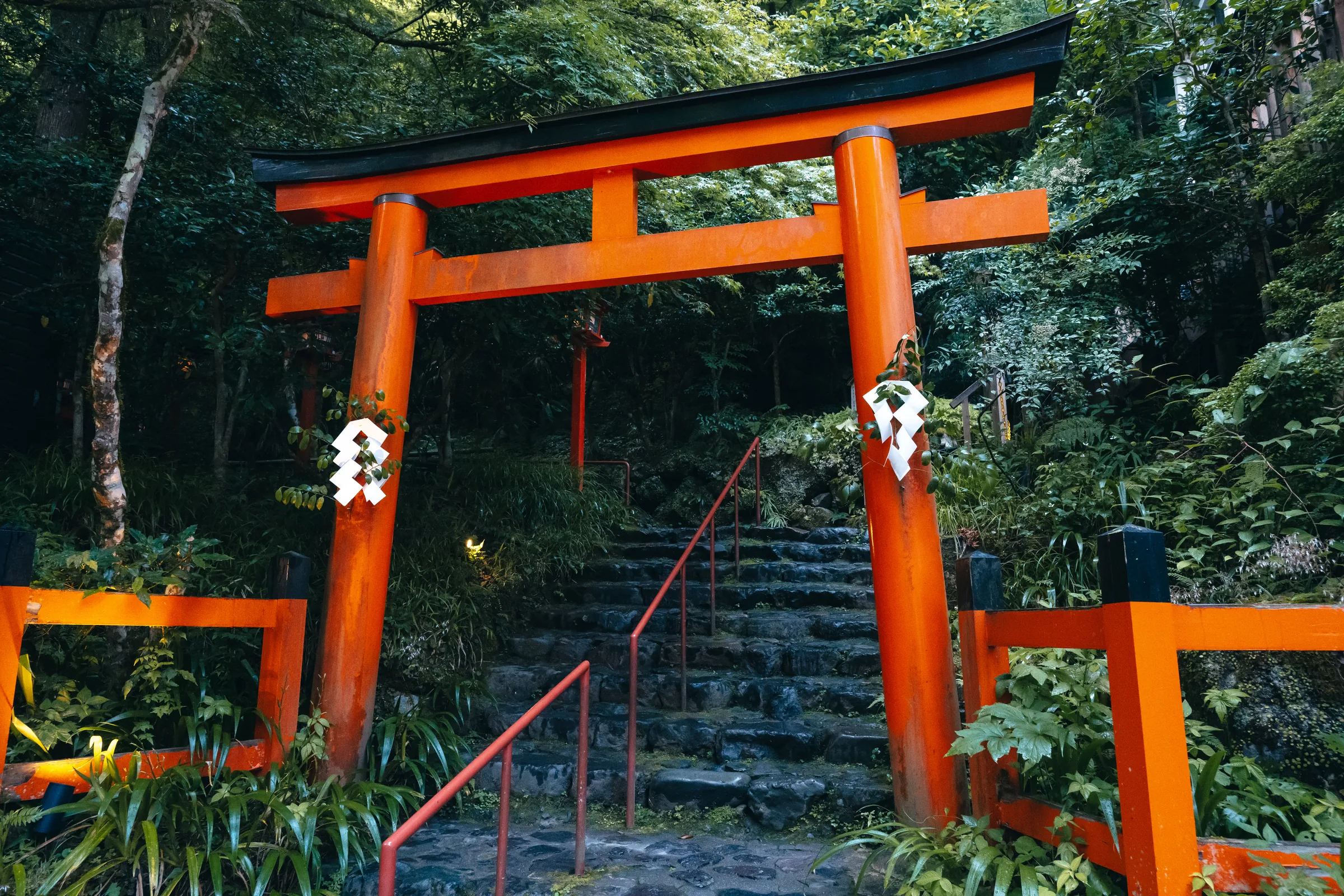
The path narrows to a gate
KIFUNE / ASCENT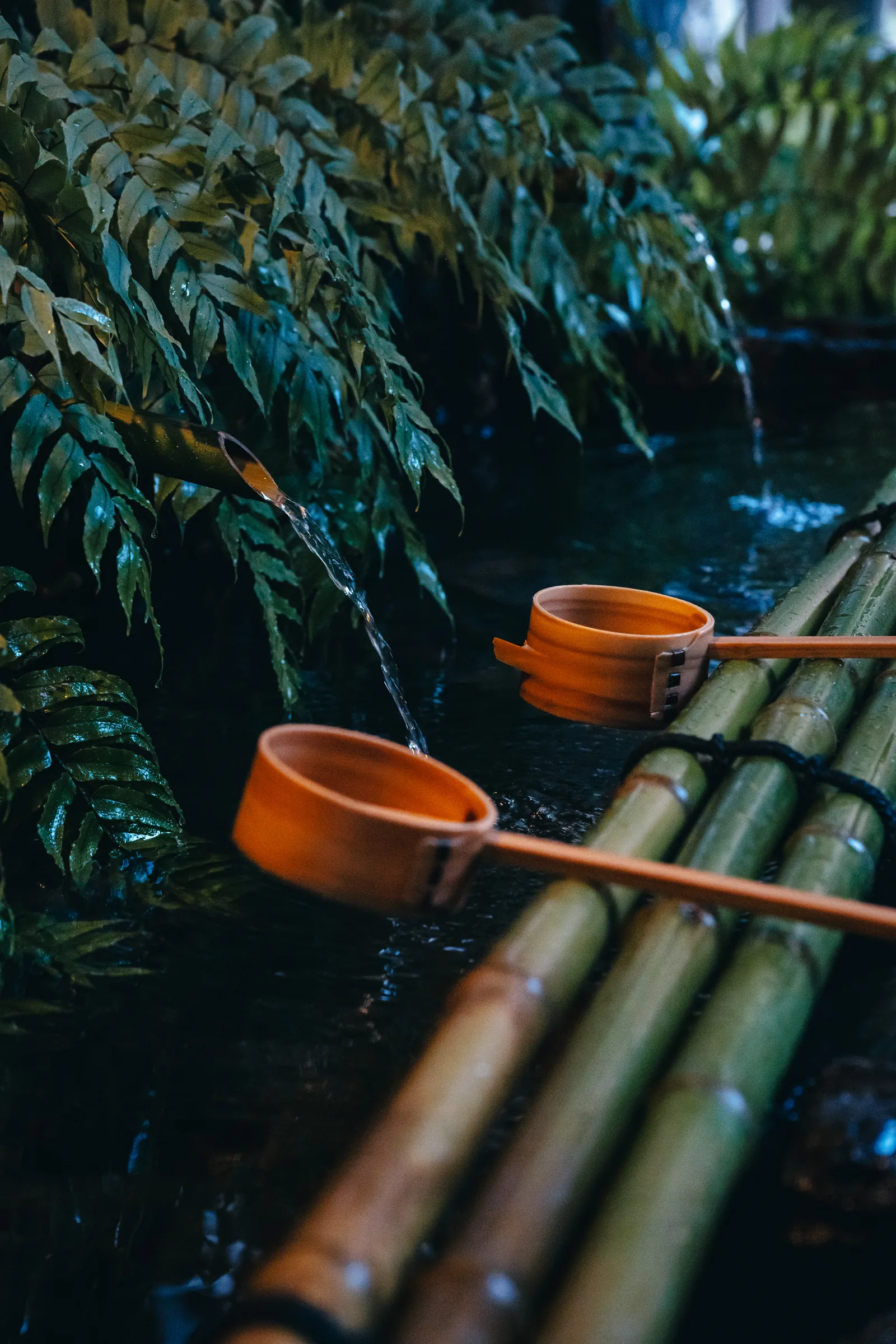
Water waits at the threshold
KIFUNE / PURIFICATION BASIN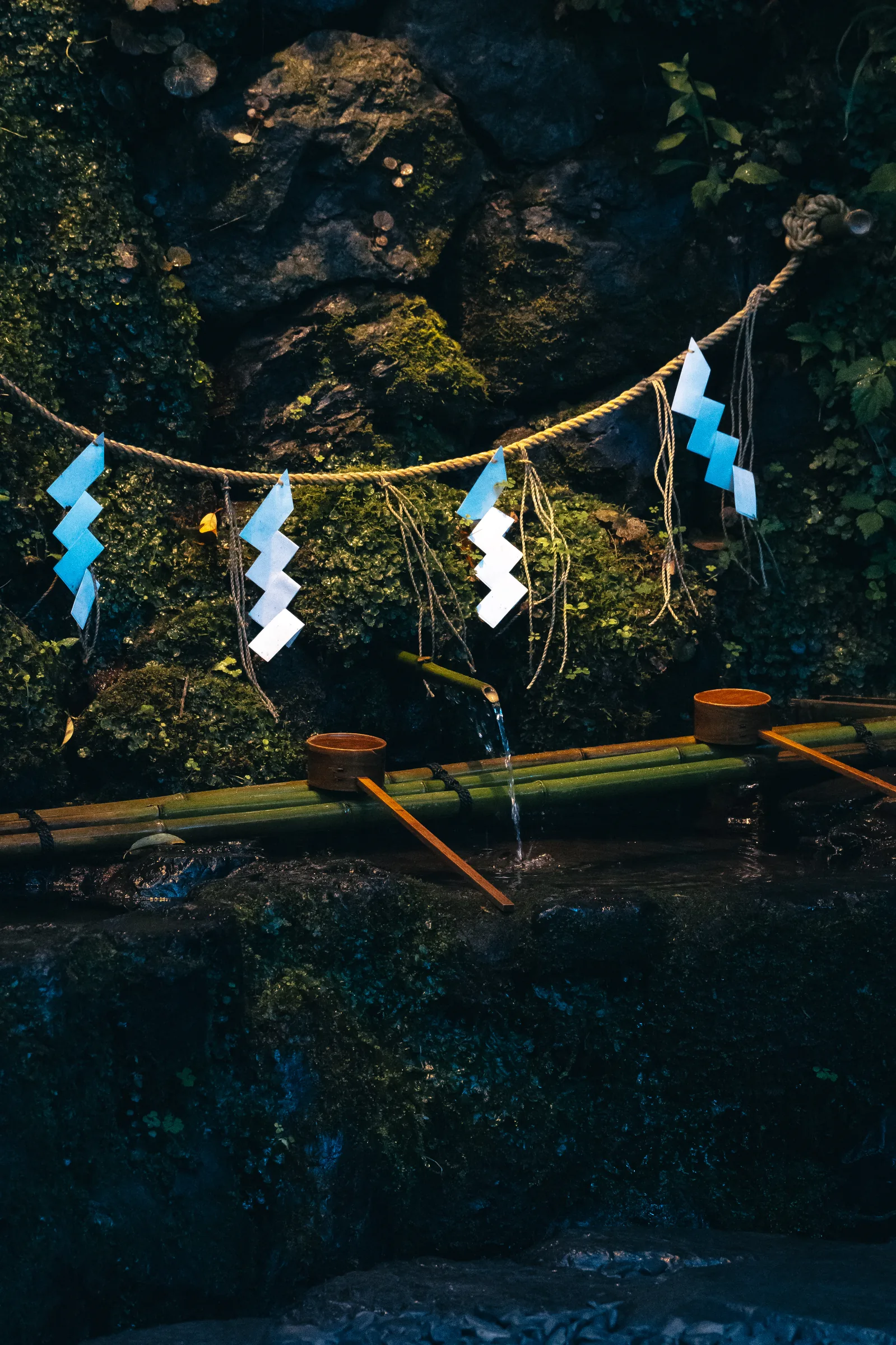
Cold water from the mountain
KIFUNE / SACRED SPRING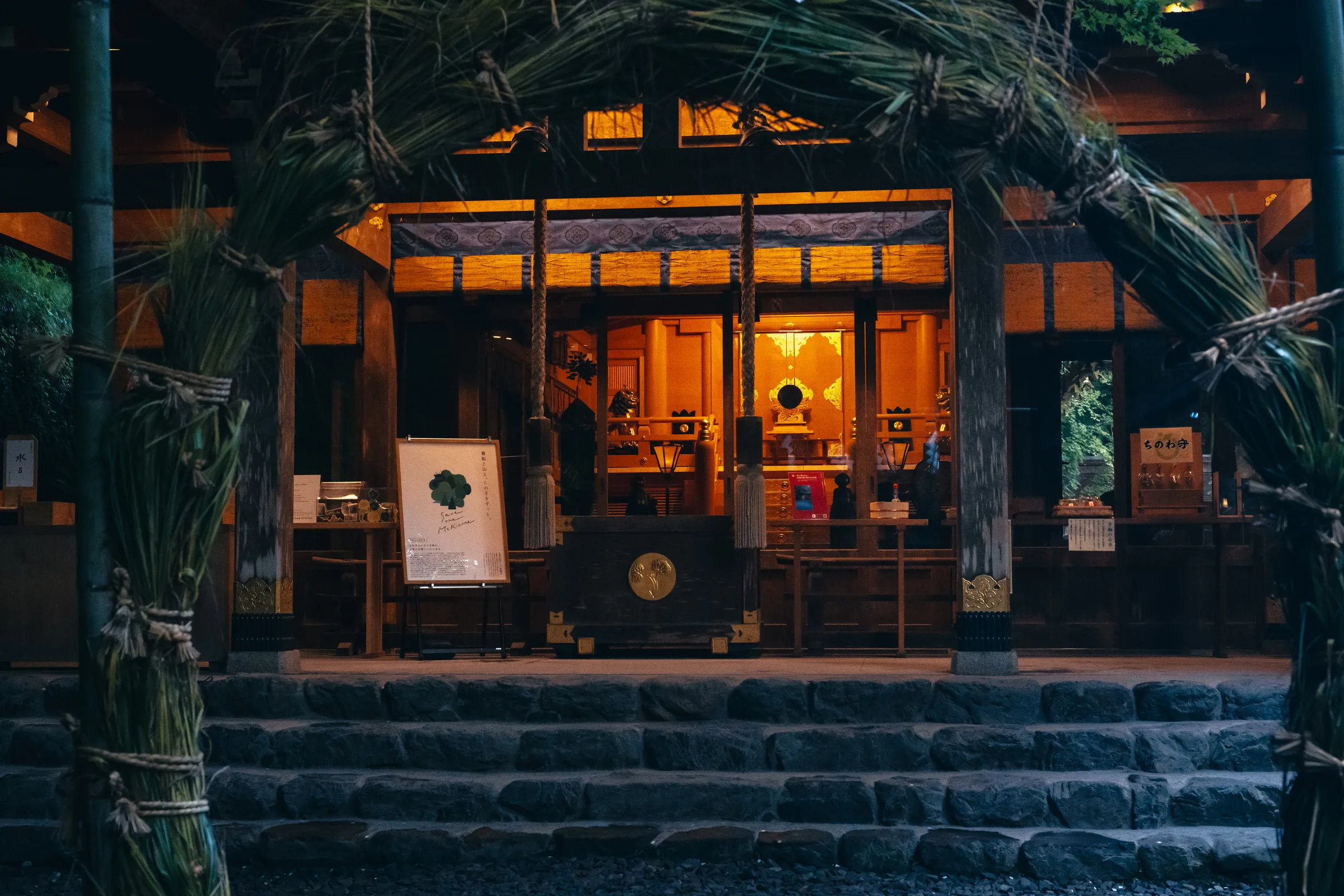
The shrine glows through the circle
KIFUNE / INNER SHRINE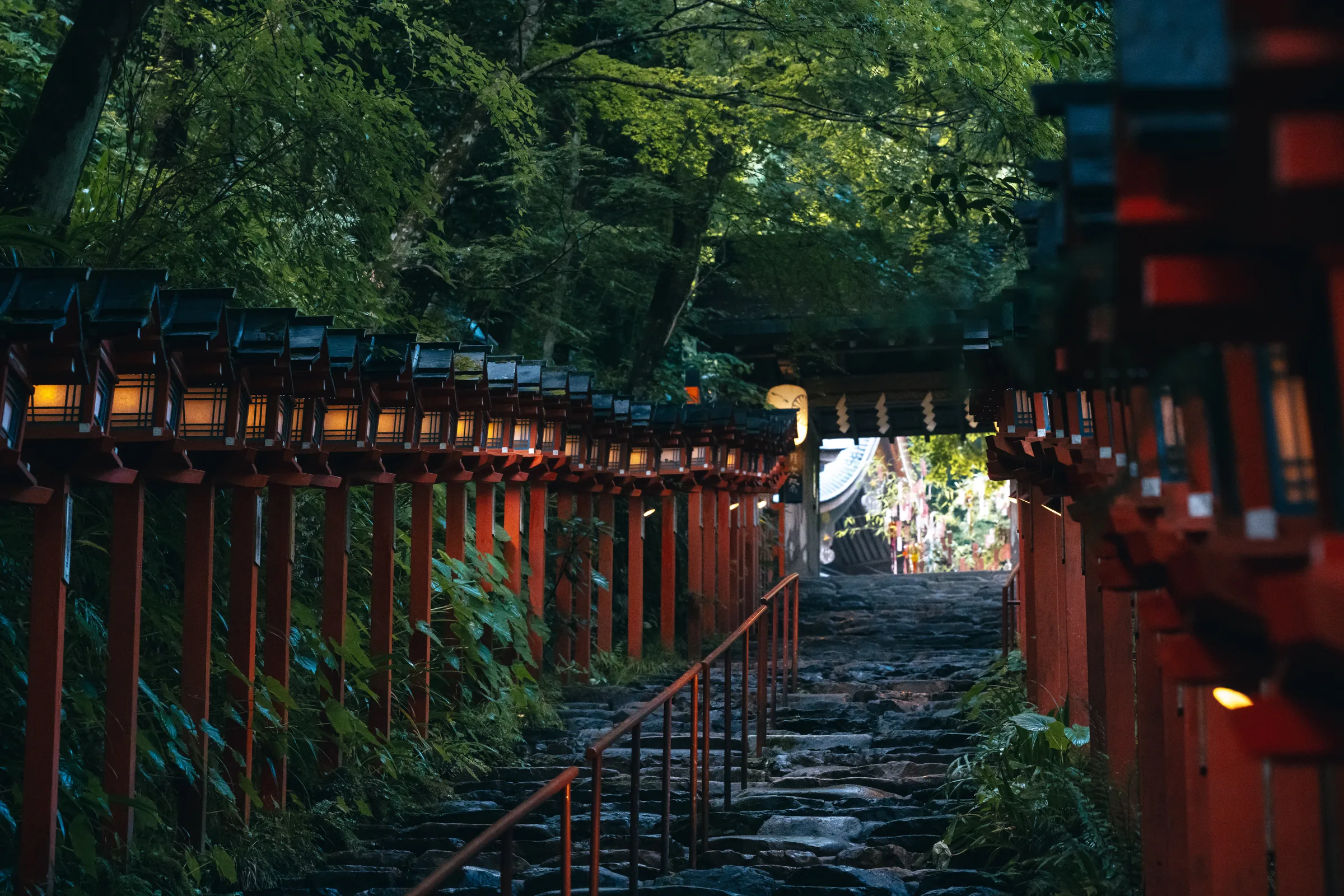
The stairs hold the last light
KIFUNE / LANTERNSThe long way back
Kurama was the end of one line and the beginning of several more. Platform mirrors repeated the Eizan train; the driver carried it out of the mountain and remained visible in one last reflection. Underground connections and a procession of orange Kintetsu trains turned the transfer itself into a subject. Nara began with an ordinary street, then deer crossed traffic and settled across the grass. Back at Kyoto Station, the atrium became an interior city—platforms in strips, departure boards, concourses, and one traveler crossing the light alone before the hall finally thinned.
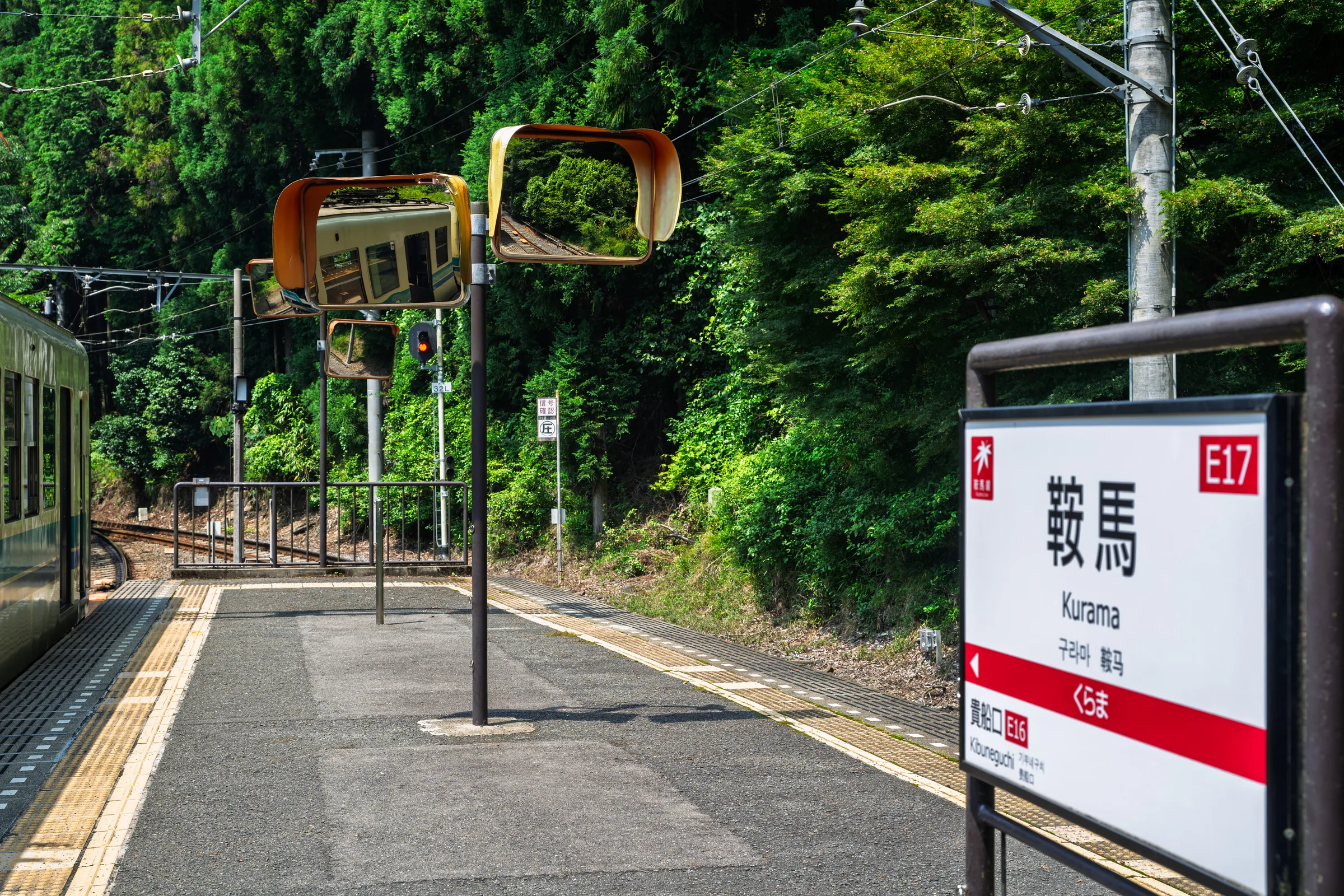
The end of the Eizan Line
KURAMA STATION / MORNING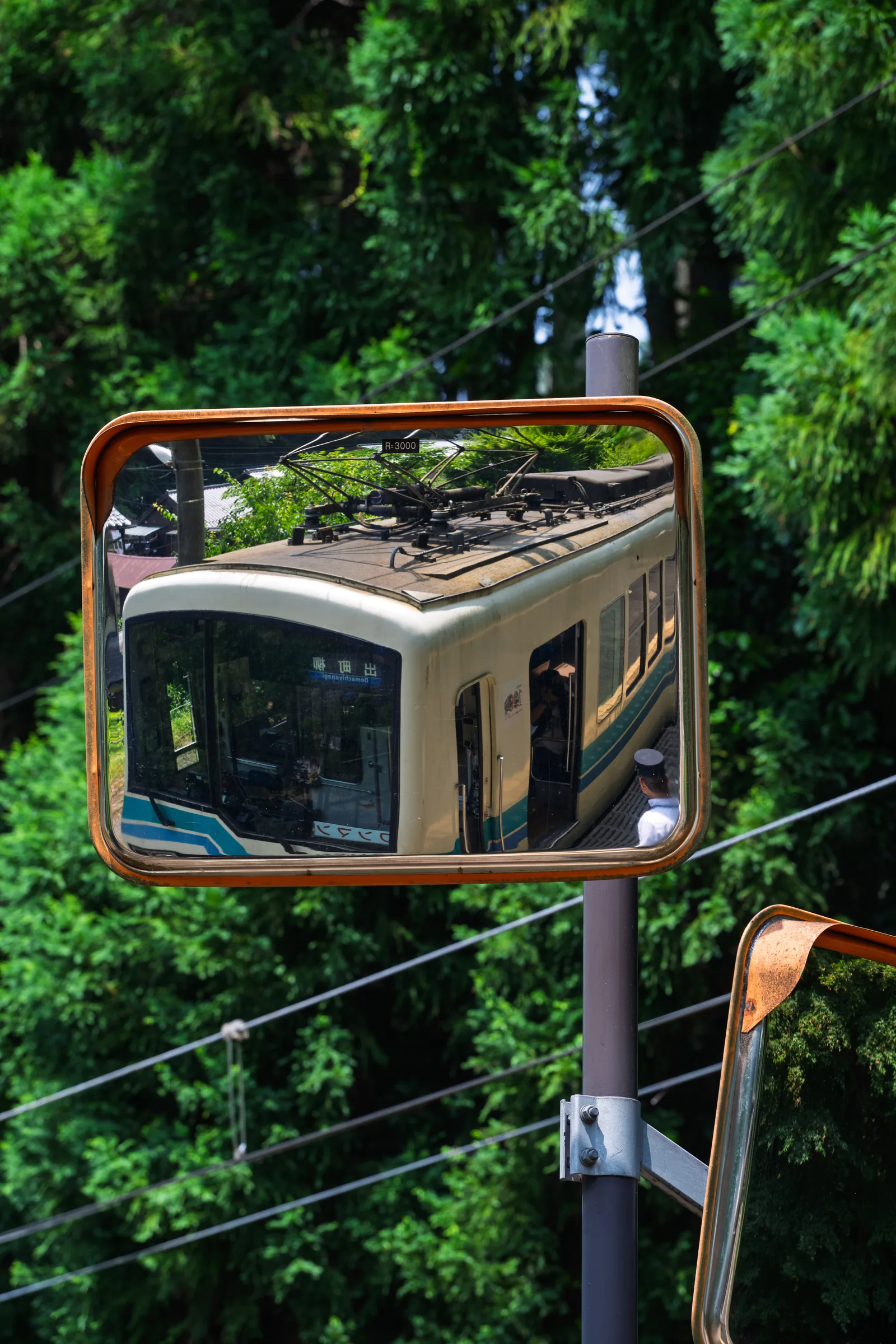
The train returns inside the mirror
KURAMA STATION / REFLECTION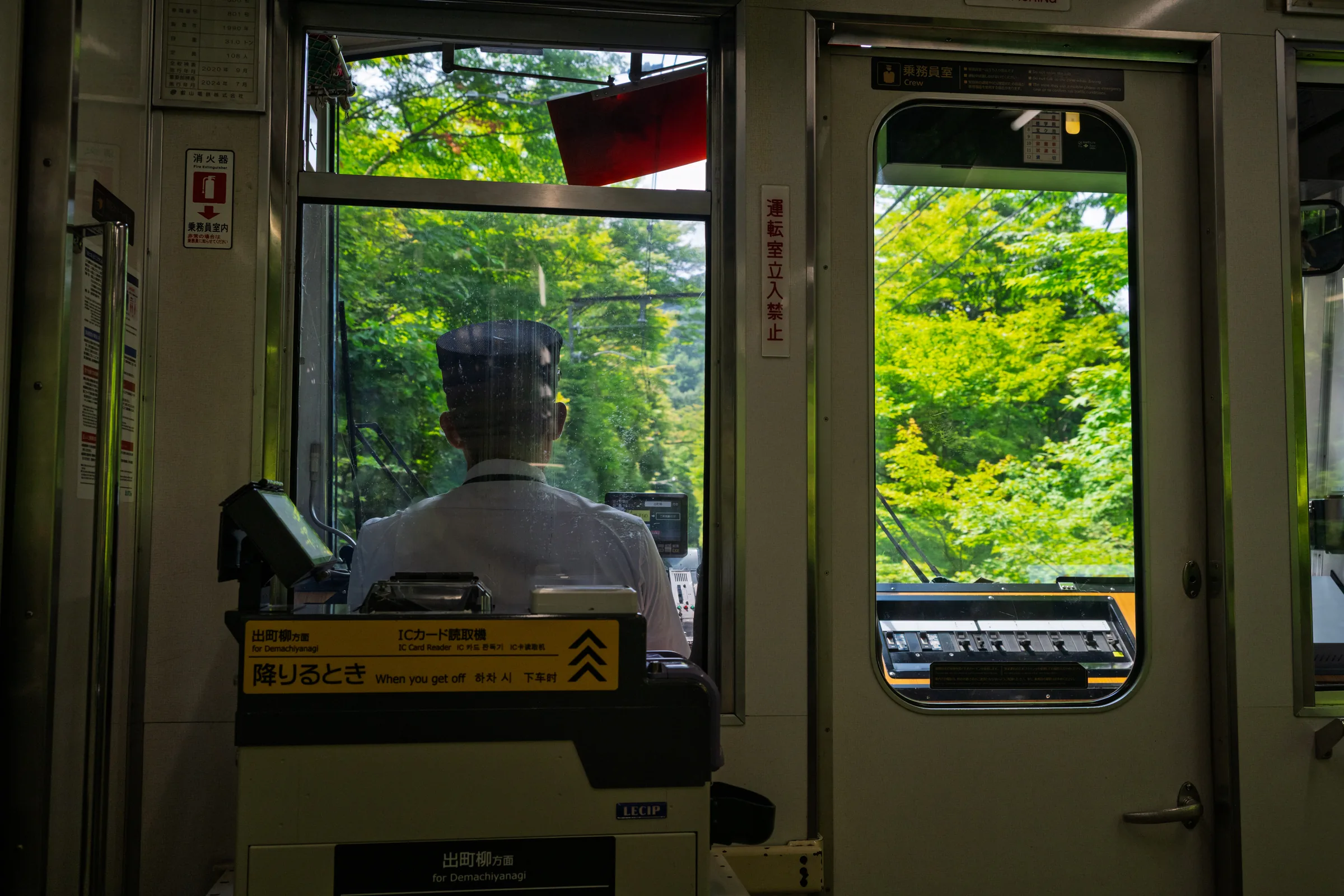
Carried out of the mountain
EIZAN LINE / DRIVER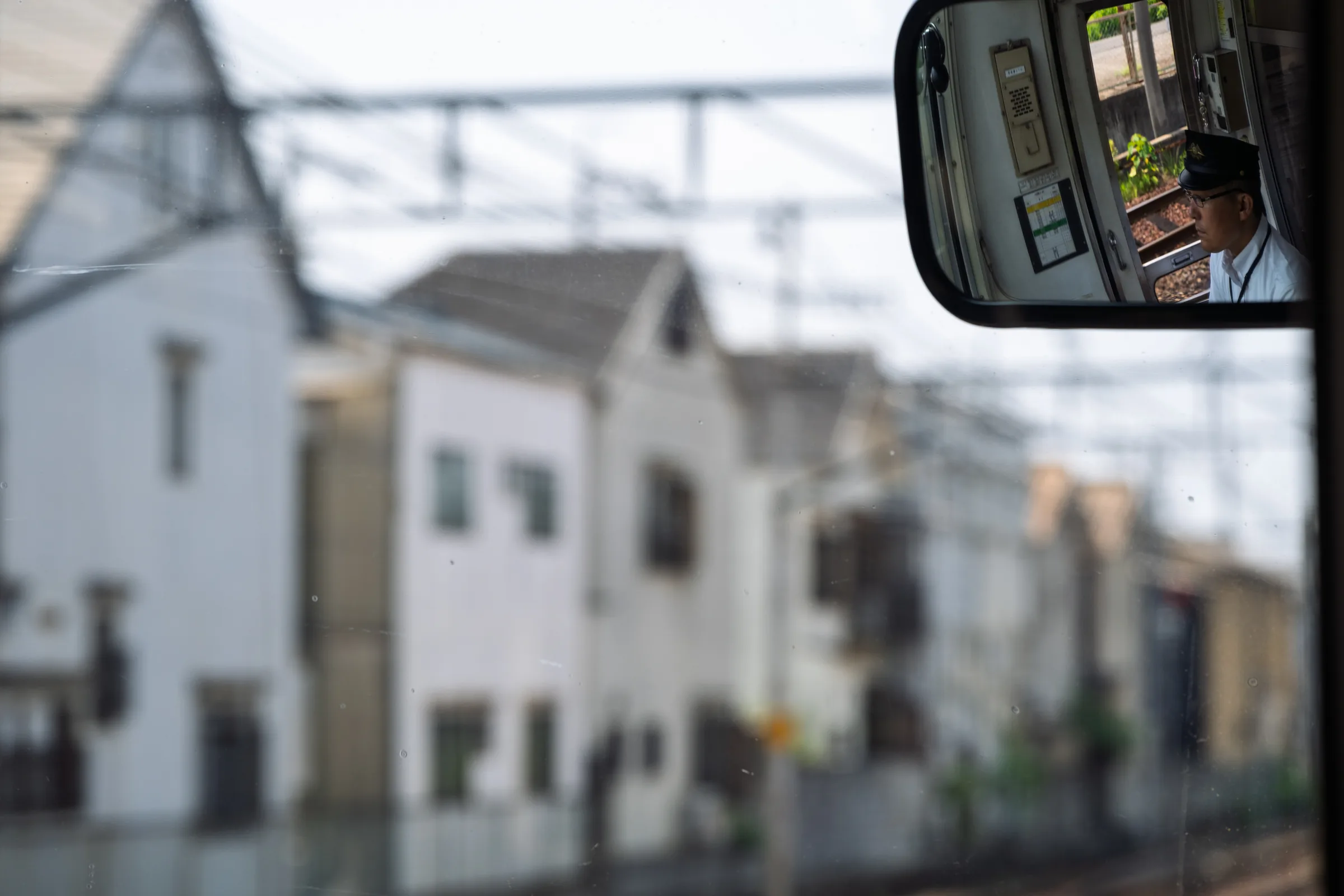
The driver remains in the corner of the frame
EIZAN LINE / IN MOTION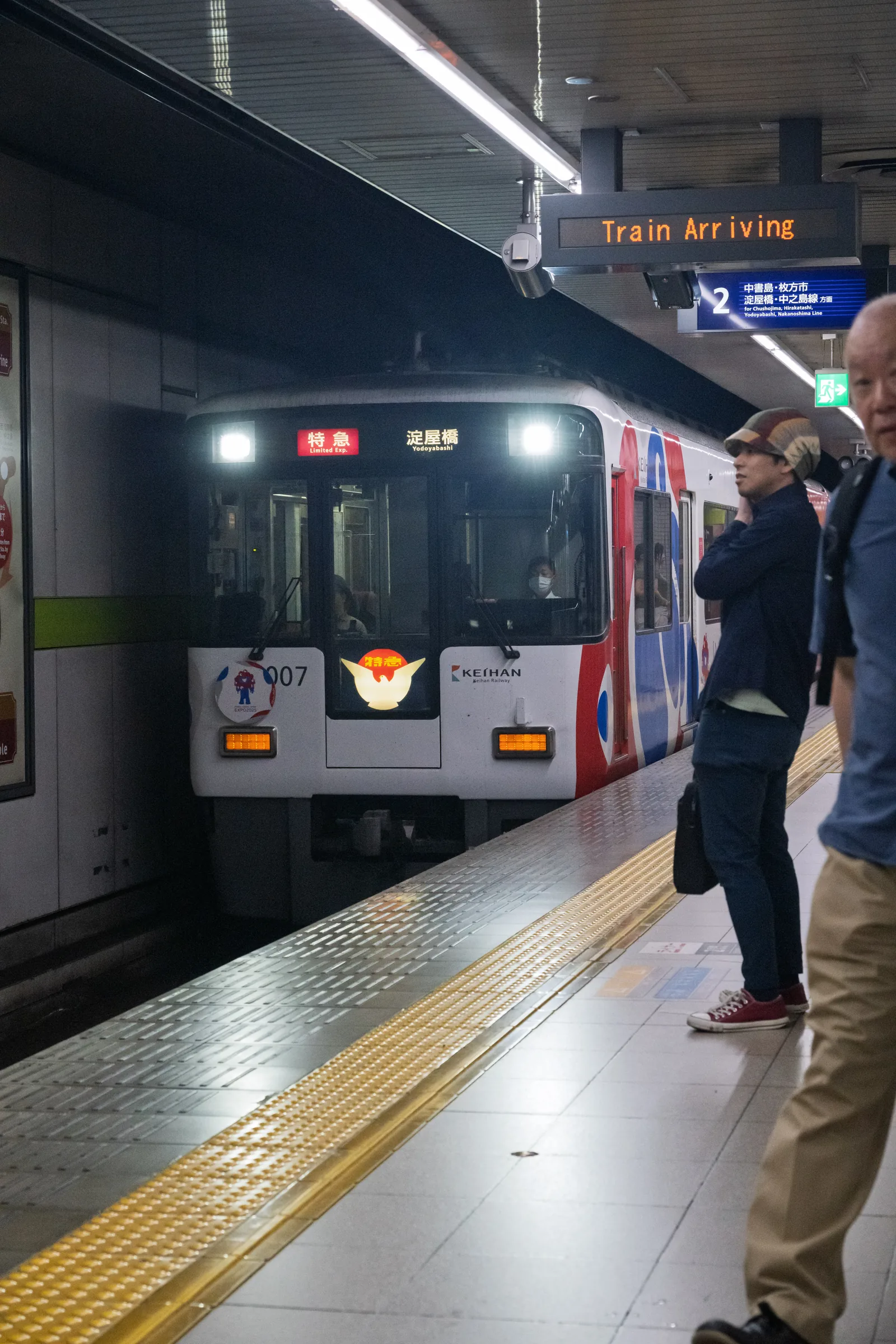
The next connection arrives underground
KYOTO / TRANSFER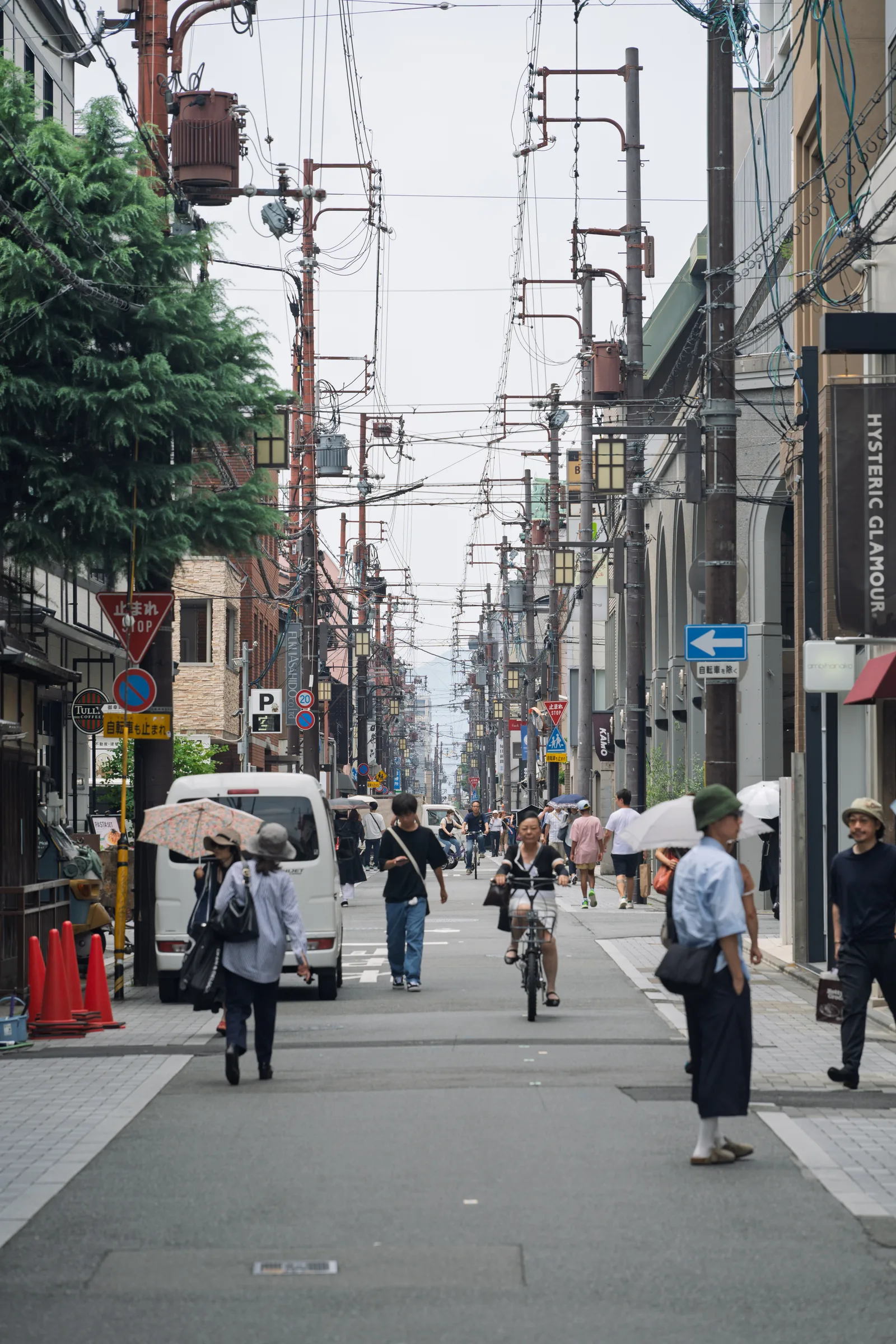
Nara begins as an ordinary street
NARA / WALKING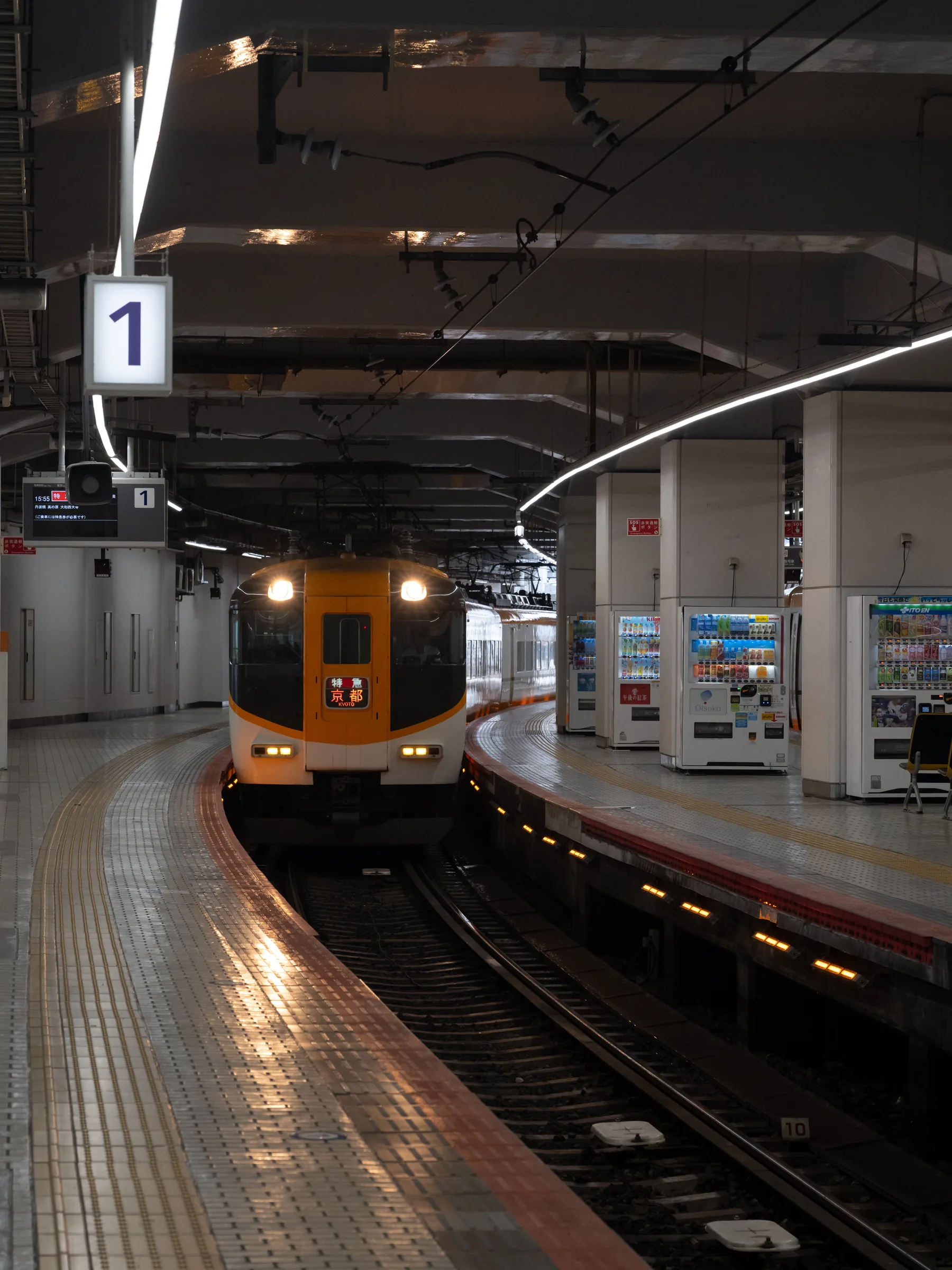
Orange waits beneath platform one
KINTETSU / TERMINAL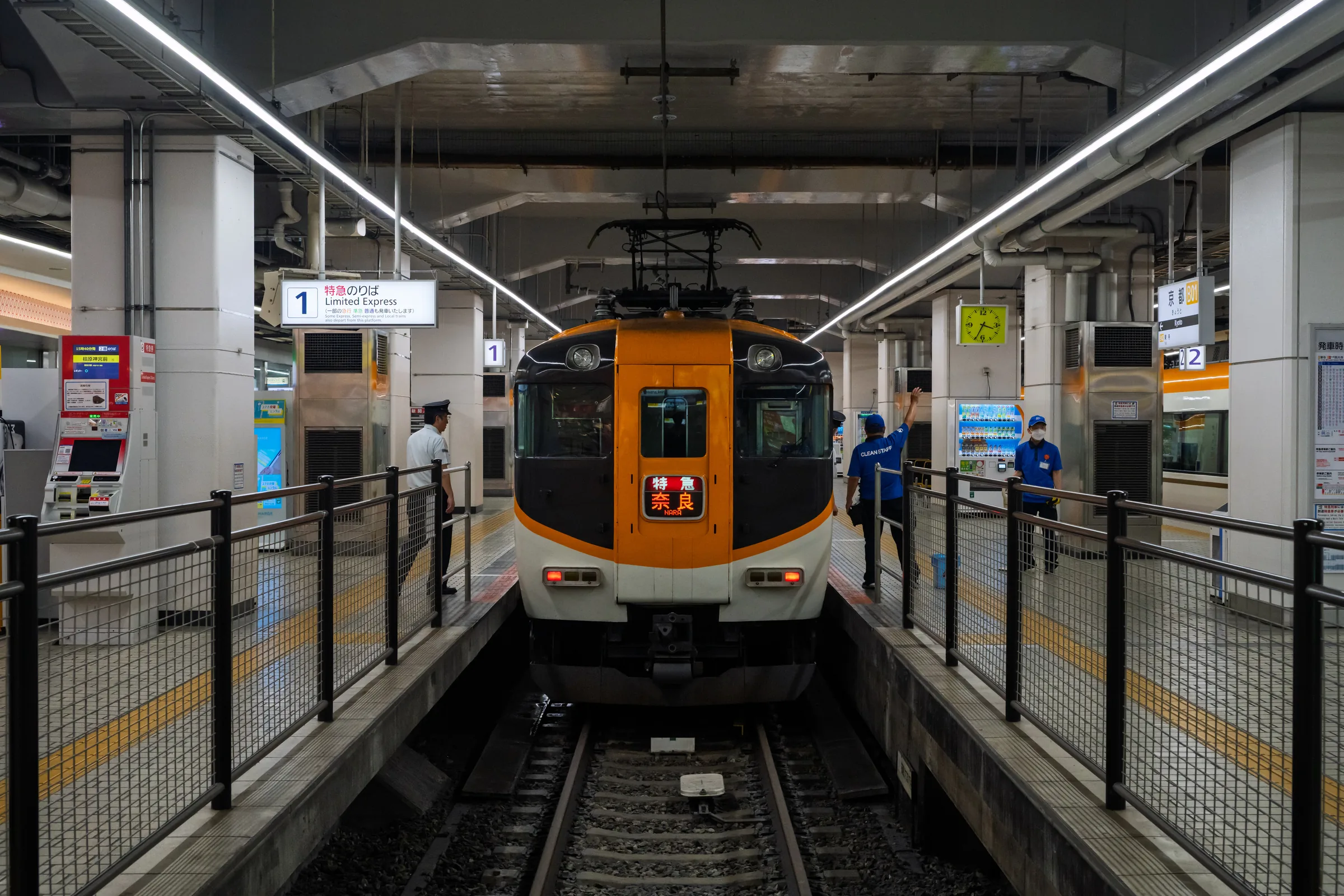
The line turns toward Nara
KINTETSU / PLATFORM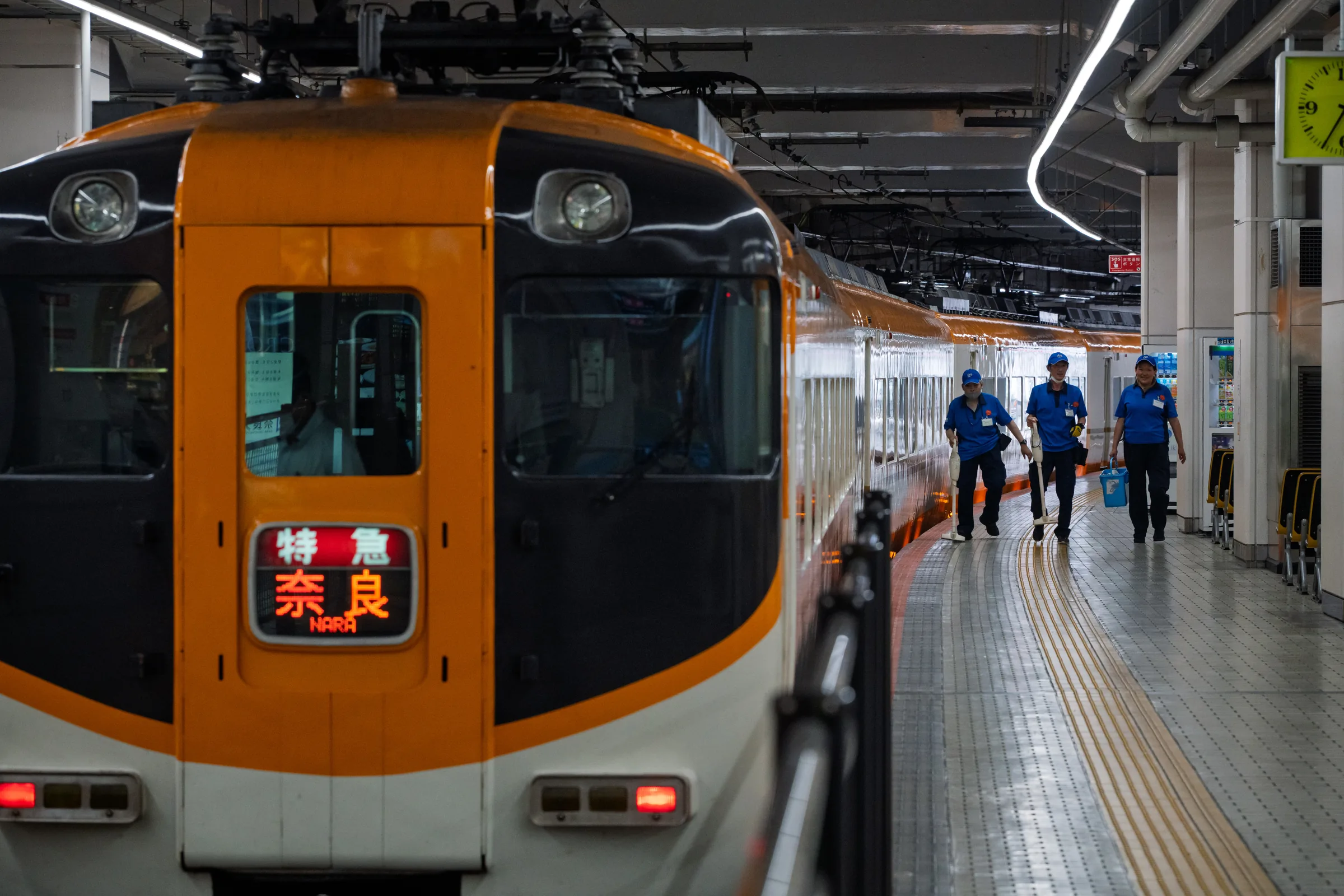
The next line reads Nara
KINTETSU / LIMITED EXPRESS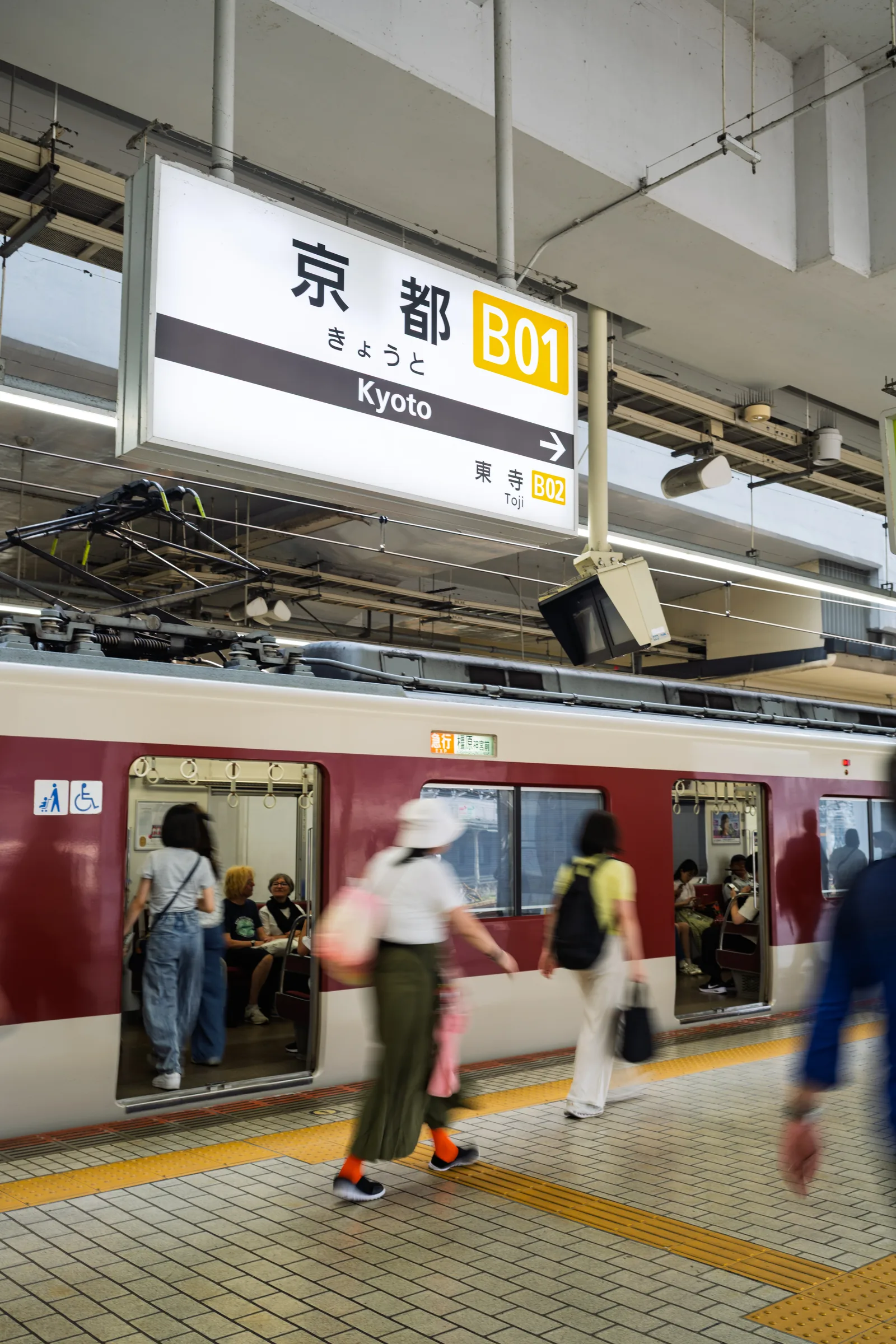
Kyoto written above the carriage
KINTETSU KYOTO / PLATFORM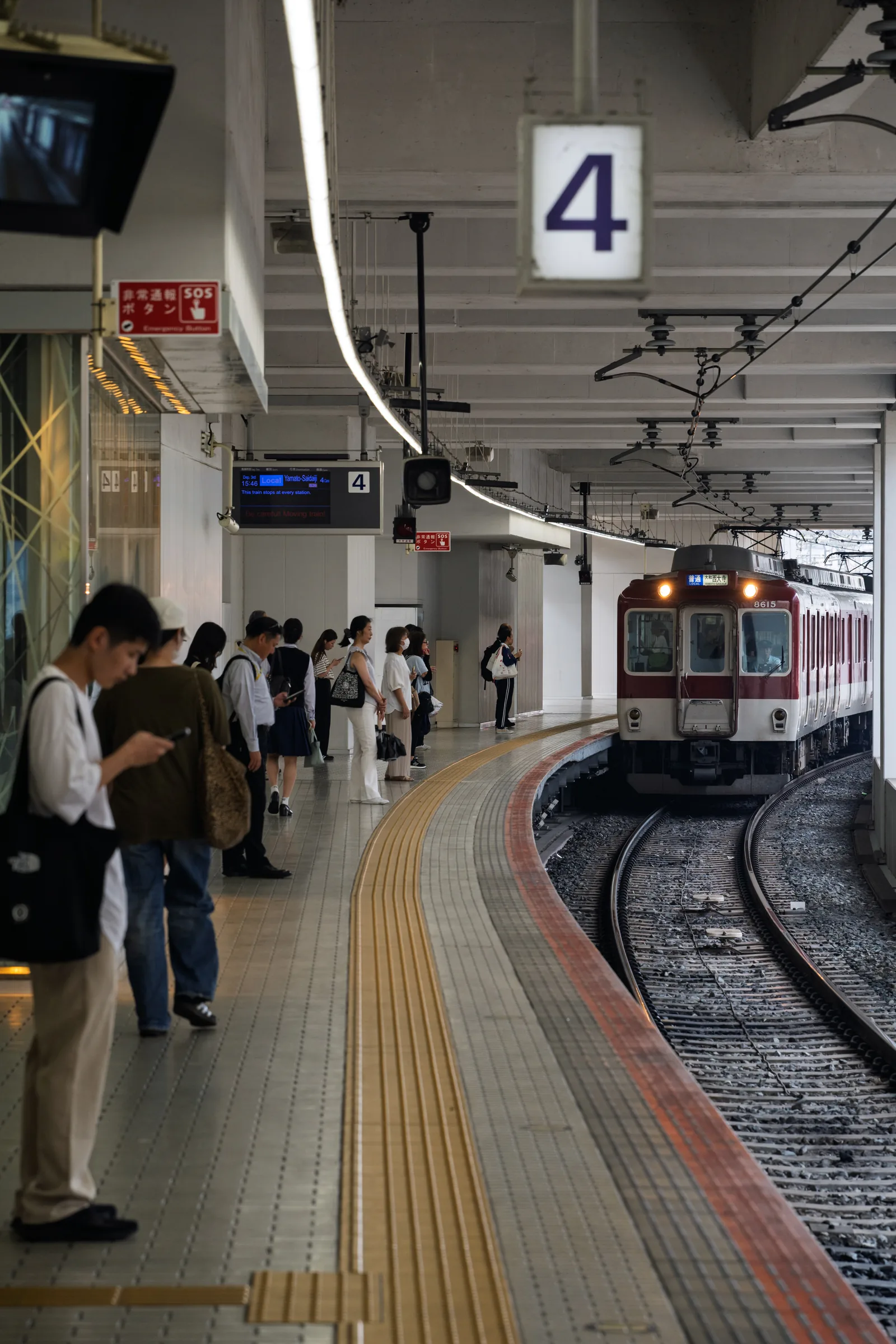
A train bends into platform four
KINTETSU / ARRIVAL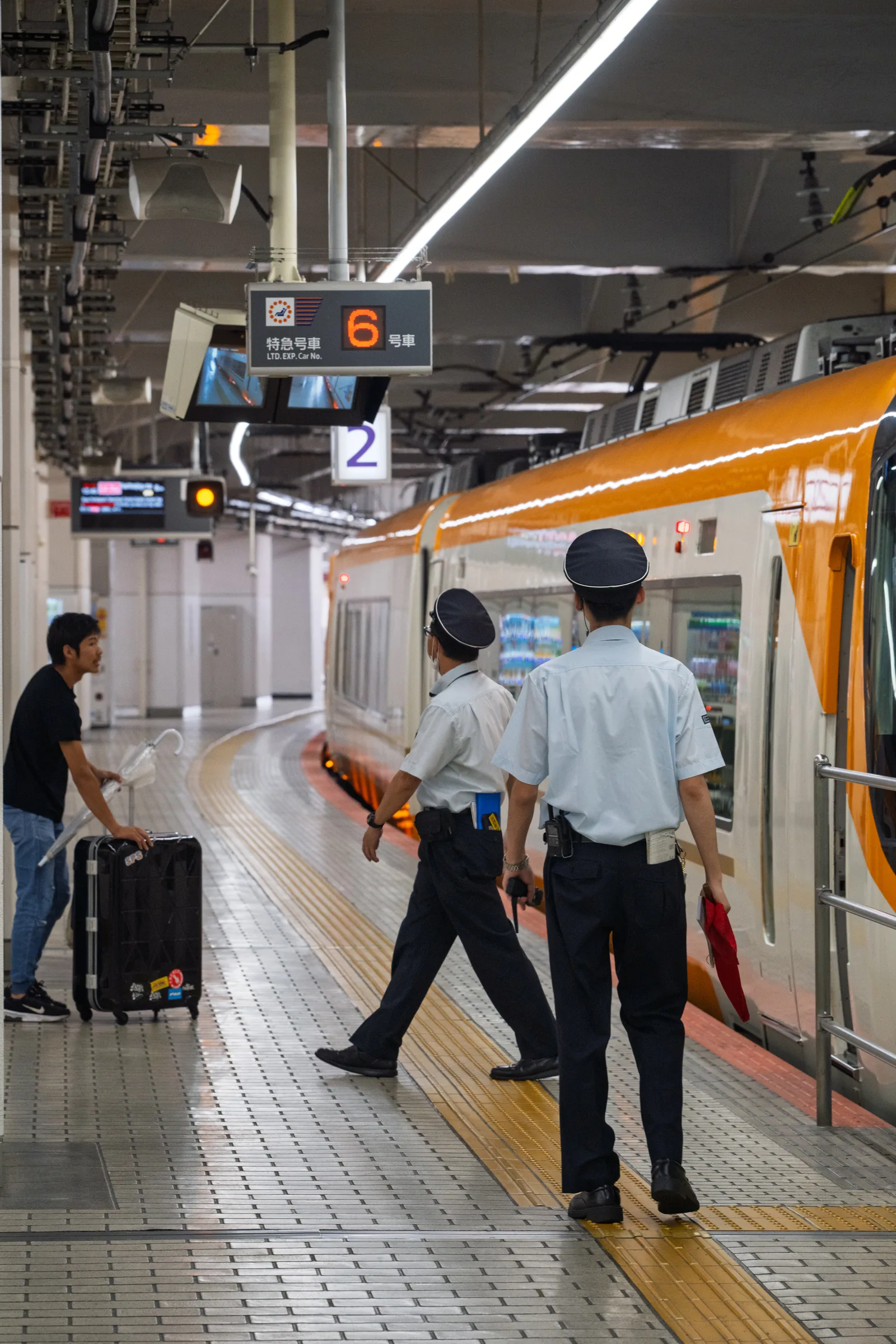
Between one departure and the next
KINTETSU / PLATFORM STAFF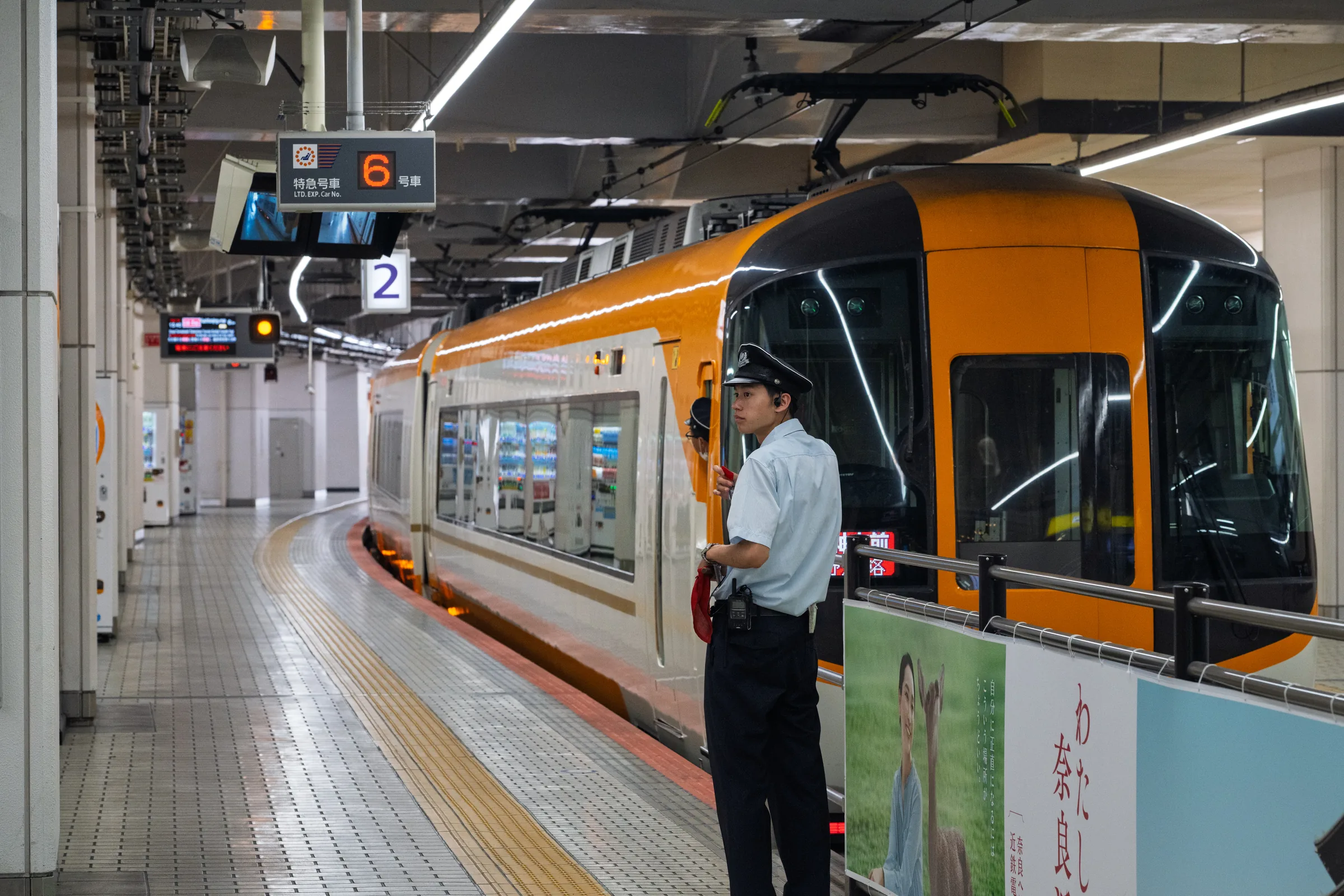
The limited express at rest
KINTETSU / LIMITED EXPRESS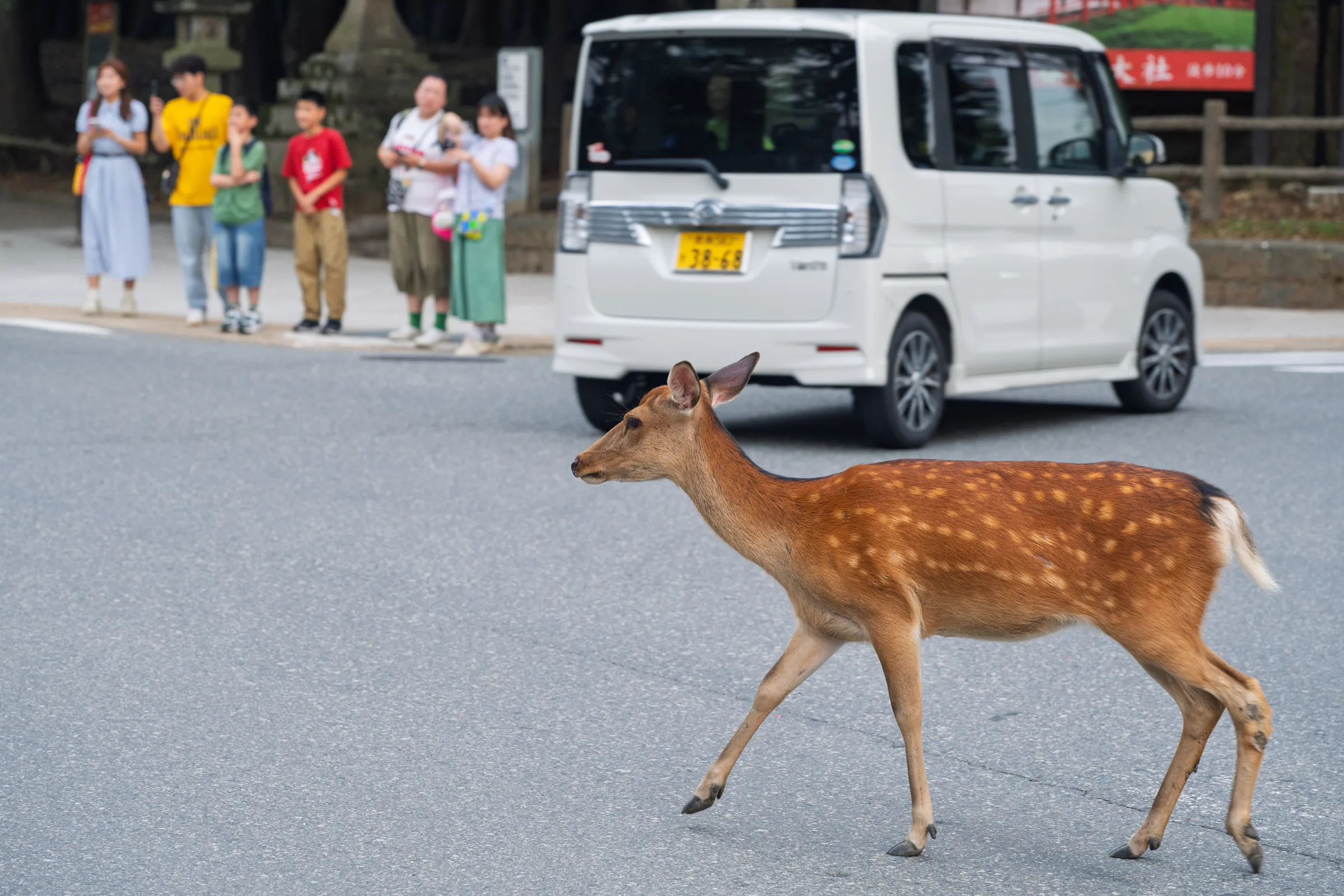
Traffic waits for another timetable
NARA / DEER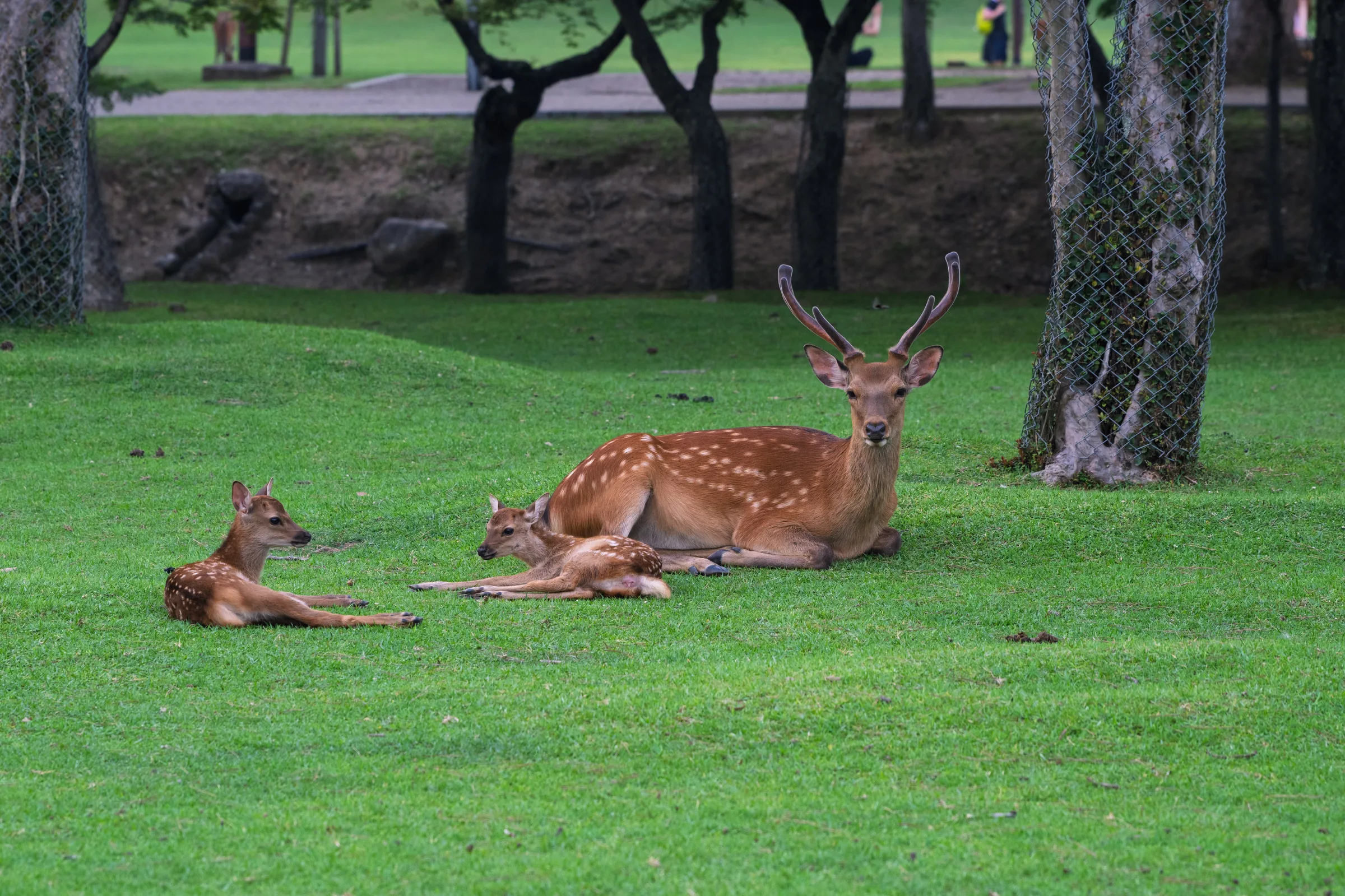
The road opens into a lawn
NARA PARK / REST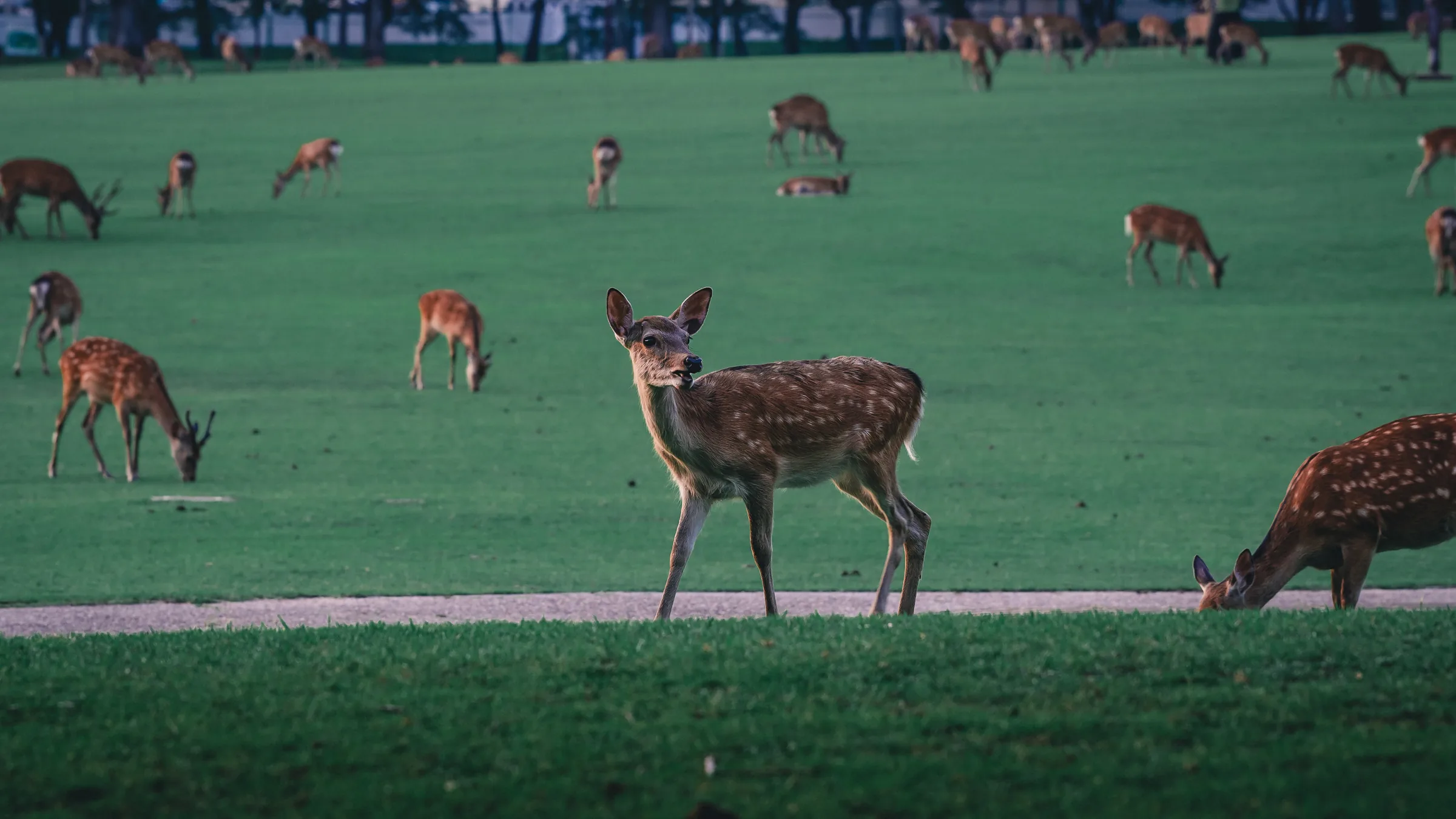
The field keeps its own crowd
NARA PARK / HERD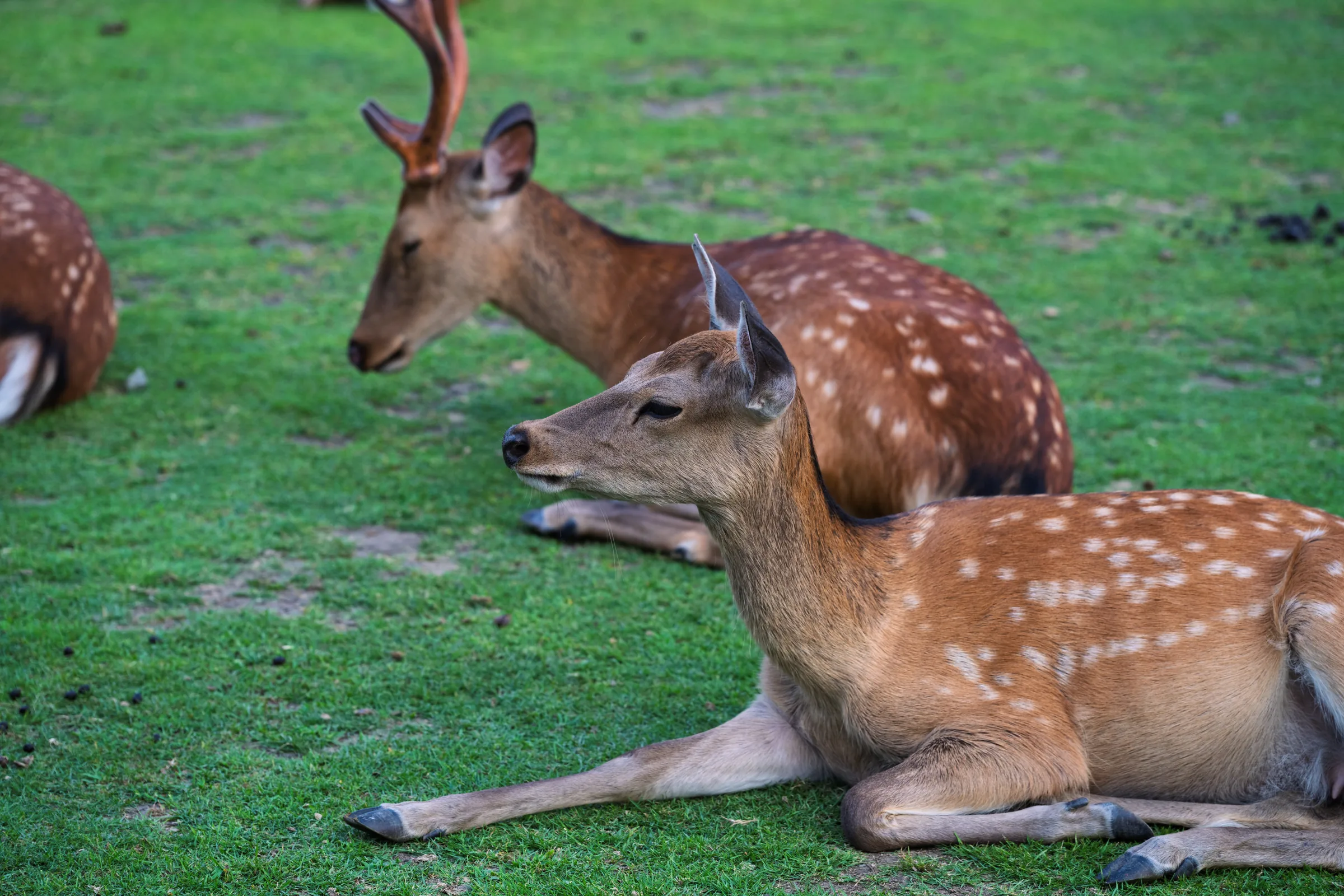
Three deer, briefly still
NARA PARK / PORTRAIT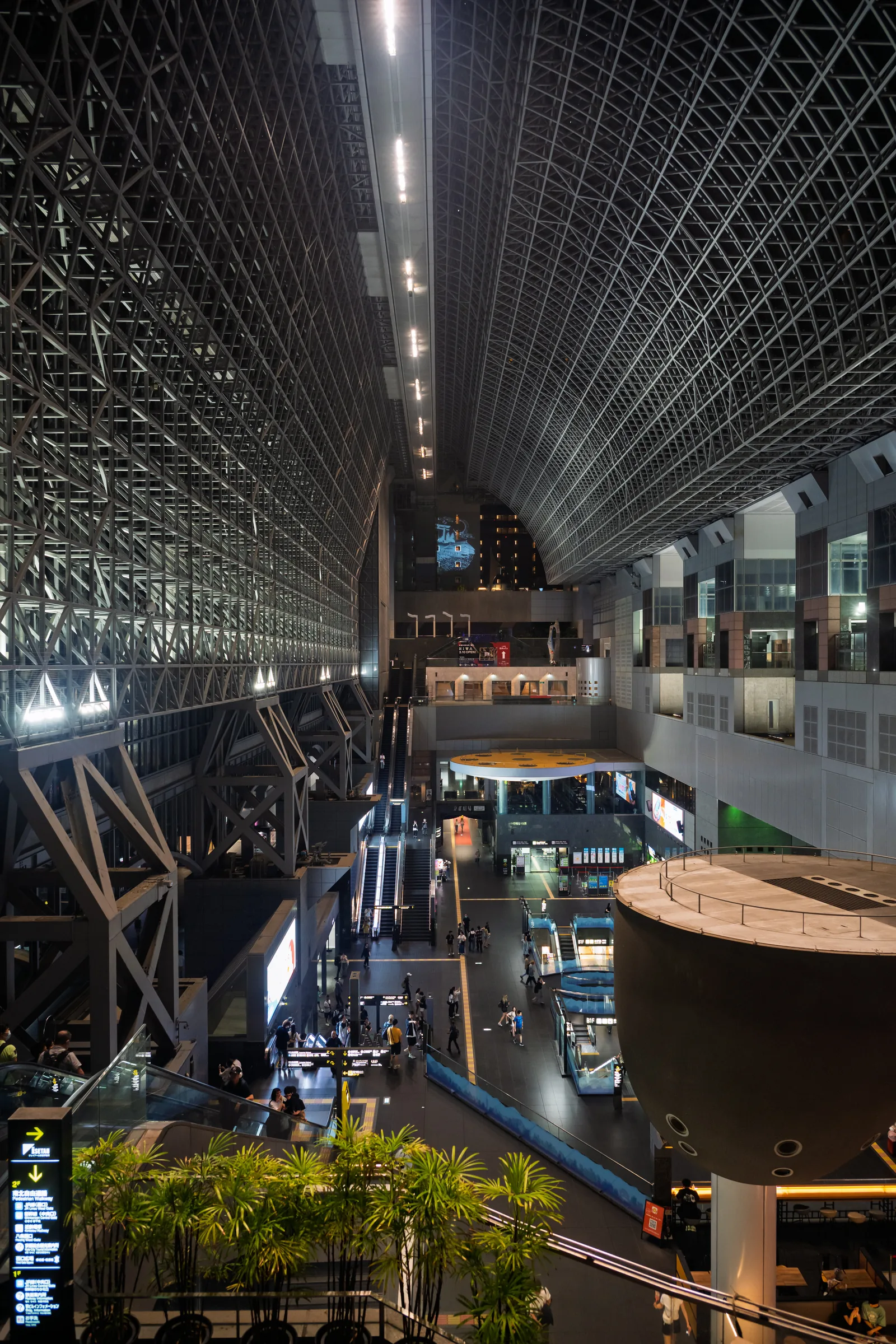
Kyoto Station becomes an interior city
KYOTO STATION / ATRIUM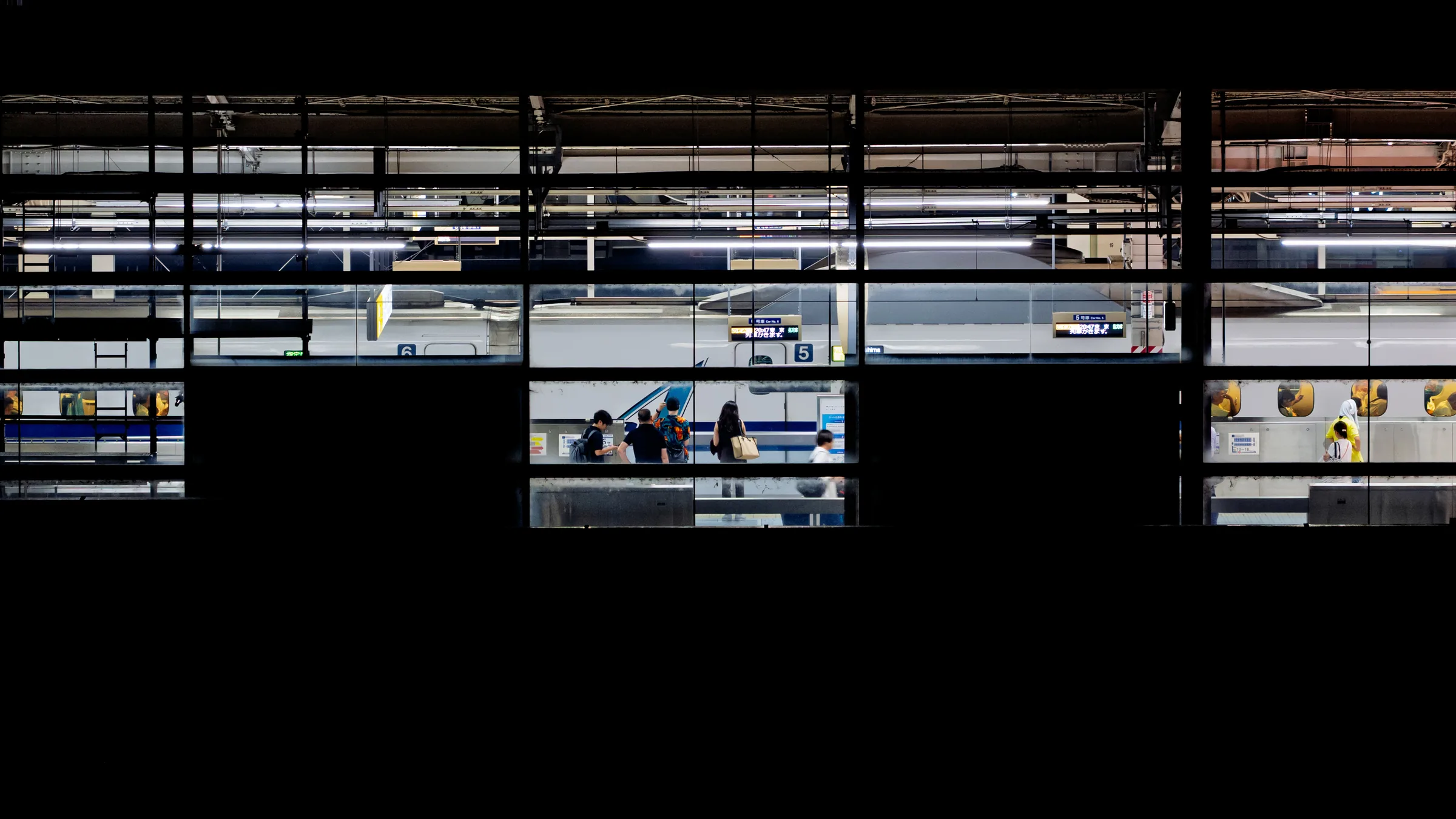
Kyoto Station, seen in strips
KYOTO STATION / NIGHT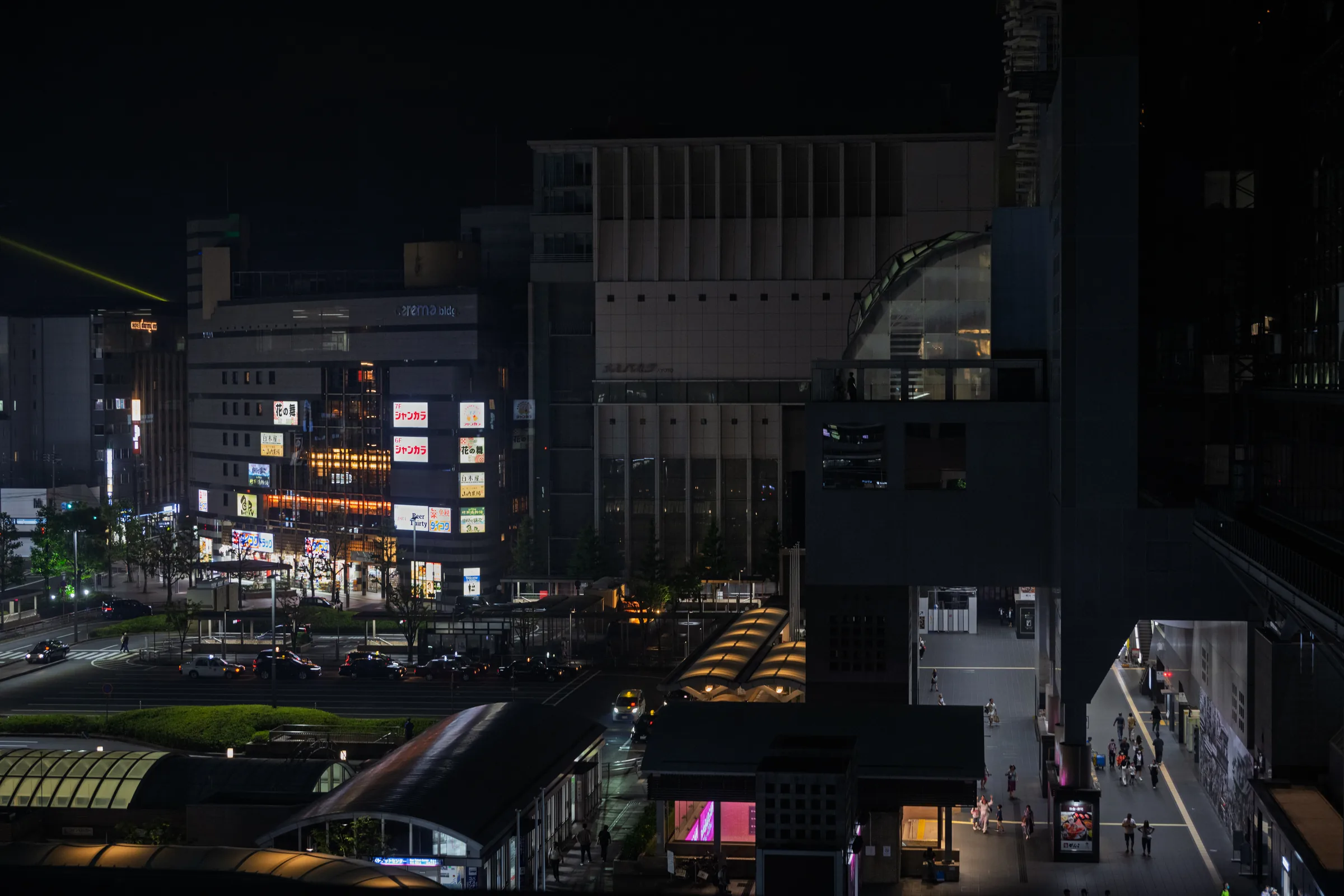
The city below the station
KYOTO STATION / NIGHT VIEW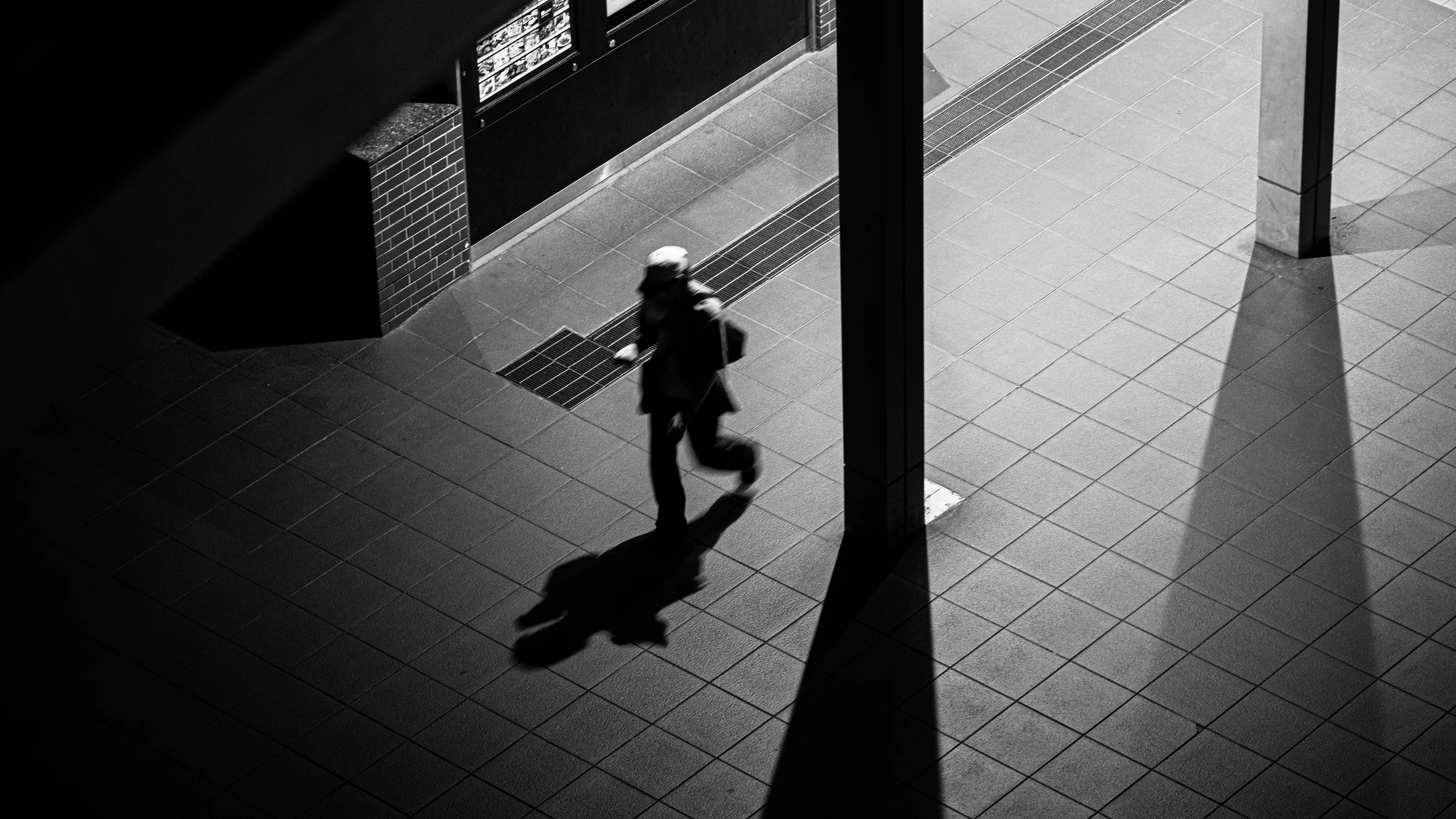
One traveler through the light
KYOTO STATION / 21:00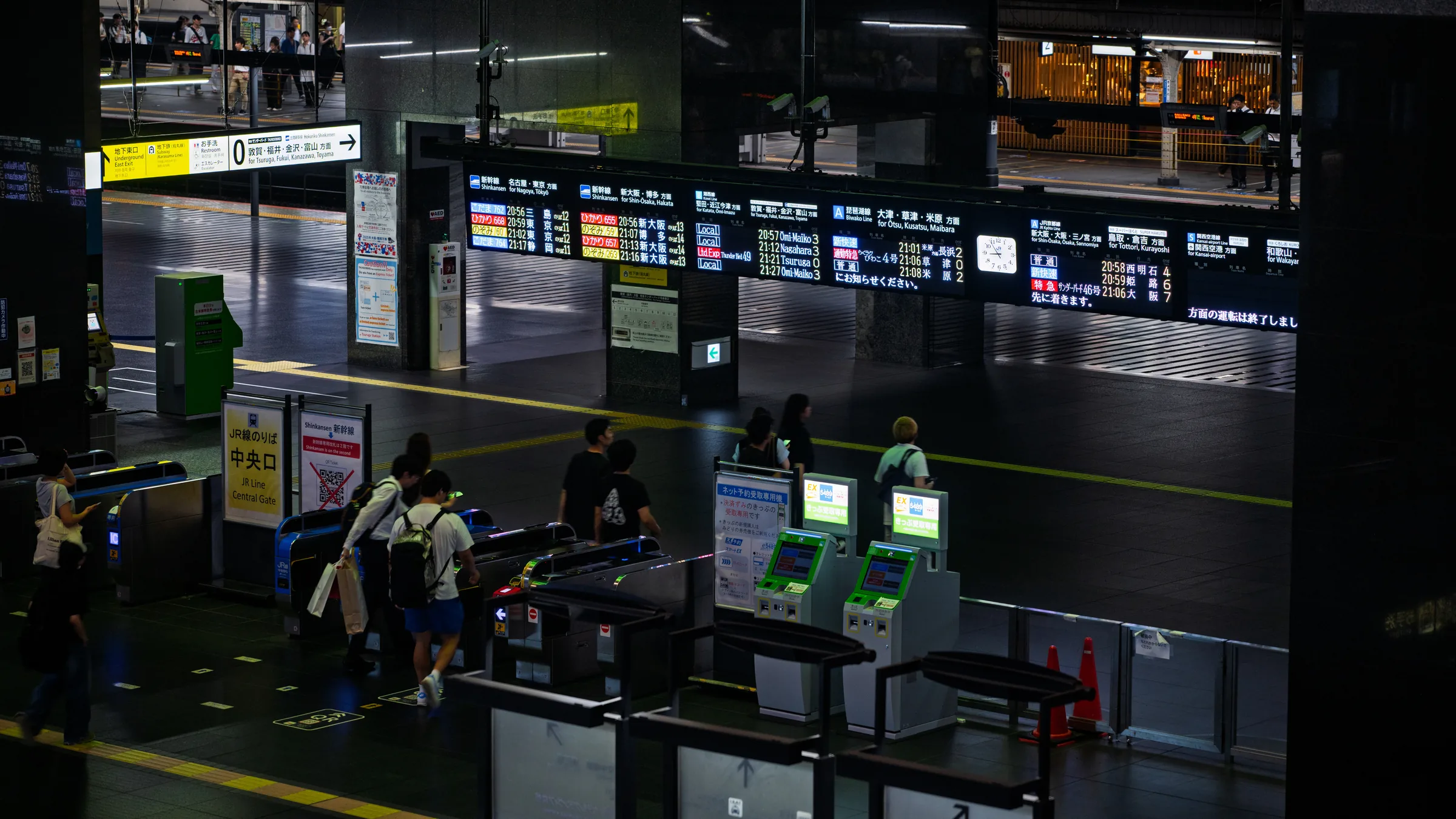
The concourse between departures
KYOTO STATION / CONCOURSE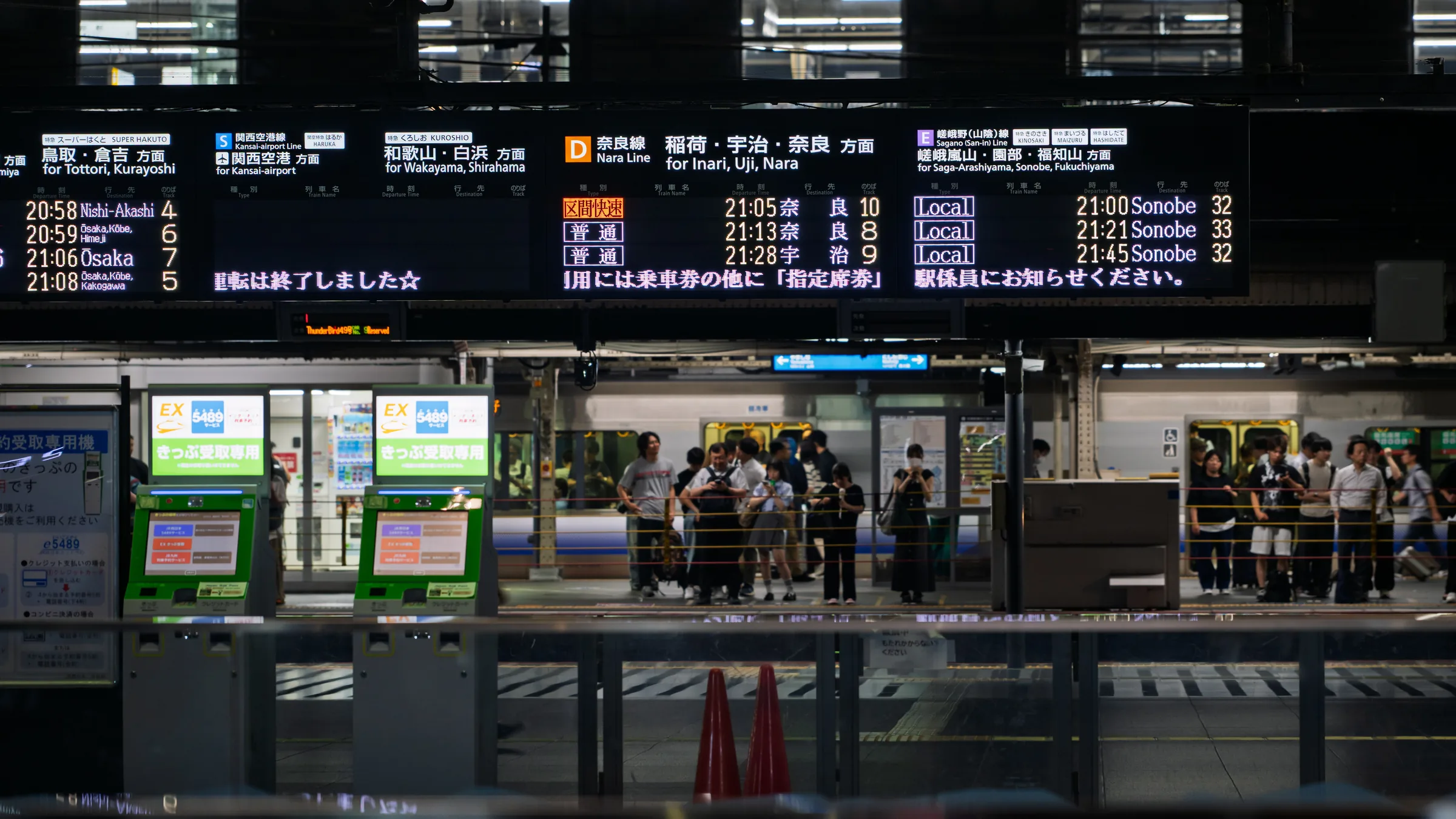
Every route gathers above the gates
KYOTO STATION / DEPARTURES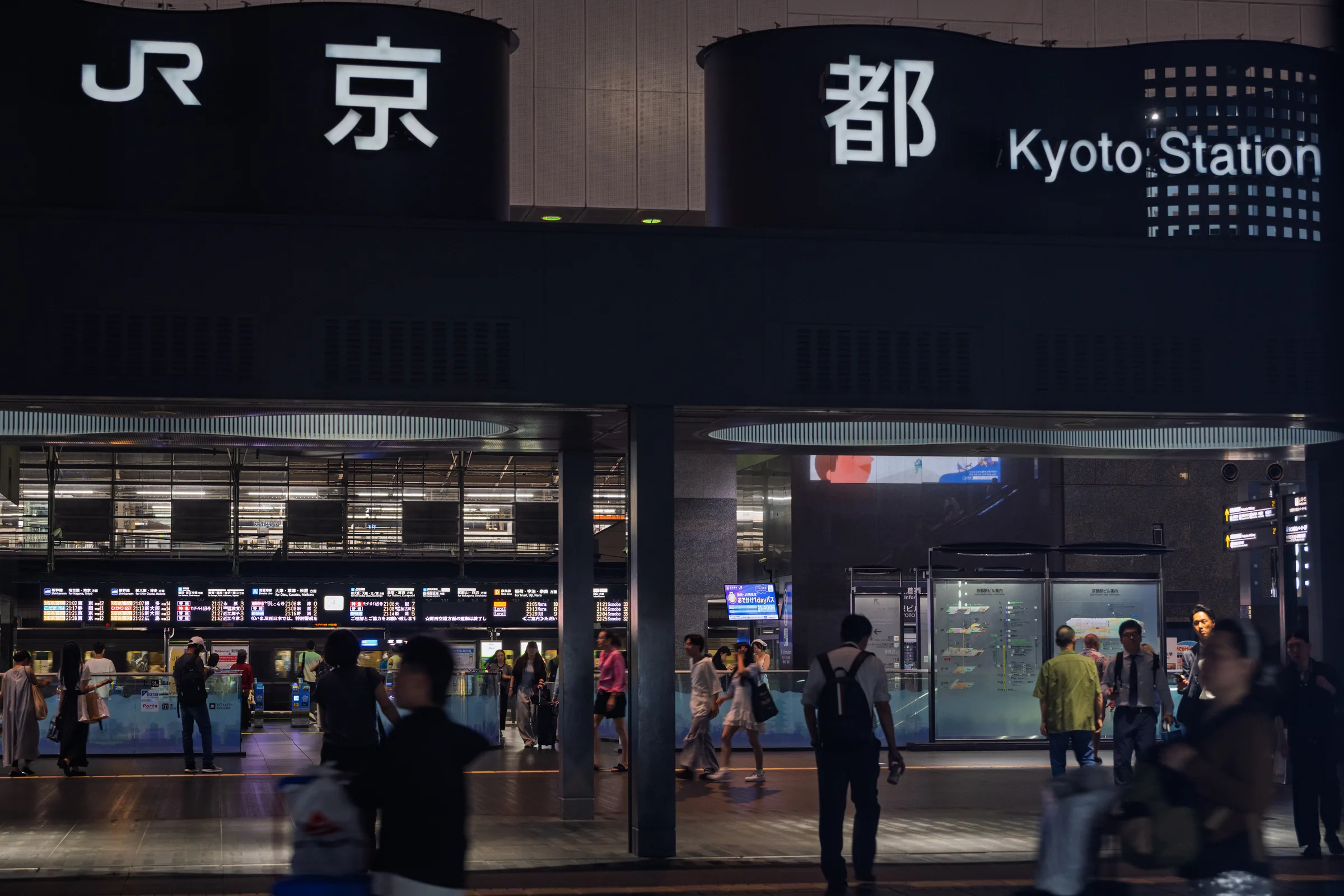
Kyoto names the ending
KYOTO STATION / ENTRANCE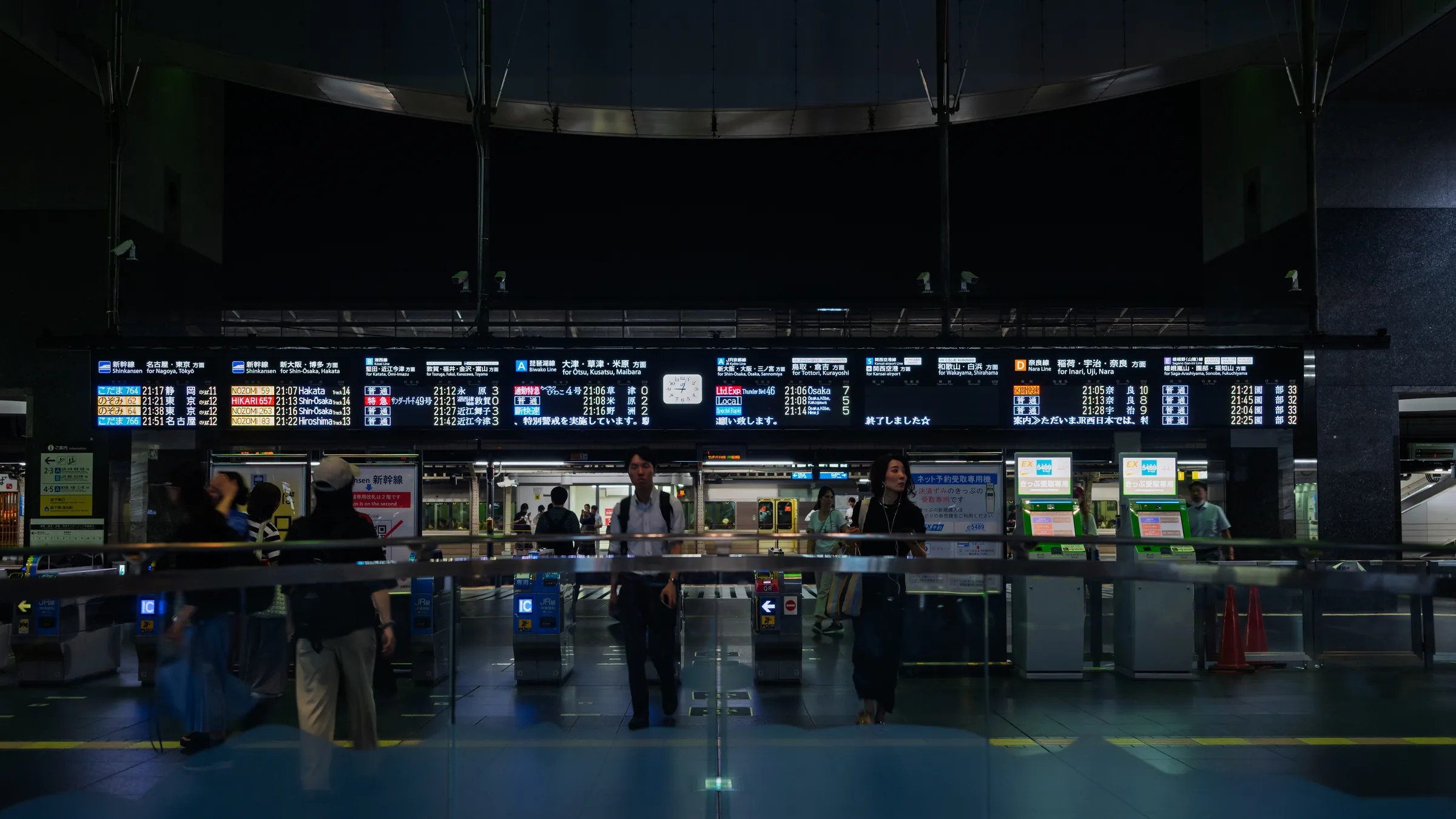
The hall after the crowd thins
KYOTO STATION / LATENorth, into blue
第二章 — 海辺の街
After Kansai's saturated green, the route turned north. Hakodate arrived in blue: a city held between mountain, harbor, overhead wire, and the next train out.
A city between two heights
From Goryokaku Tower, Hakodate gathered around the mountain at its far end. By evening we were following the city's wires toward it—streetcar, ropeway, then the dark gondola above the roofs. At the summit, the two bays became light. One camera entered the view, and the observation-deck crowd made its own moving foreground.
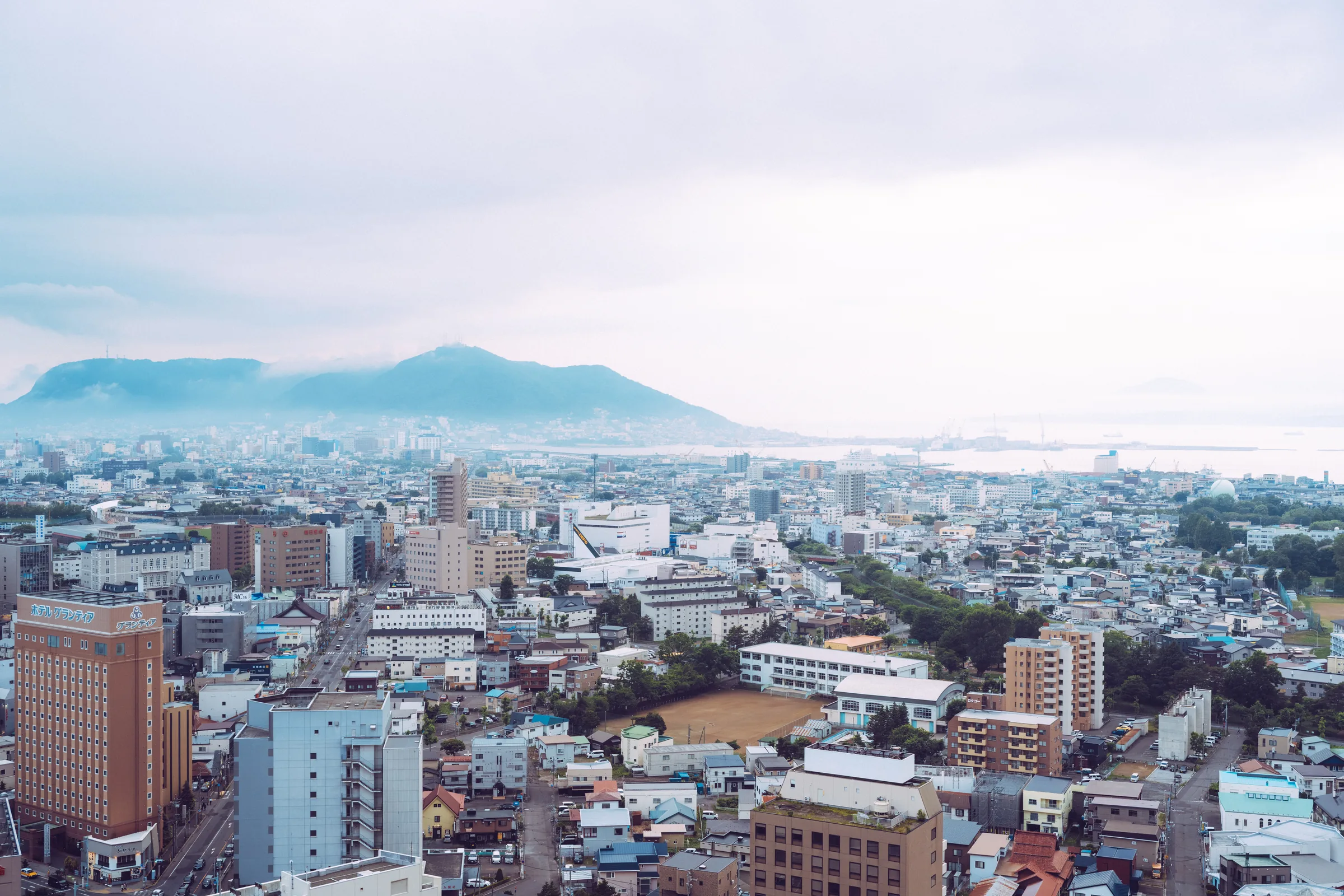
The mountain waits at the far end of the city
GORYOKAKU TOWER / ARRIVAL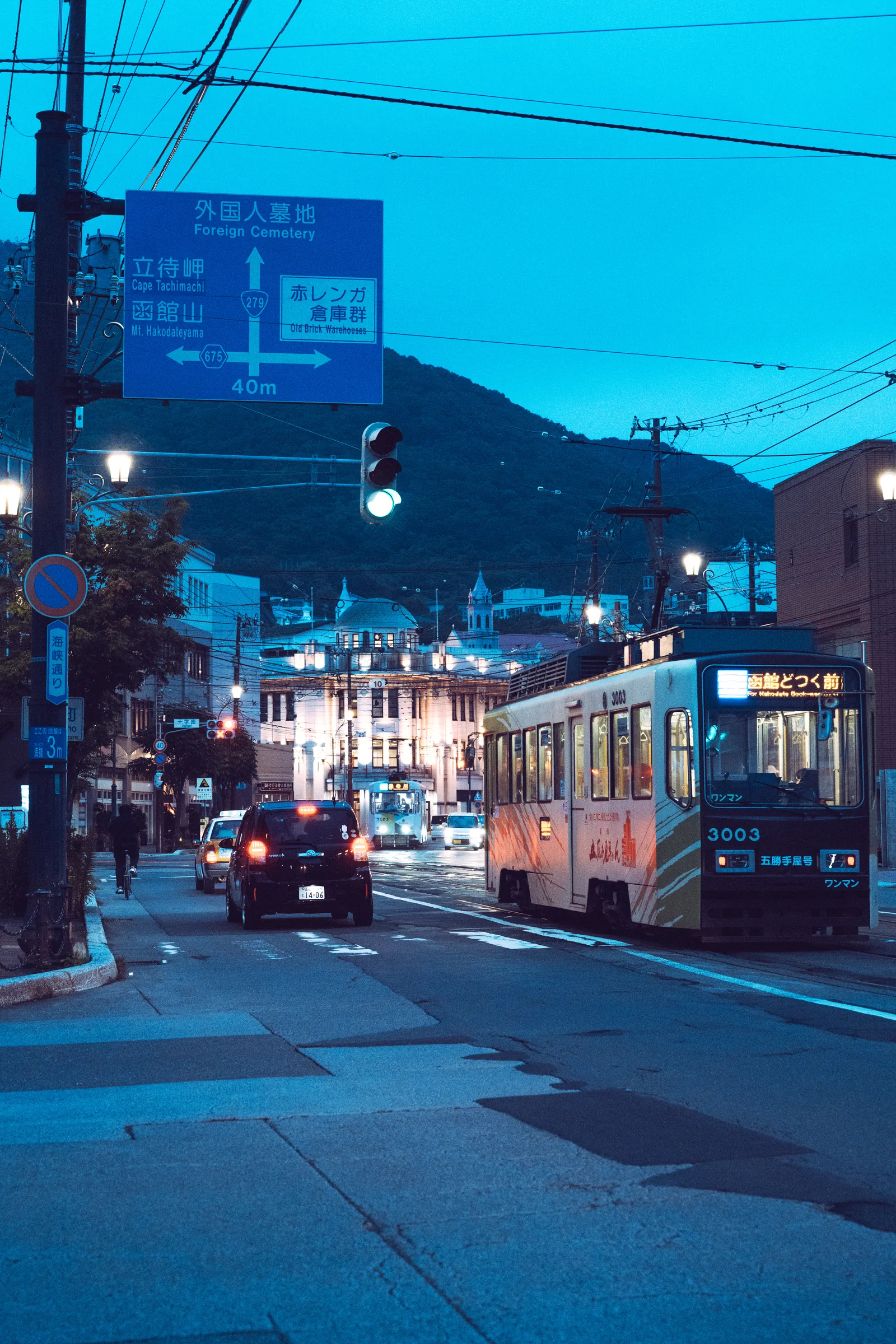
Rails continue into the street
HAKODATE TRAM / BLUE HOUR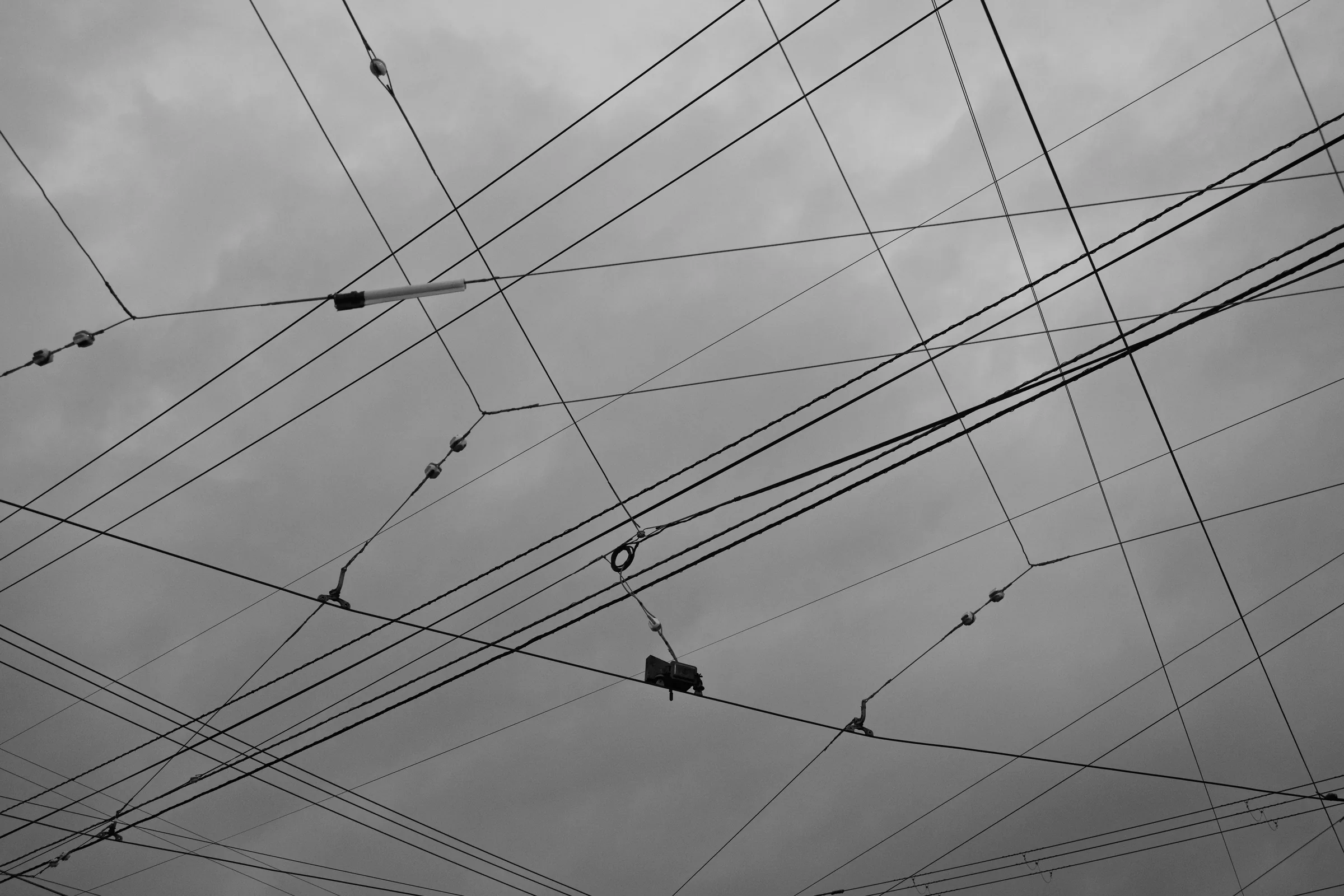
The route remains overhead
HAKODATE / WIRES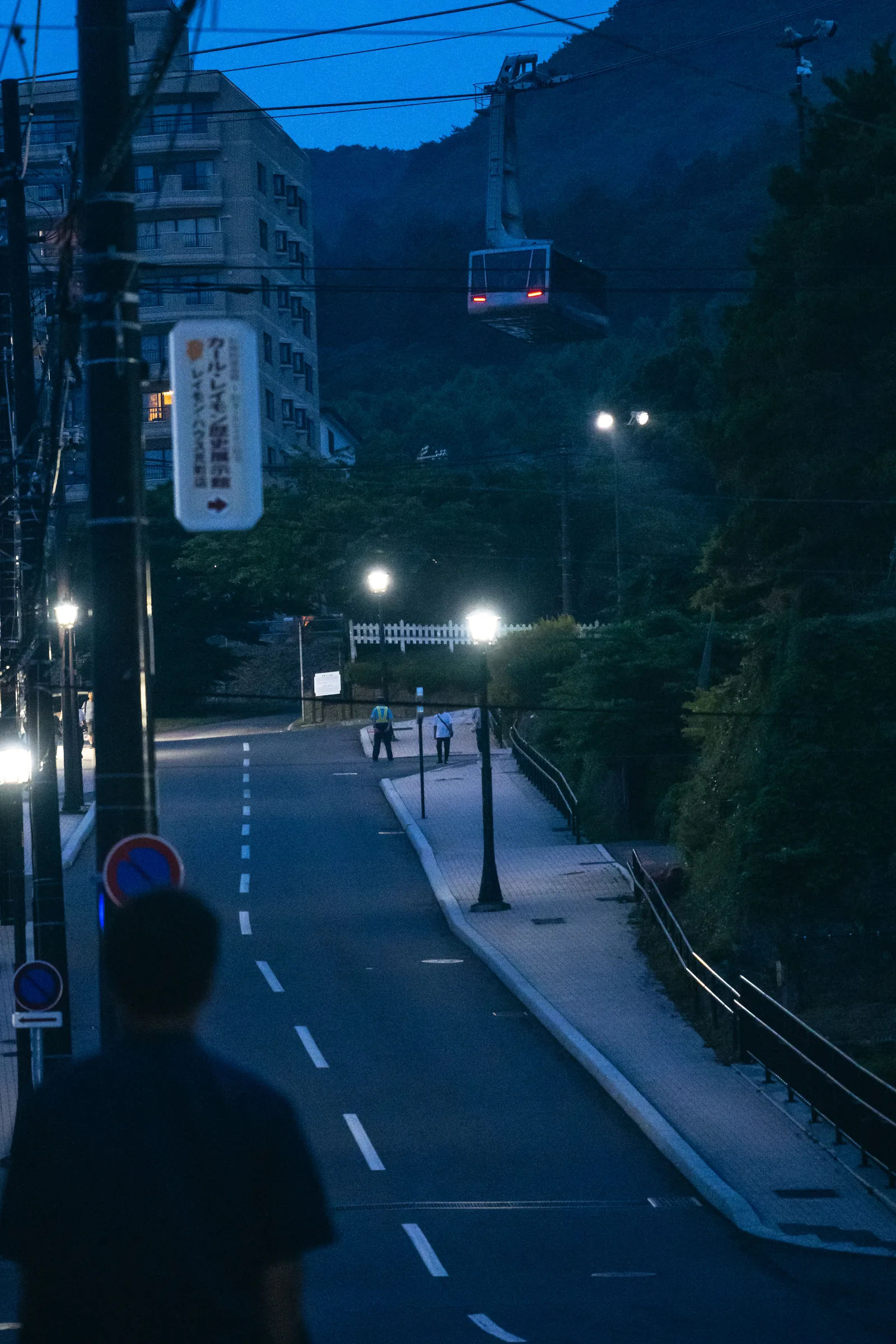
Three minutes above the street
MT HAKODATE / ROPEWAY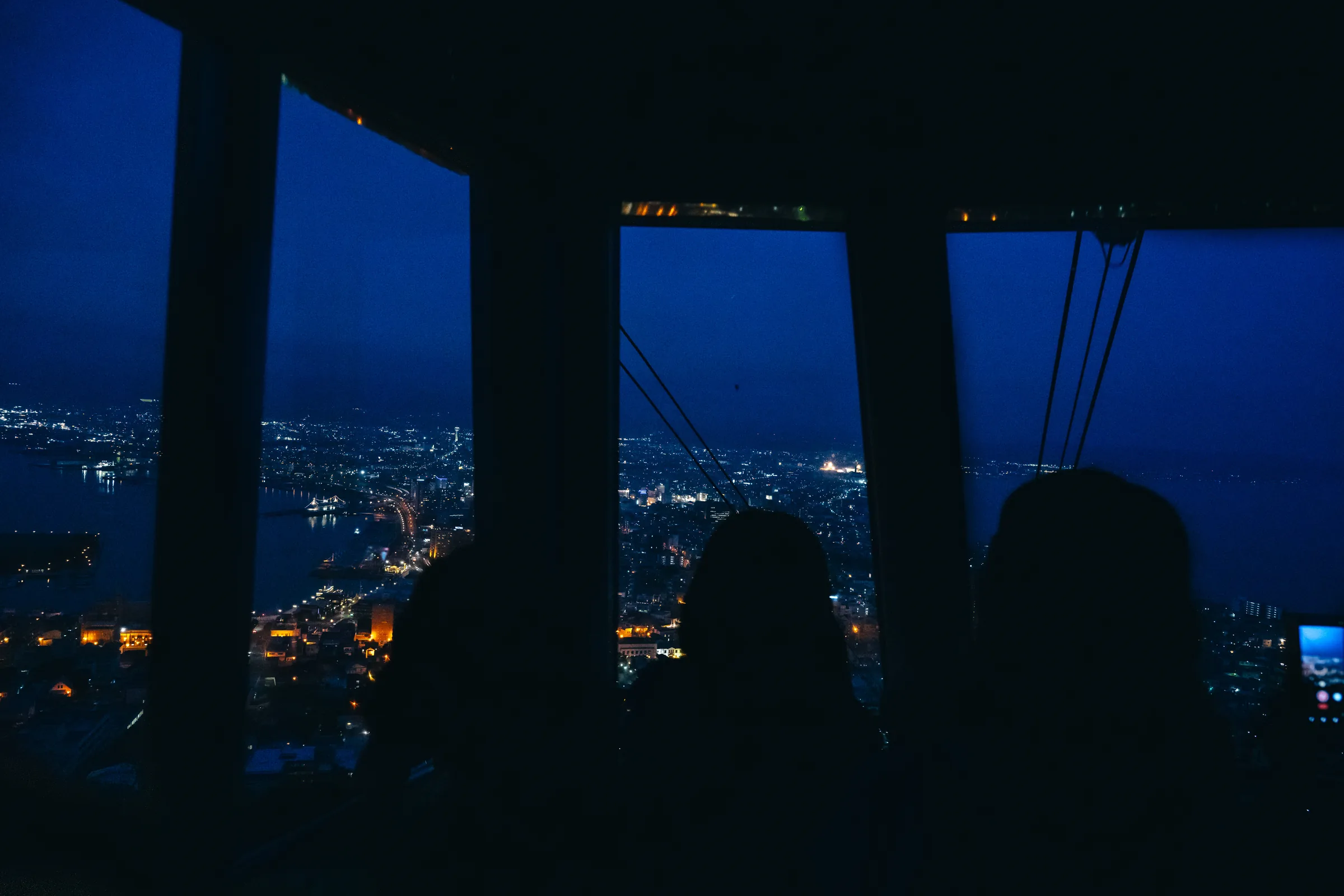
The city appears between the cables
ROPEWAY / GONDOLA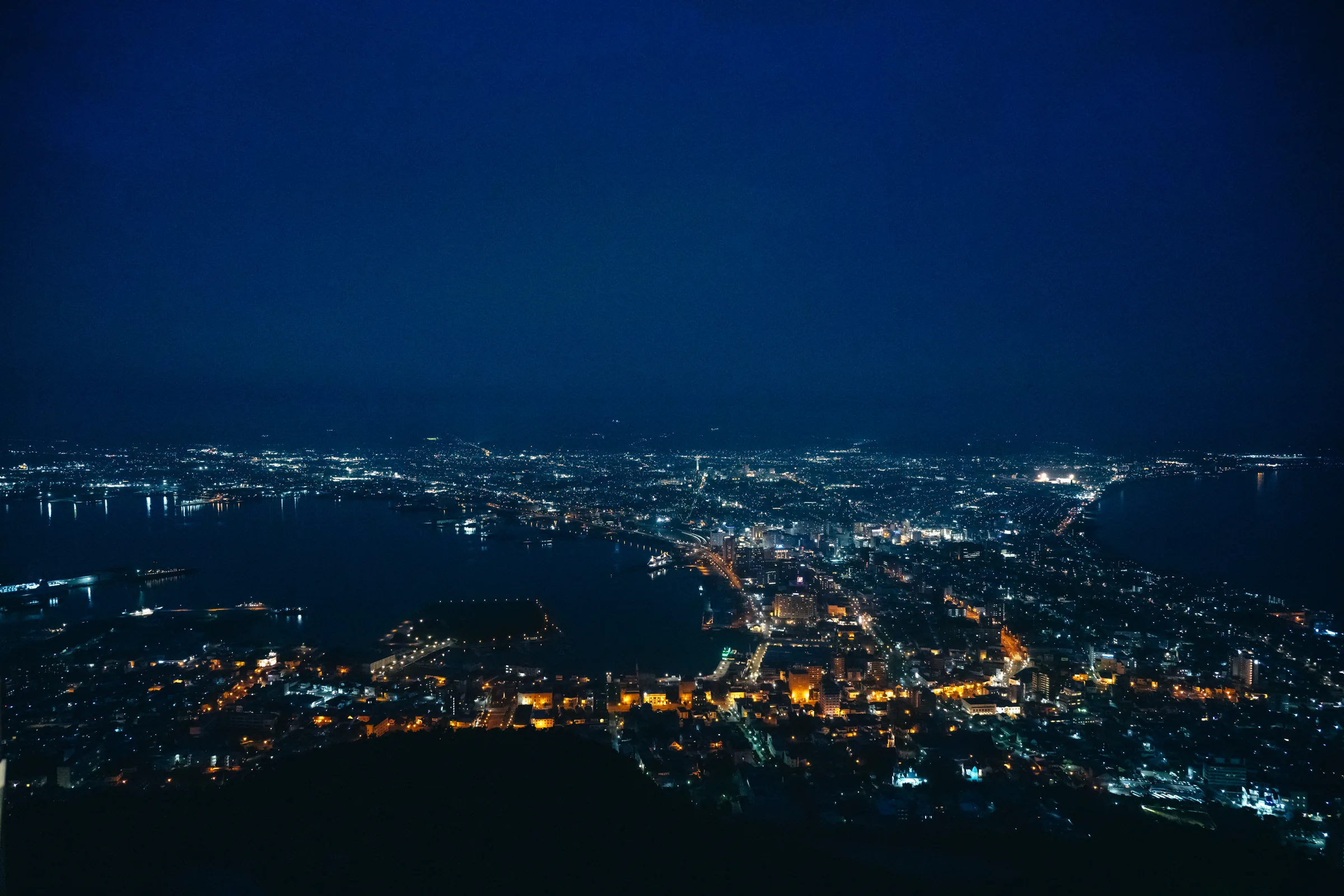
Night gathers between two bodies of water
MT HAKODATE / NIGHT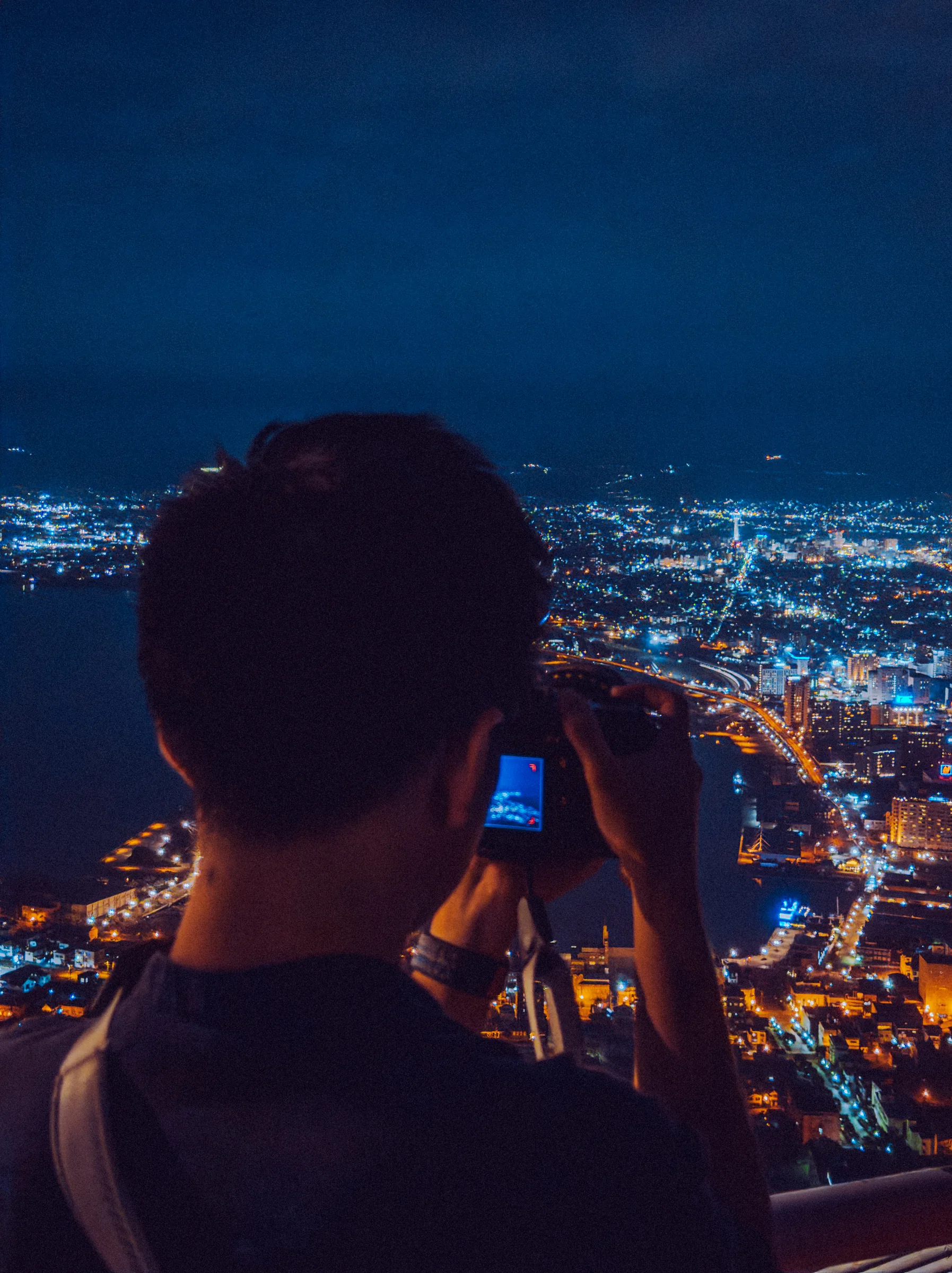
One city, inside another camera
MT HAKODATE / OBSERVATION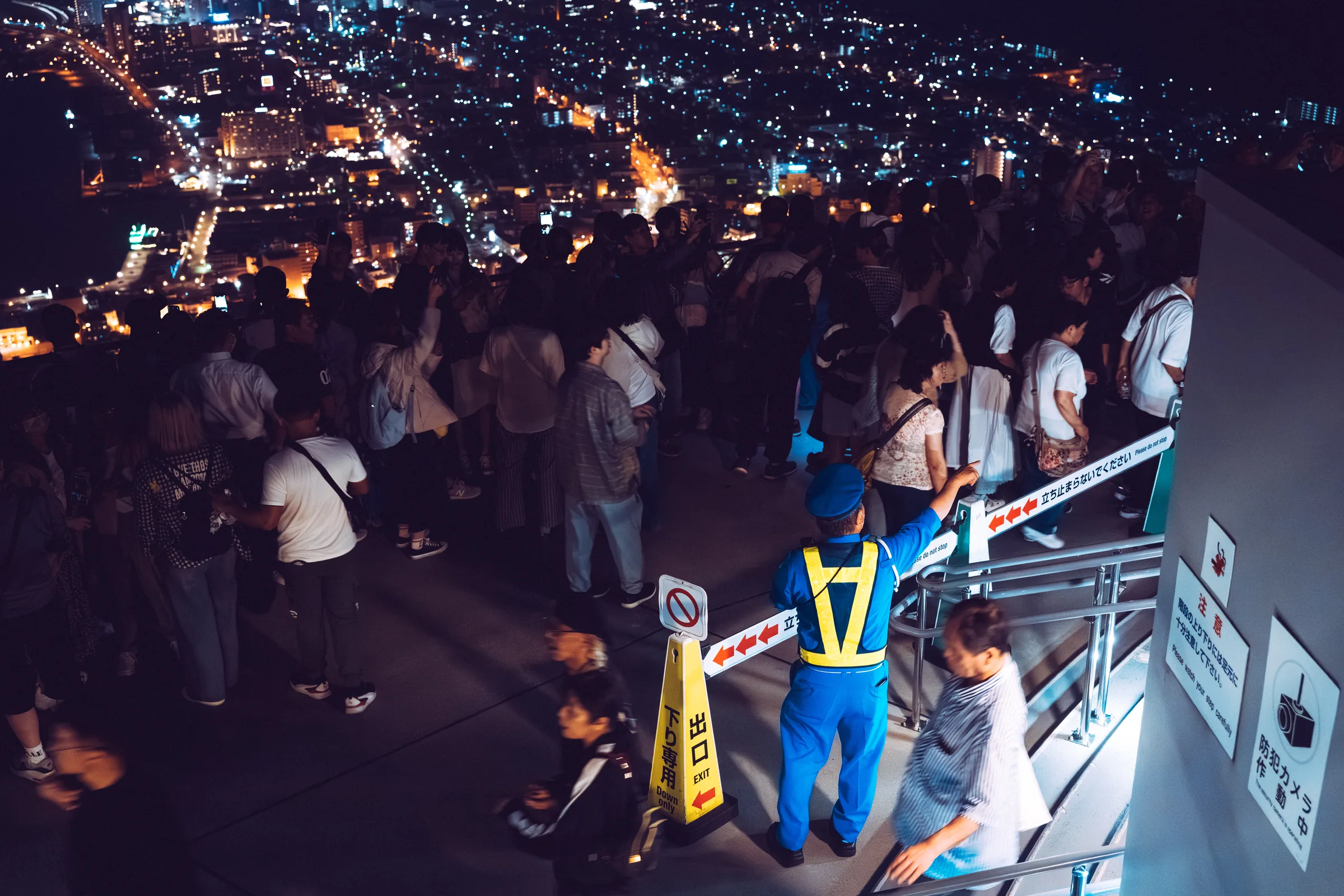
The view has its own choreography
MT HAKODATE / CROWDEvery street reaches the water
The next day stayed close to the edge: red brick beside the bay, one Motomachi street descending through wires and pedestrians, then Hachimanzaka dropping cleanly toward the Mashu-maru. Beyond the last houses came Cape Tachimachi. There the city stopped; seabirds occupied the rocks and the Tsugaru Strait took the rest of the frame.
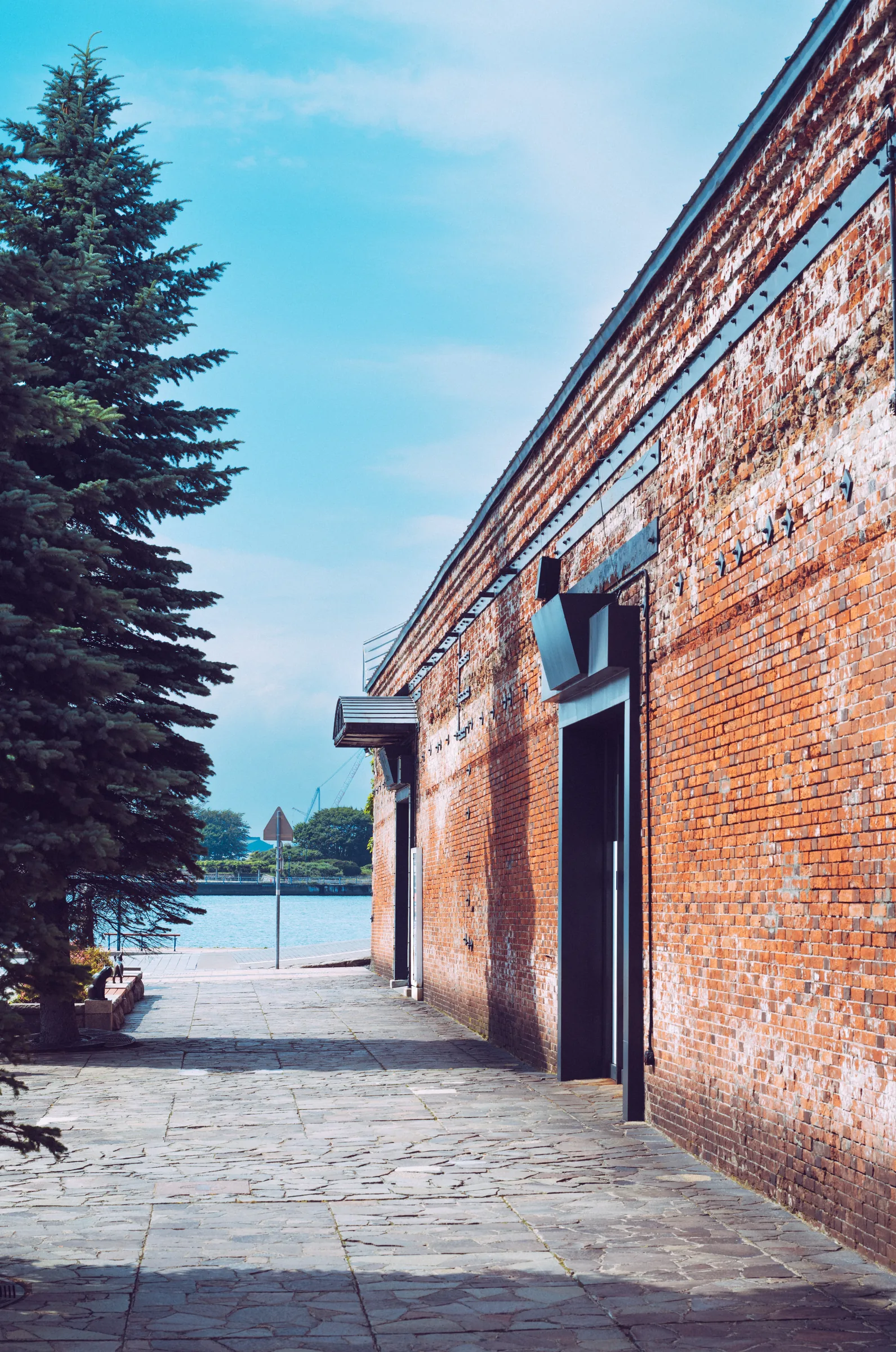
Brick meets the water
KANEMORI / BAY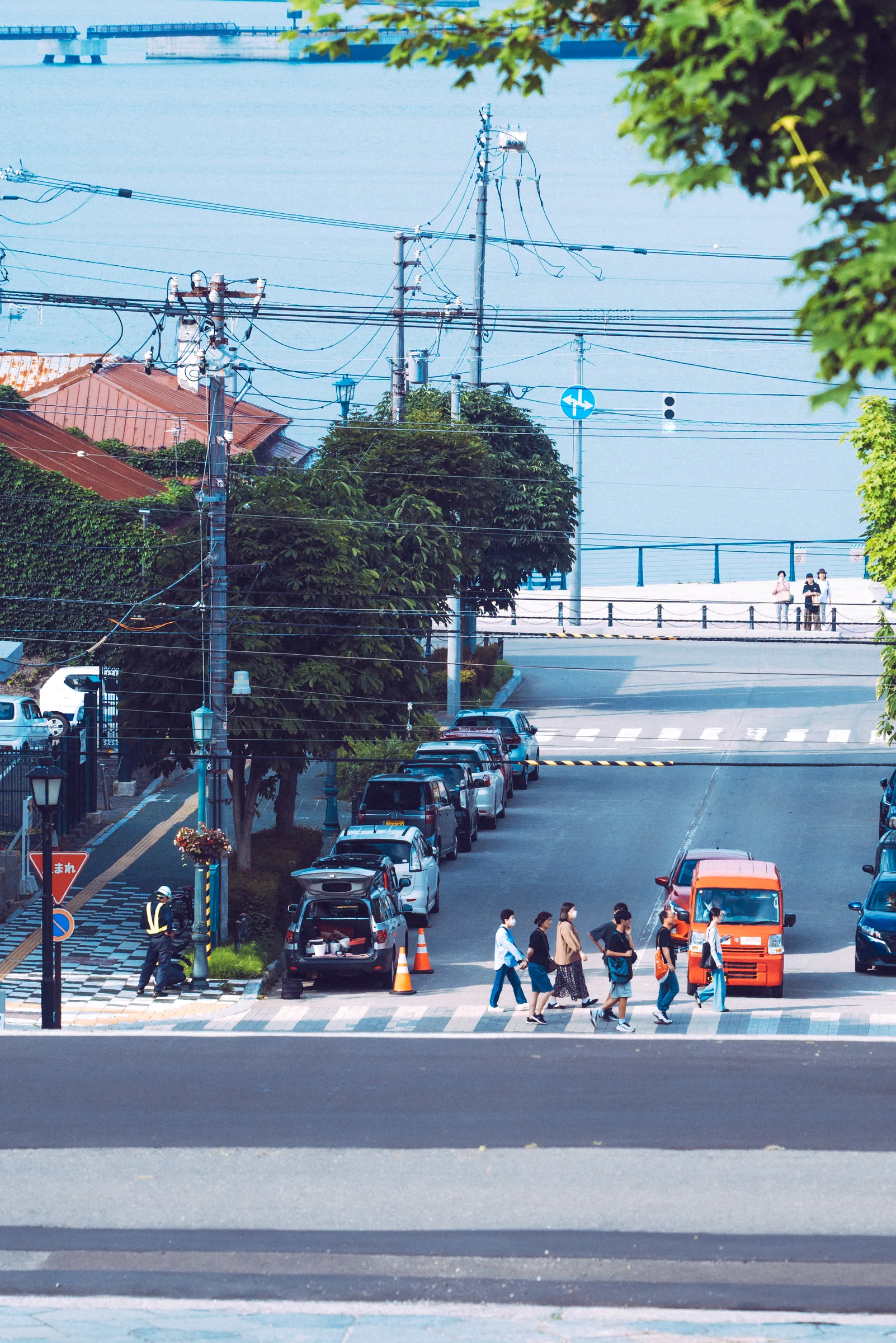
The city begins its descent
MOTOMACHI / SLOPE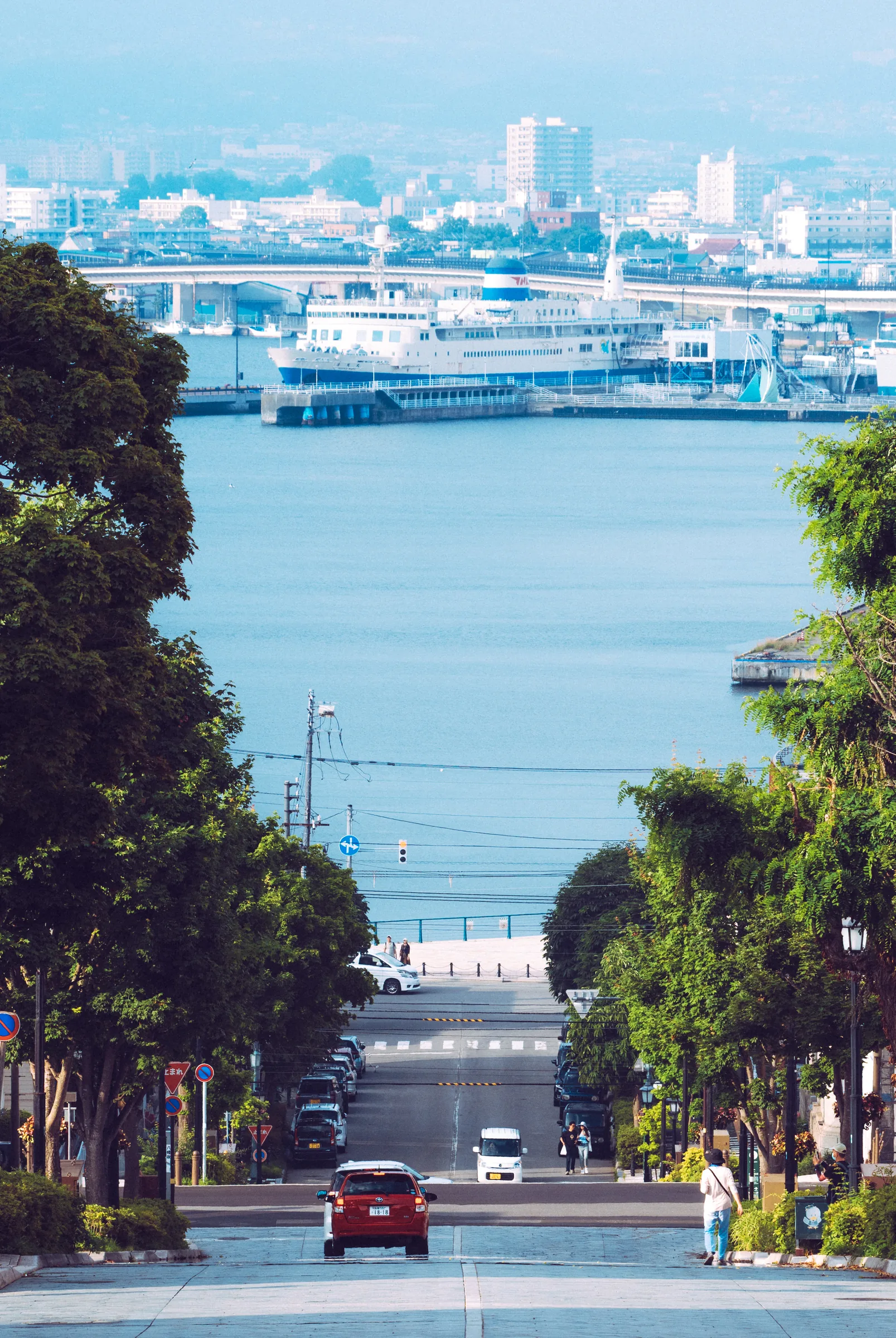
The harbor waits at the bottom
HACHIMANZAKA / MASHU-MARU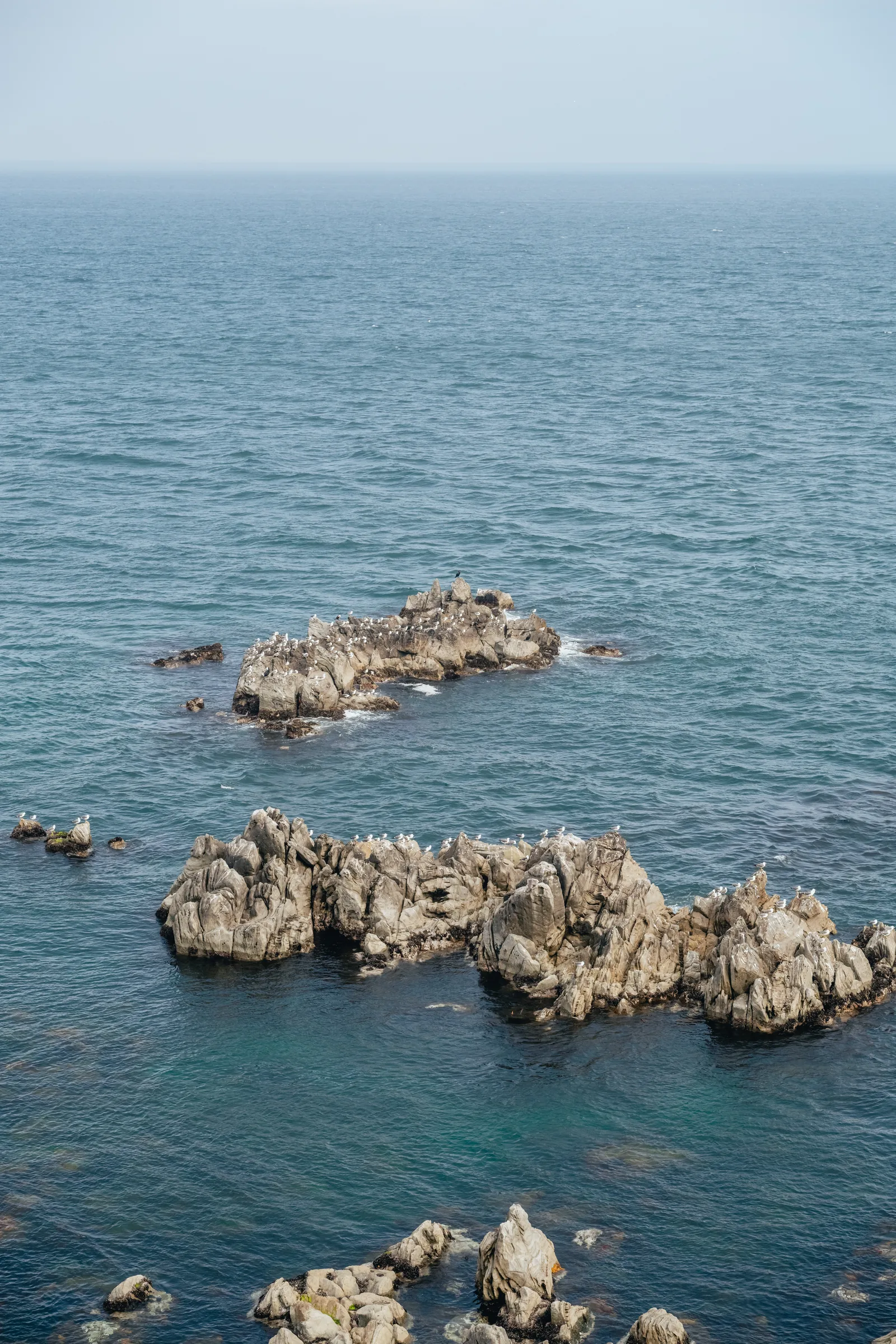
The city gives way to salt and stone
CAPE TACHIMACHI / TSUGARU STRAITRain north of the city
The Limited Express Hokuto carried us out of Hakodate toward Onuma. Rain softened the park and made the summer smaller: not a panorama now, but water-lily leaves, pale flowers, and drops held on the surface.
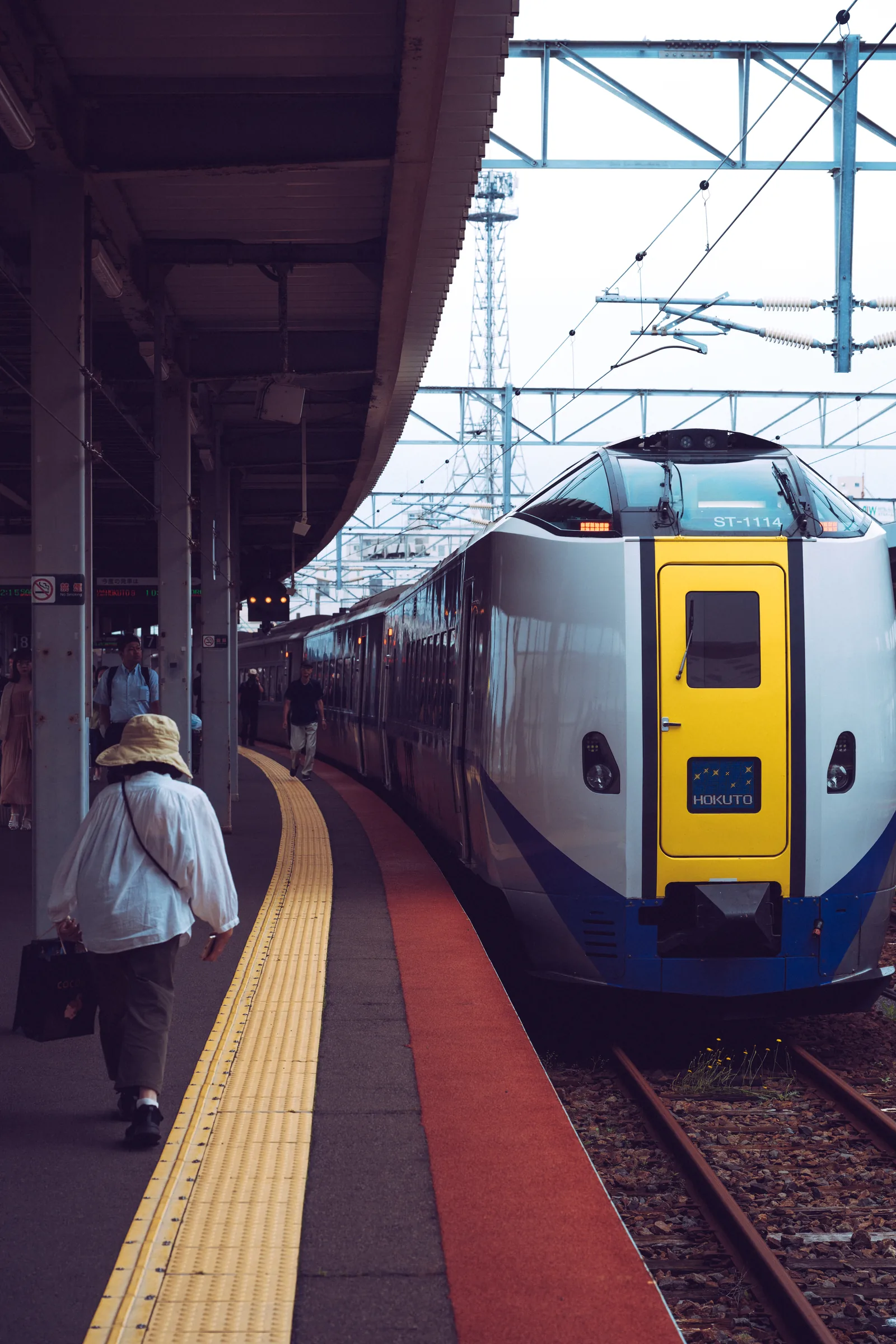
North of the city, by rail
HAKODATE STATION / HOKUTO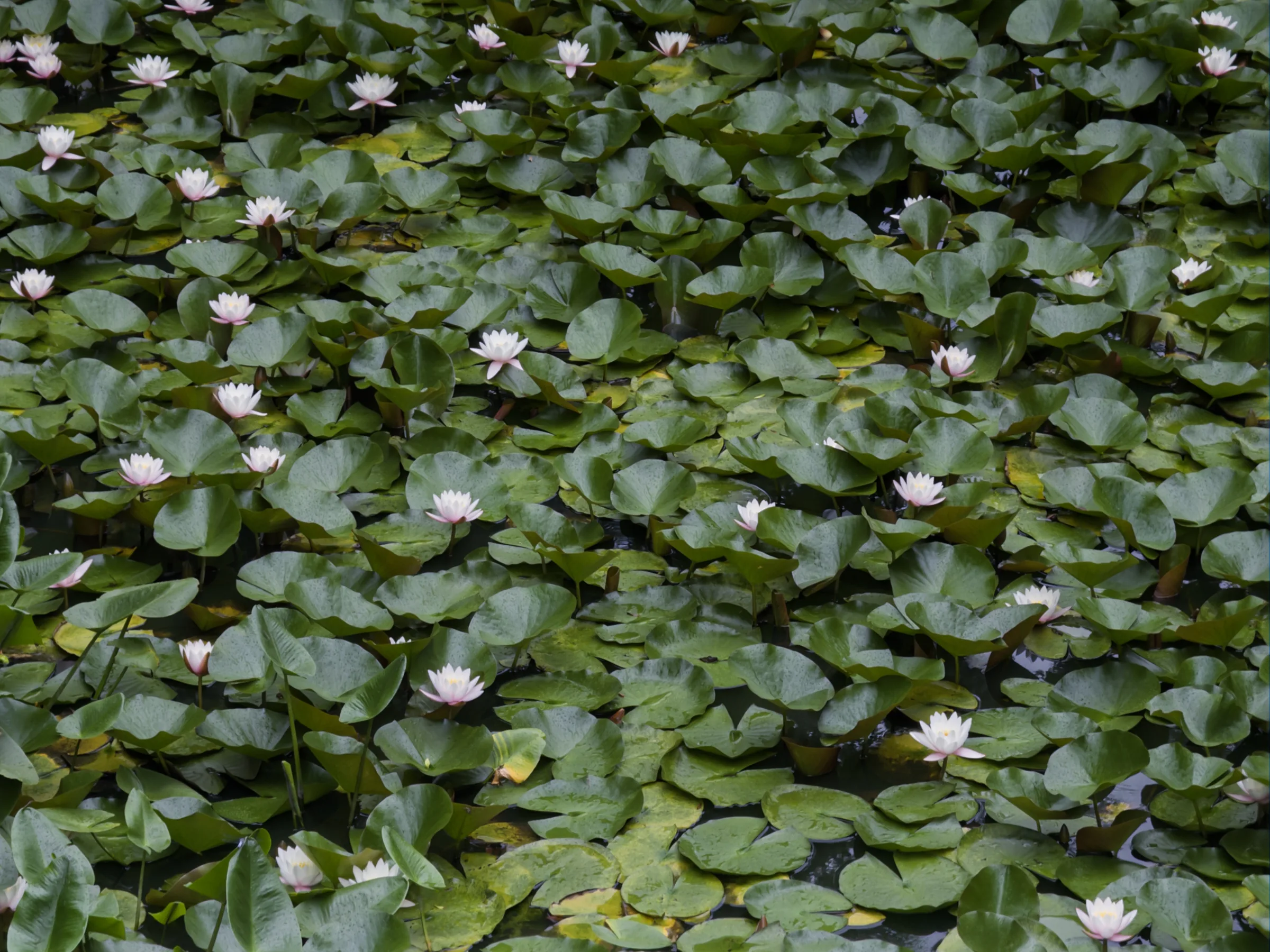
Summer holds still in the rain
ONUMA / WATER LILIESThe first train home
At 5:36, a single local car curved into the wet station. It carried us to Shin-Hakodate-Hokuto; from there the Shinkansen turned south toward Tokyo, and the journey began to close.
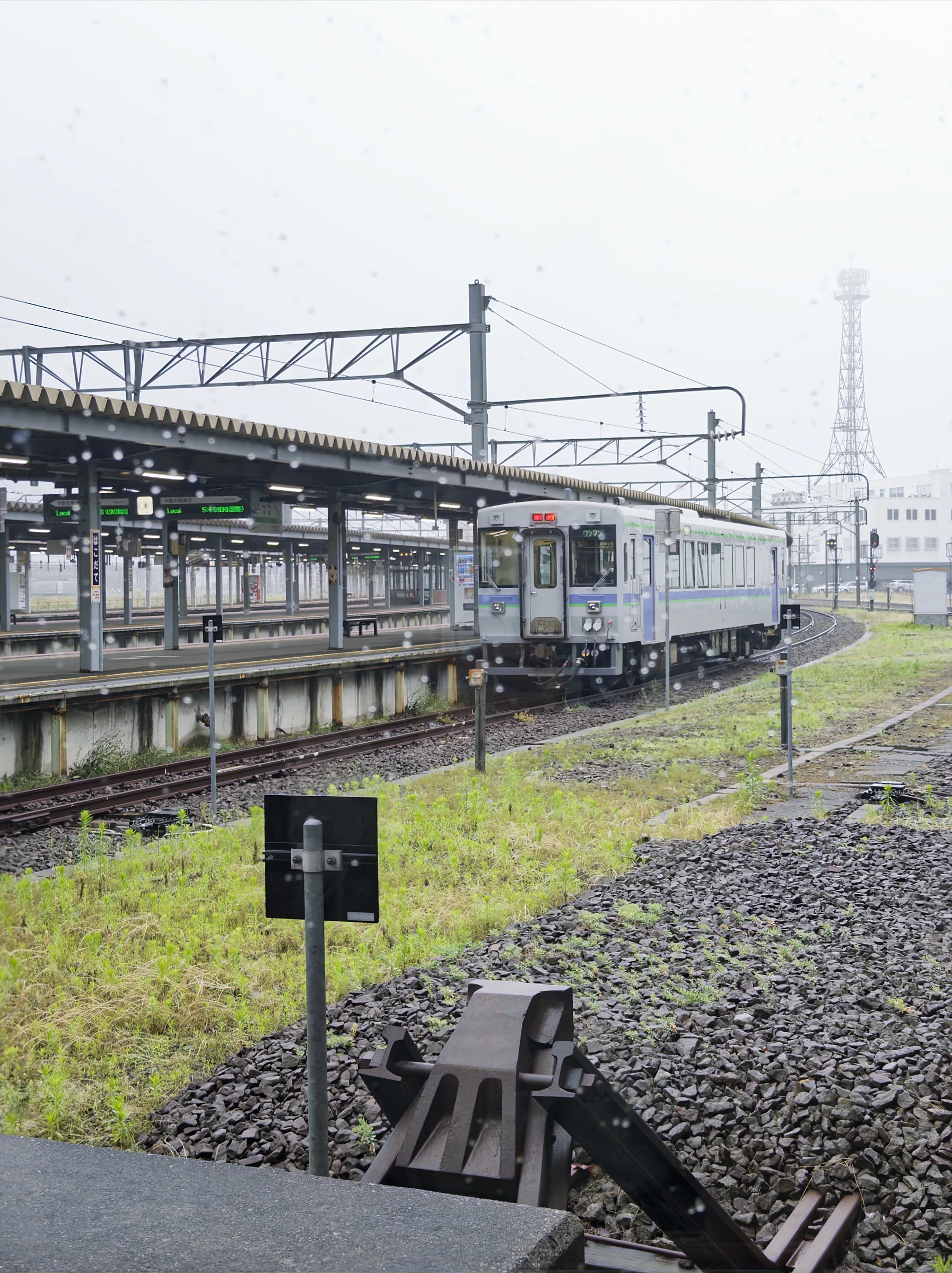
The first train begins the way home
HAKODATE STATION / 05:36The notebook closes in rain.
The local train reached Shin-Hakodate-Hokuto before the day had properly begun. From there, the long line back to Tokyo folded the two chapters into one route home.